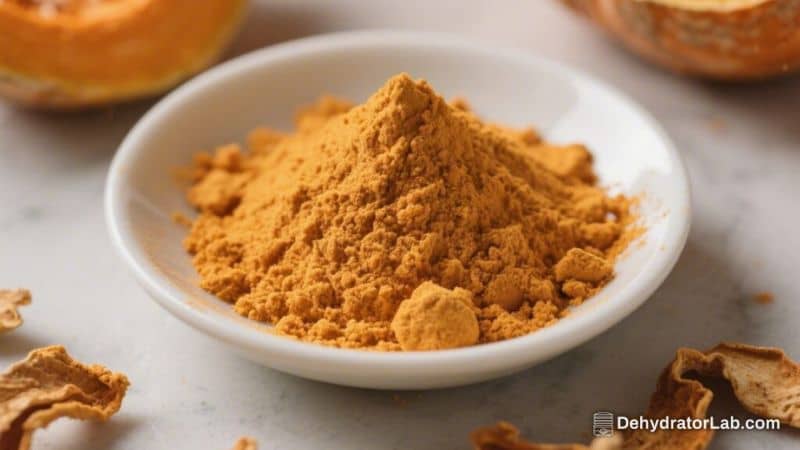
Pumpkin powder might not be the first thing you think to stock in your pantry, but once you try it, you’ll wonder how you lived without it. It delivers rich pumpkin flavor without the moisture, which is great for baking, smoothies, soups, and even homemade spice blends. It’s shelf-stable, easy to store, and surprisingly simple to make at home.
With just a few pumpkins and a dehydrator or oven, you can create a year-round supply of cozy, fall flavor that goes well beyond pumpkin pie.
In this article:
What Makes This Recipe So Good
- Flavor without the bulk: You get concentrated pumpkin flavor that brightens both sweet and savory recipes without adding extra liquid.
- Budget-friendly: Make use of seasonal pumpkins when they’re cheap and abundant, then enjoy them all year.
- Customizable texture: Choose fine powder for baking or a coarser grind for soups and stews.
- Long shelf life: Properly dried and stored pumpkin powder can last months, cutting down on waste.
- Convenient: No thawing, chopping, or dealing with canned purée—just scoop and go.
Shopping List
- Fresh pumpkin (sugar pie or Cinderella are best; avoid large carving pumpkins)
- Lemon juice or citric acid (optional, helps color retention)
- Sea salt (optional, for savory applications)
How to Make It
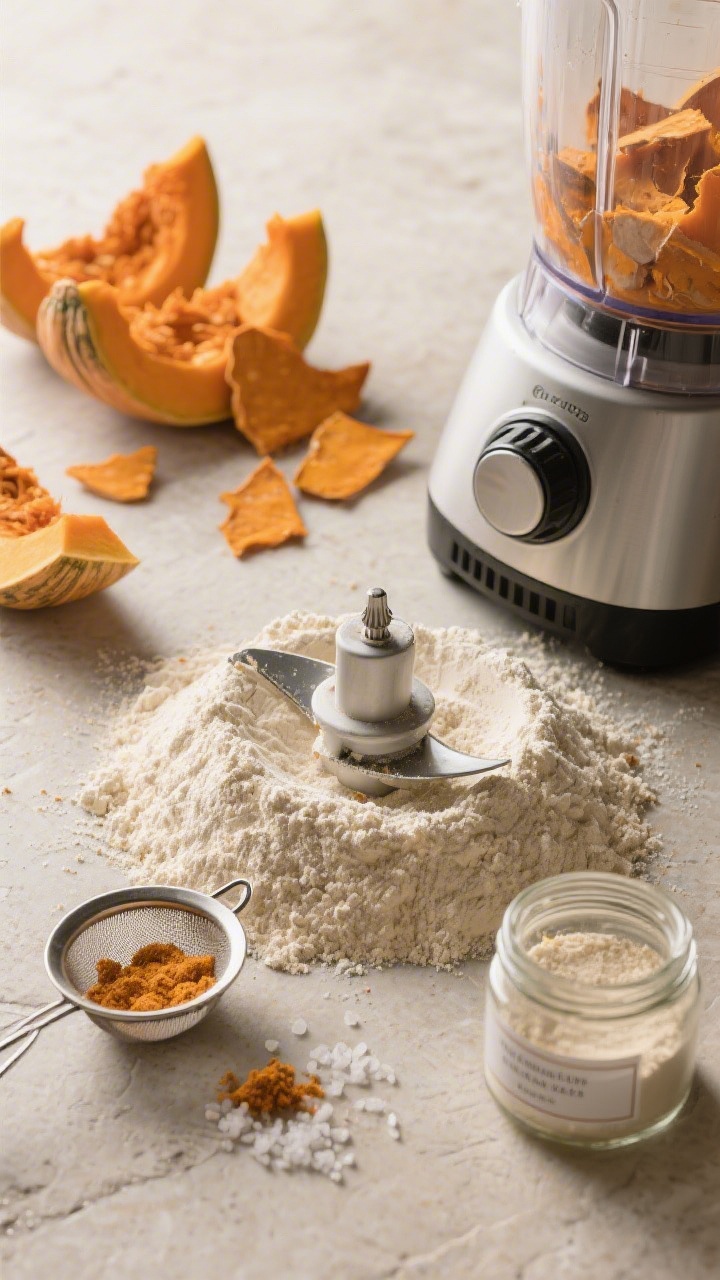
- Choose the right pumpkin: Pick small to medium sugar pumpkins. They’re sweeter, denser, and less watery than carving pumpkins, which means better texture and flavor.
- Prep the pumpkin: Wash, halve, and scoop out the seeds and stringy bits. Save seeds if you want to roast them later.
- Cook until soft: Roast cut-side down at 375°F (190°C) for 40–60 minutes, or steam in chunks until fully tender.
Roasting boosts flavor and reduces moisture.
- Drain excess moisture: Once cooked, let the pumpkin rest in a colander for 10–15 minutes. Press gently with a spoon to remove extra water.
- Purée smoothly: Blend the flesh into a smooth purée. If it’s very thick, that’s fine; avoid adding water.
Stir in a splash of lemon juice if you want to help preserve color.
- Spread for drying: For a dehydrator, spread a thin, even layer (about 1/8 inch) on silicone or fruit leather trays. For an oven, line baking sheets with silicone mats or parchment and spread the purée the same way.
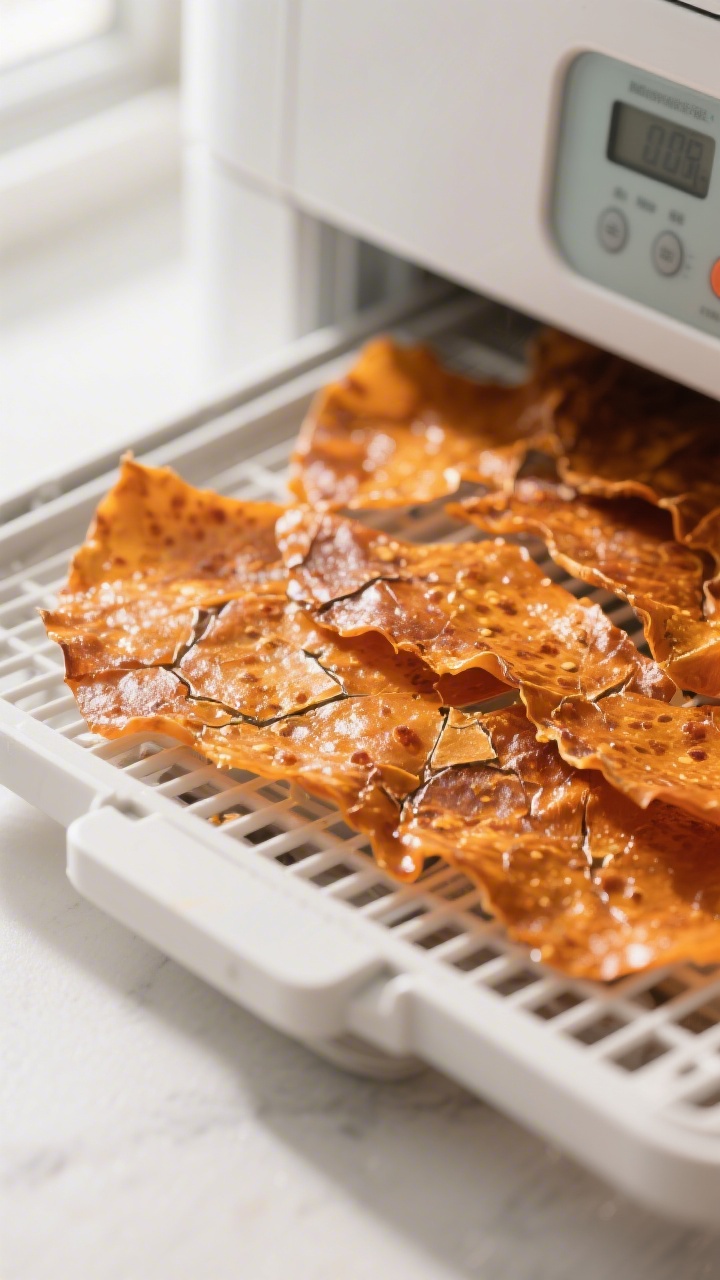
- Dehydrate low and slow: Dry at 125–135°F (52–57°C) in a dehydrator for 8–12 hours, or in the oven at its lowest setting with the door cracked slightly for airflow. Rotate trays halfway through.
Drying is complete when the pumpkin sheet is fully brittle, not tacky.
- Cool and break up: Let the dried sheets cool completely. Break into pieces to prepare for grinding.
- Grind to powder: Use a high-speed blender, spice grinder, or food processor. Pulse to your preferred texture.
For the finest powder, grind in small batches and sift, then regrind any larger bits.
- Condition the powder: Place the powder loosely in a jar for 3–5 days, shaking once daily. If you see clumps or condensation, it’s not fully dry—return to the dehydrator.
- Store properly: Transfer to airtight containers. Label with the date.
Store in a cool, dark place.
Storage Instructions
- Room temperature: Keep in airtight containers in a cool cupboard away from light and heat for 6–12 months.
- Refrigeration: Not required, but can help in humid climates. Use a moisture absorber packet if available.
- Freezer: For the longest life, store sealed powder in the freezer for up to 18 months. Let it come to room temp before opening to avoid condensation.
- Clumping fix: If clumps form, pulse in a grinder.
Add a food-safe desiccant to the jar to prevent moisture issues.
Health Benefits
- Rich in beta-carotene: Pumpkin is packed with beta-carotene, which the body converts to vitamin A to support vision and immune health.
- Fiber-friendly: Even in powder form, pumpkin offers dietary fiber that supports digestion and helps you feel full.
- Minerals and antioxidants: It contains potassium, vitamin C, and various antioxidants that may support heart health and reduce oxidative stress.
- Lower sugar option: It adds natural sweetness and body to recipes, which can help reduce added sugar in smoothies and baked goods.
Pitfalls to Watch Out For
- Using the wrong pumpkin: Carving pumpkins are watery and bland. Opt for pie varieties for the best flavor and texture.
- Drying too thick: Thick layers take forever to dry and often end up leathery. Keep it thin and even.
- Stopping too soon: If the sheets aren’t fully brittle, the powder will clump and spoil faster.
Dry until crisp.
- Overheating in the oven: Too much heat can brown the purée and dull the flavor. Keep the temperature as low as possible and allow airflow.
- Skipping conditioning: Moisture pockets can cause mold. Conditioning helps ensure even dryness before long-term storage.
Alternatives
- Butternut squash: Naturally sweet and dense, it dehydrates beautifully and works 1:1 in most recipes.
- Kabocha squash: Very dry and rich; great for a super-concentrated powder.
- Canned pumpkin: You can dehydrate canned purée if fresh pumpkins aren’t available.
Choose pure pumpkin, not pie filling.
- Flavor additions: Blend in cinnamon, ginger, nutmeg, or vanilla powder for a pre-seasoned mix. For savory use, try garlic powder, smoked paprika, or sage.
FAQ
How do I use pumpkin powder in baking?
Use 1–3 tablespoons to boost flavor in muffins, pancakes, quick breads, and cookies. If replacing some flour, start with up to 10% by weight and adjust liquid slightly since the powder absorbs moisture.
Can I rehydrate it back into purée?
Yes.
Mix pumpkin powder with warm water, starting at a 1:2 ratio by volume (powder to water). Let it sit for 5–10 minutes, then adjust until you reach a thick purée consistency.
What’s the best way to add it to soups and sauces?
Whisk directly into simmering liquids to thicken and add flavor. Start with 1 tablespoon per cup of liquid, then taste and adjust.
Will it taste like canned pumpkin?
It’s similar but often more concentrated, especially if you roasted the pumpkin first.
Roasting brings a deeper, lightly caramelized flavor.
Do I need a dehydrator?
No, but it helps. An oven on its lowest setting works if you keep the door slightly open for airflow and monitor closely to avoid browning.
How fine should I grind it?
For baking and beverages, go for a fine, flour-like texture. For soups and savory dishes, a slightly coarser grind is fine and dissolves easily when simmered.
Is it safe to store at room temperature?
Yes, if fully dried and kept airtight in a cool, dark place.
Always check for off smells, moisture, or visible mold before using.
Can I make it unsweetened?
Absolutely. Pure pumpkin has natural sweetness, and you don’t need to add sugar. You can also season it later to match the recipe.
How much powder equals 1 cup of pumpkin purée?
Roughly 1/4 to 1/3 cup pumpkin powder plus water will approximate 1 cup of purée, depending on how finely ground and dehydrated it is.
Adjust water until the texture looks right.
Why did my powder clump after a week?
It likely wasn’t fully dry or the jar admitted moisture. Re-dehydrate the powder on low heat for 30–60 minutes, cool, and store with a desiccant packet.
In Conclusion
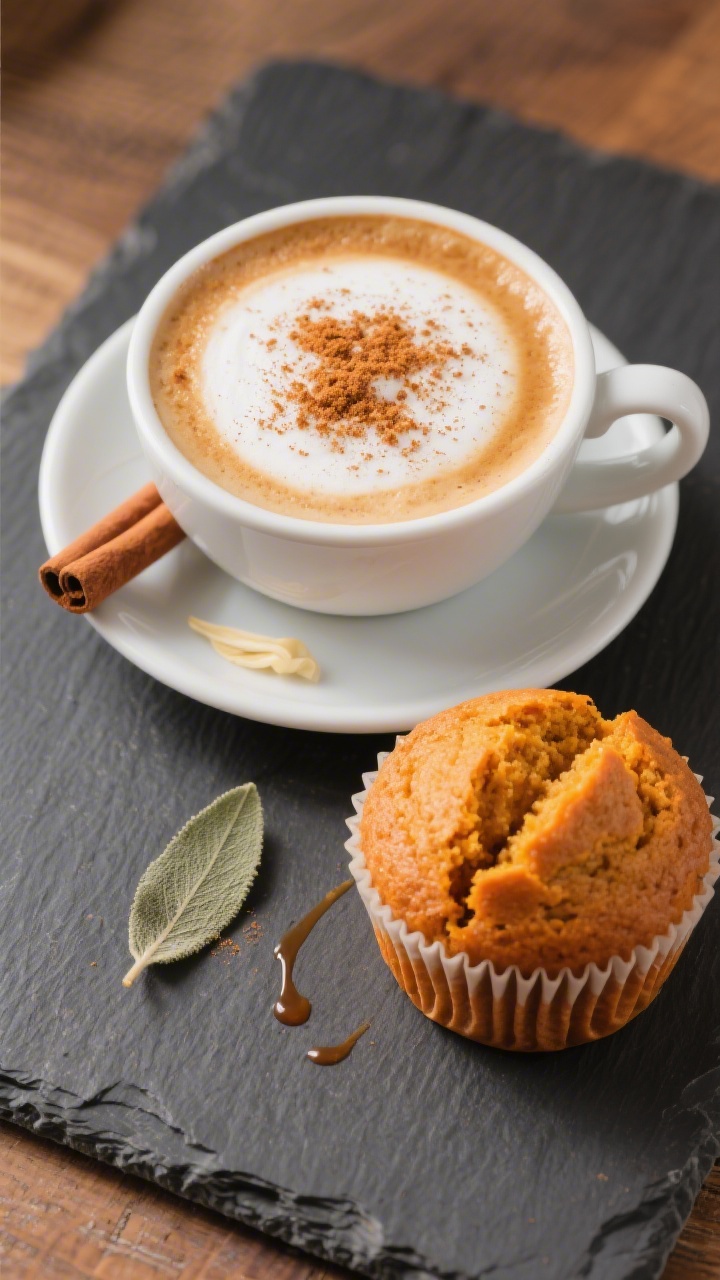
Dehydrated pumpkin powder is an easy, practical way to keep real pumpkin flavor on hand year-round. It takes a little time up front, but the payoff is huge: fast flavor boosts, less waste, and a pantry staple that works in everything from lattes to lasagna.
With the right pumpkin, careful drying, and airtight storage, you’ll have a versatile ingredient ready whenever inspiration (or craving) strikes.
Dehydrated Pumpkin Powder – A Versatile Pantry Staple
Instructions
- Choose the right pumpkin: Pick small to medium sugar pumpkins. They’re sweeter, denser, and less watery than carving pumpkins, which means better texture and flavor.
- Prep the pumpkin: Wash, halve, and scoop out the seeds and stringy bits. Save seeds if you want to roast them later.
- Cook until soft: Roast cut-side down at 375°F (190°C) for 40–60 minutes, or steam in chunks until fully tender.Roasting boosts flavor and reduces moisture.
- Drain excess moisture: Once cooked, let the pumpkin rest in a colander for 10–15 minutes. Press gently with a spoon to remove extra water.
- Purée smoothly: Blend the flesh into a smooth purée. If it’s very thick, that’s fine; avoid adding water.Stir in a splash of lemon juice if you want to help preserve color.
- Spread for drying: For a dehydrator, spread a thin, even layer (about 1/8 inch) on silicone or fruit leather trays. For an oven, line baking sheets with silicone mats or parchment and spread the purée the same way.
- Dehydrate low and slow: Dry at 125–135°F (52–57°C) in a dehydrator for 8–12 hours, or in the oven at its lowest setting with the door cracked slightly for airflow. Rotate trays halfway through.Drying is complete when the pumpkin sheet is fully brittle, not tacky.
- Cool and break up: Let the dried sheets cool completely. Break into pieces to prepare for grinding.
- Grind to powder: Use a high-speed blender, spice grinder, or food processor. Pulse to your preferred texture.For the finest powder, grind in small batches and sift, then regrind any larger bits.
- Condition the powder: Place the powder loosely in a jar for 3–5 days, shaking once daily. If you see clumps or condensation, it’s not fully dry—return to the dehydrator.
- Store properly: Transfer to airtight containers. Label with the date.Store in a cool, dark place.
Printable Recipe Card
Want just the essential recipe details without scrolling through the article? Get our printable recipe card with just the ingredients and instructions.