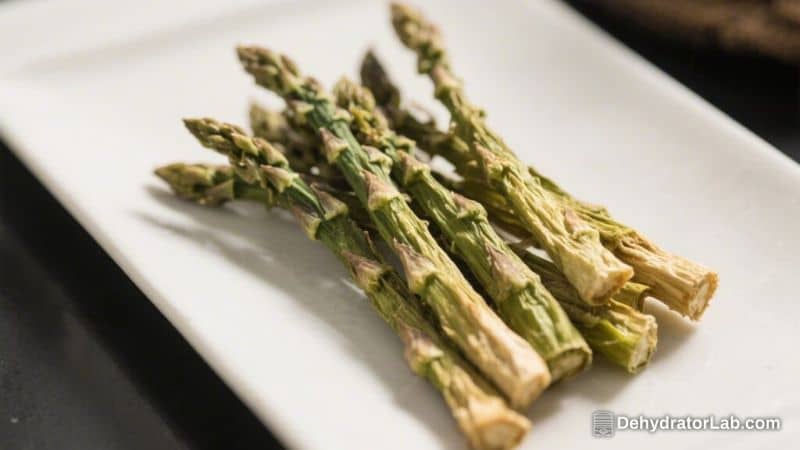
If you love asparagus and want a way to enjoy it long after spring, dehydrated asparagus spears are a smart, tasty option. They turn tender stalks into crisp, savory bites that keep for months. You can use them as a snack, an easy side, or toss them into soups and pastas for quick meals.
With just a few ingredients and a dehydrator or oven, you’ll have a pantry-friendly staple that’s light, crunchy, and full of flavor.
In this article:
What Makes This Recipe So Good
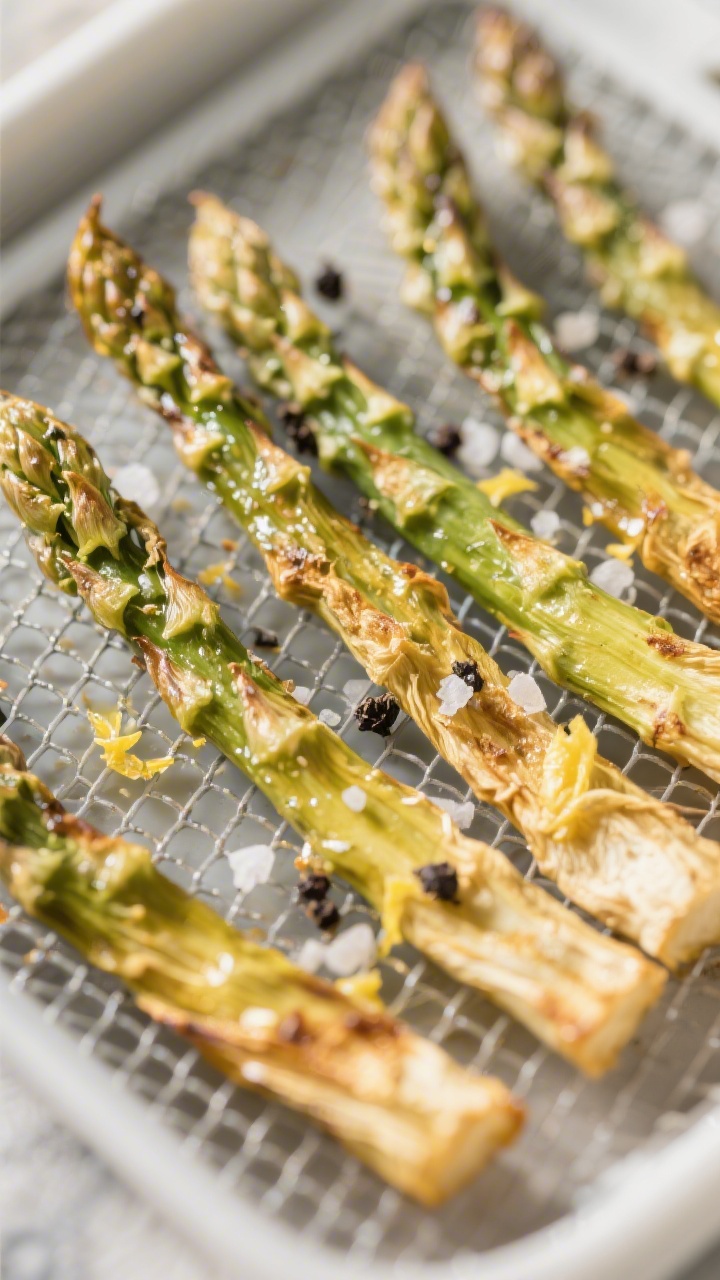
- Great texture: Drying pulls out the moisture and concentrates the asparagus flavor, leaving you with crisp spears or snappy chips.
- Saves money and waste: Dehydrate a big bunch while it’s in season, and avoid limp spears going bad in the fridge.
- Versatile: Enjoy as a snack, grind into a powder for seasoning, or rehydrate for quick sides and soups.
- Simple ingredients: Just asparagus, a little oil, and basic seasonings. That’s it.
- Travel-friendly: Lightweight, no refrigeration needed, and perfect for hiking or lunch boxes.
What You’ll Need
- Fresh asparagus: 1 to 2 pounds, preferably medium-thick spears for even drying.
- Olive oil: 1 to 2 teaspoons, optional for flavor and seasoning adhesion.
- Salt: Fine sea salt or kosher salt, to taste.
- Black pepper: Freshly ground, to taste.
- Optional seasonings: Garlic powder, lemon zest, smoked paprika, crushed red pepper, or Parmesan (finely grated).
- Lemon juice: Optional, for a quick blanching acid boost.
- Equipment: Dehydrator with mesh trays, or a baking sheet and oven; knife and cutting board; large bowl; clean kitchen towel; airtight containers or vacuum bags.
How to Make It
- Select good asparagus. Choose firm, bright green spears with tight tips. Medium-thick stalks dry more evenly than very thin or extra thick ones.
- Wash and trim. Rinse well and snap off the woody ends.
Pat dry thoroughly so excess water doesn’t slow down the drying process.
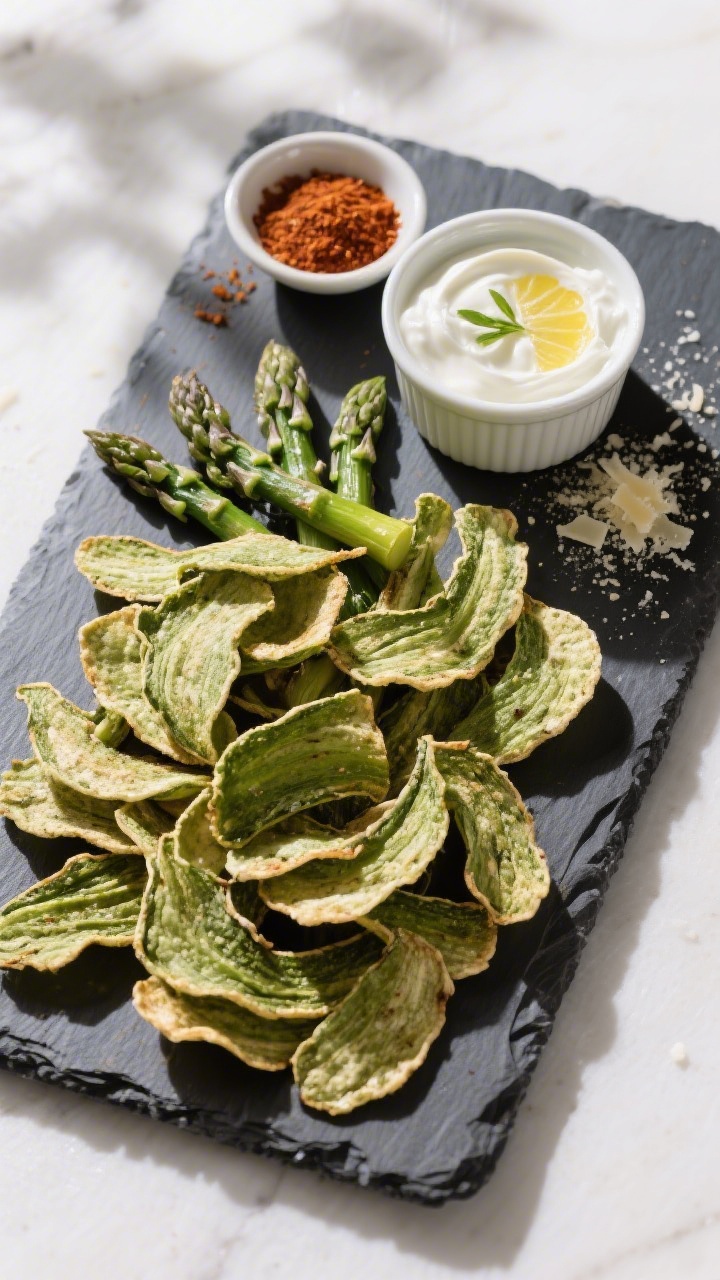
- Decide on shape. Leave spears whole for a striking look, or cut into 1- to 2-inch pieces for easier snacking and faster drying. For “chips,” use a sharp knife or mandoline to slice on a bias, about 1/8 to 1/4 inch thick.
- Optional blanch. For brighter color and slightly softer rehydration, blanch asparagus in boiling water for 1 to 2 minutes, then shock in ice water and dry well. Add a squeeze of lemon juice to the blanching water for color retention.
Skipping this step yields a slightly earthier flavor and deeper green.
- Season lightly. Toss asparagus with a small amount of olive oil—just enough to coat—and season with salt and pepper. Add any optional spices. Go easy on the salt; dehydration concentrates flavors.
- Arrange on trays. Spread in a single layer on dehydrator trays or parchment-lined baking sheets.
Leave space between pieces for airflow.
- Dehydrate.
- Dehydrator: Set to 125°F to 135°F (52°C to 57°C). Dry for 6 to 10 hours for pieces, 8 to 14 hours for whole spears, depending on thickness and humidity.
- Oven: Set to the lowest temperature (usually 170°F/75°C). Prop the door open slightly with a wooden spoon for airflow.
Check frequently; drying time ranges from 3 to 6 hours for pieces, longer for whole spears.
- Check for doneness. Spears should feel completely dry and snap cleanly. No tackiness or sponginess. If in doubt, dry a bit longer.
- Condition the batch.</-strong> Let cool, then place the dried asparagus in a loosely filled jar for 5 to 7 days, shaking daily.
If you see condensation or clumps, return to the dehydrator to remove remaining moisture.
- Store. Once conditioned, move to airtight containers, jars with tight lids, or vacuum bags. Label with the date.
Keeping It Fresh
- Cool, dark, dry: Store jars in a pantry or cupboard away from heat and light to protect color and flavor.
- Airtight matters: Oxygen speeds up staling. Use well-sealed containers, and consider oxygen absorbers for long-term storage.
- Use within 6 to 12 months: Quality is best in the first year, though safe longer if properly dried and stored.
- Freeze for extra insurance: For very long storage, keep vacuum-sealed bags in the freezer.
Texture holds up, and flavor stays bright.
Health Benefits
- Nutrient-dense: Asparagus is rich in folate, vitamin K, and fiber. Drying concentrates these nutrients by weight, though heat-sensitive vitamins may decline slightly.
- Low calorie, high fiber: A crunchy, satisfying snack without heavy calories. Fiber supports digestion and helps you feel full.
- Prebiotic boost: Asparagus contains inulin, a prebiotic that supports healthy gut bacteria.
- No additives needed: You control the salt and seasonings.
Keep it simple for a clean, whole-food snack.
Common Mistakes to Avoid
- Overcrowding the tray: Poor airflow slows drying and causes uneven results. Space pieces apart.
- Skipping the condition step: Even if the spears seem dry, conditioning catches hidden moisture and prevents spoilage.
- Too much oil or salt: Excess oil can make pieces soft and rancid over time. Heavy salt becomes overpowering after dehydration.
- High oven heat: Temperatures above 170°F/75°C can cook rather than dry the asparagus, leading to a brittle exterior and chewy interior.
- Not checking thickness: Mixed sizes dry at different speeds.
Keep pieces uniform for best texture.
Alternatives
- Flavor twists: Try lemon pepper, everything bagel seasoning, curry powder, or a light dusting of Parmesan. Add spices after blanching and drying the surface well.
- Oil-free version: Skip the oil and use only dry seasonings. The result is ultra-light and shelf-stable longer.
- Powdered asparagus: Blend fully dried pieces into a powder and use to season eggs, sauces, dips, or popcorn.
Store powder airtight to avoid clumping.
- Mixed veg medley: Dehydrate asparagus with sliced carrots, bell peppers, and zucchini for a colorful trail mix. Season each vegetable lightly and dry them separately for best control, then combine.
- Quick rehydration: For sides, soak dried spears in hot broth or water for 10 to 20 minutes, then sauté with butter, garlic, and lemon.
FAQ
Do I need to blanch the asparagus first?
Blanching is optional. It helps lock in color and gives a slightly better texture after rehydration, but you can skip it for a deeper, more concentrated flavor and slightly darker green.
How do I know when the asparagus is fully dehydrated?
Pieces should be crisp and snap cleanly.
No rubbery bend or tacky feel. If you’re unsure, dry for another 30 to 60 minutes and test again.
Can I dehydrate asparagus in the oven?
Yes. Use the lowest setting and prop the door open a crack to let moisture escape.
Rotate trays for even drying and check often to prevent over-browning.
How long will dehydrated asparagus last?
Stored airtight in a cool, dark place, it keeps well for 6 to 12 months. For longer storage, vacuum-seal and freeze.
What’s the best way to rehydrate?
Cover with hot water or broth and soak 10 to 20 minutes, depending on thickness. Drain, then use in sautés, pastas, omelets, or soups.
Why does my asparagus turn brown when dehydrating?
Heat or oxidation can cause browning.
Blanch briefly with a bit of lemon in the water, dry at a low temperature, and store away from light to keep color brighter.
Can I use frozen asparagus?
You can. Thaw, pat very dry, and dehydrate. Frozen spears are usually pre-blanched, which helps, but texture may be slightly softer after rehydration.
In Conclusion
Dehydrated asparagus spears are an easy way to stretch seasonal produce into year-round snacks and quick meals.
With minimal prep and simple seasoning, you’ll get crisp, flavorful bites that store beautifully. Keep a jar on hand for snacking, grind some into a savory powder, and tuck a bag into your pantry for fast weeknight sides. It’s a small effort that pays off every time you want something green, bright, and ready to go.
Dehydrated Asparagus Spears – Simple, Crisp, and Snackable
Ingredients
- Fresh asparagus: 1 to 2 pounds, preferably medium-thick spears for even drying.
- Olive oil: 1 to 2 teaspoons, optional for flavor and seasoning adhesion.
- Salt: Fine sea salt or kosher salt, to taste.
- Black pepper: Freshly ground, to taste.
- Optional seasonings: Garlic powder, lemon zest, smoked paprika, crushed red pepper, or Parmesan (finely grated).
- Lemon juice: Optional, for a quick blanching acid boost.
- Equipment: Dehydrator with mesh trays, or a baking sheet and oven; knife and cutting board; large bowl; clean kitchen towel; airtight containers or vacuum bags.
Instructions
- Select good asparagus. Choose firm, bright green spears with tight tips. Medium-thick stalks dry more evenly than very thin or extra thick ones.
- Wash and trim. Rinse well and snap off the woody ends.Pat dry thoroughly so excess water doesn’t slow down the drying process.
- Decide on shape. Leave spears whole for a striking look, or cut into 1- to 2-inch pieces for easier snacking and faster drying. For “chips,” use a sharp knife or mandoline to slice on a bias, about 1/8 to 1/4 inch thick.
- Optional blanch. For brighter color and slightly softer rehydration, blanch asparagus in boiling water for 1 to 2 minutes, then shock in ice water and dry well. Add a squeeze of lemon juice to the blanching water for color retention.Skipping this step yields a slightly earthier flavor and deeper green.
- Season lightly. Toss asparagus with a small amount of olive oil—just enough to coat—and season with salt and pepper. Add any optional spices. Go easy on the salt; dehydration concentrates flavors.
- Arrange on trays. Spread in a single layer on dehydrator trays or parchment-lined baking sheets.Leave space between pieces for airflow.
- Dehydrate. Dehydrator: Set to 125°F to 135°F (52°C to 57°C). Dry for 6 to 10 hours for pieces, 8 to 14 hours for whole spears, depending on thickness and humidity.
- Oven: Set to the lowest temperature (usually 170°F/75°C). Prop the door open slightly with a wooden spoon for airflow.Check frequently; drying time ranges from 3 to 6 hours for pieces, longer for whole spears.
- Check for doneness. Spears should feel completely dry and snap cleanly. No tackiness or sponginess. If in doubt, dry a bit longer.
- Condition the batch. Let cool, then place the dried asparagus in a loosely filled jar for 5 to 7 days, shaking daily.If you see condensation or clumps, return to the dehydrator to remove remaining moisture.
- Store. Once conditioned, move to airtight containers, jars with tight lids, or vacuum bags. Label with the date.
Printable Recipe Card
Want just the essential recipe details without scrolling through the article? Get our printable recipe card with just the ingredients and instructions.