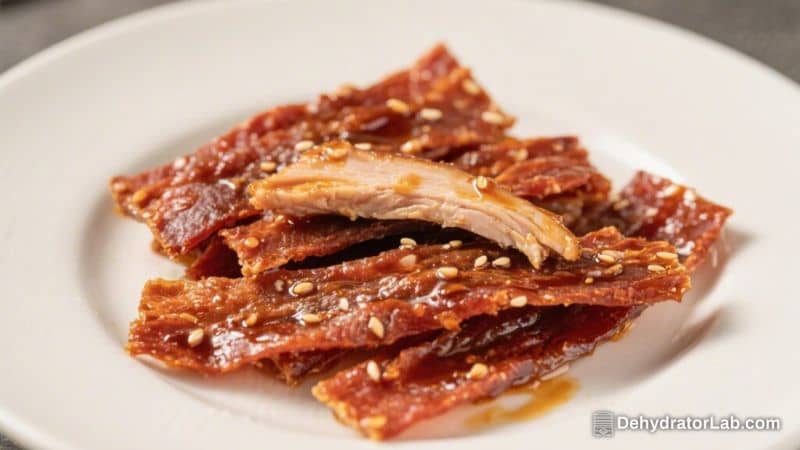
If you love jerky but want something lighter and faster than beef, this air fryer teriyaki turkey jerky hits the sweet spot. It’s chewy, savory, and just a little sticky from a glossy teriyaki glaze. The air fryer keeps the process simple and mess-free, and you can customize the flavor to your taste.
Whether you need a high-protein snack for the week or a road trip treat, this homemade version tastes better than store-bought and costs less, too.
In this article:
What Makes This Special
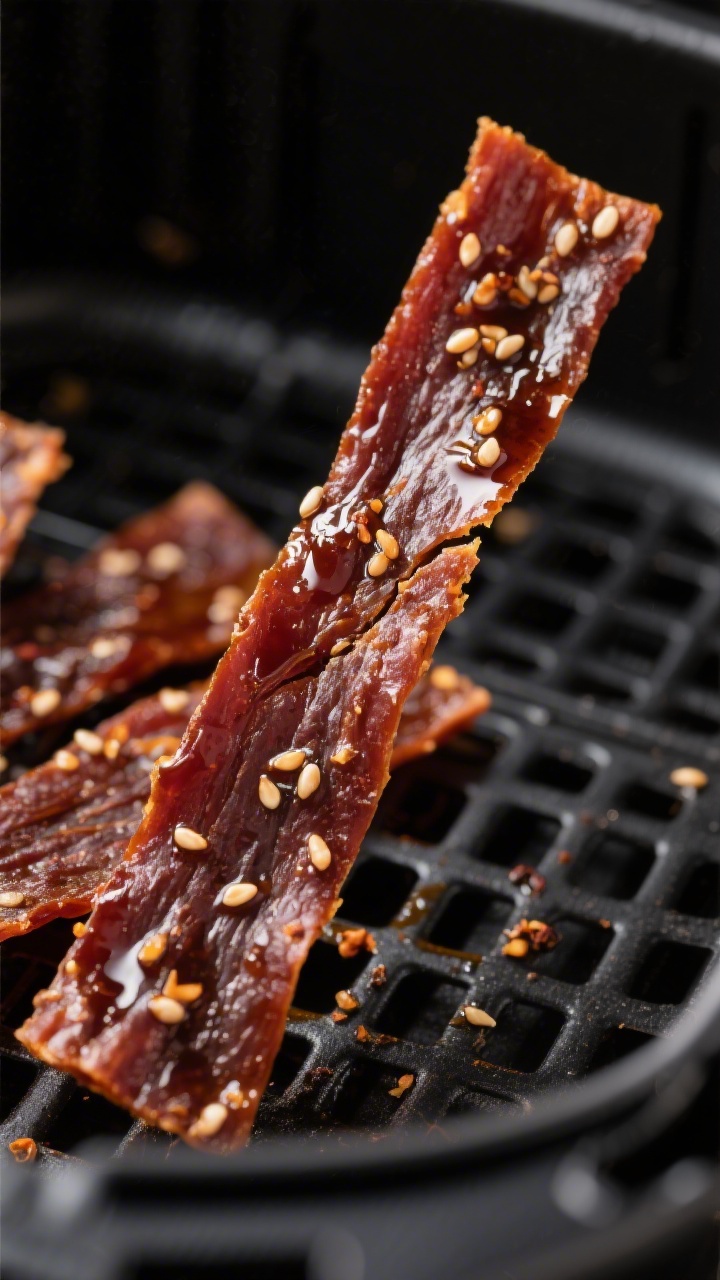
This jerky keeps the classic teriyaki flavor—ginger, garlic, soy, and a hint of sweetness—without the heaviness. Because it’s turkey breast, it’s naturally lean and high in protein. The air fryer cuts the time way down compared to a traditional dehydrator, and cleanup is easy.
You control the ingredients, so you can make it as sweet, salty, or spicy as you like. Plus, the texture is spot-on: tender-chewy, not brittle.
Shopping List
- Turkey: 1.5–2 pounds turkey breast or turkey tenderloins, very lean, trimmed of fat
- Soy sauce or tamari: 1/2 cup (use low-sodium to control salt)
- Pineapple juice or apple juice: 1/3 cup (adds sweetness and a touch of tang)
- Brown sugar or honey: 2–3 tablespoons
- Rice vinegar: 1 tablespoon
- Sesame oil: 1 teaspoon
- Garlic: 3 cloves, minced (or 1 teaspoon garlic powder)
- Fresh ginger: 1 tablespoon grated (or 1 teaspoon ground ginger)
- Black pepper: 1/2 teaspoon
- Red pepper flakes or sriracha: optional, to taste
- Onion powder: 1/2 teaspoon (optional)
- Cornstarch: 1 teaspoon (optional, for a light glaze)
- Sesame seeds: optional, for finishing
- Cooking spray: for the air fryer basket or racks
Instructions
- Partially freeze the turkey for slicing. Place the turkey in the freezer for 45–60 minutes until firm but not solid. This makes it easier to cut thin, even slices.
- Make the teriyaki marinade. In a bowl, whisk soy sauce, pineapple juice, brown sugar, rice vinegar, sesame oil, garlic, ginger, black pepper, and red pepper flakes.
Taste and adjust sweetness or heat. It should be savory with a gentle sweet finish.
- Slice the turkey thinly. Using a sharp knife, slice against the grain into 1/8–1/4 inch thick strips. Thinner slices dry faster and stay more tender.
- Marinate. Add the turkey strips to the marinade, ensuring everything is coated.
Cover and refrigerate 6–12 hours. Overnight marinating gives the best flavor.
- Drain and pat dry. Remove turkey from the marinade and pat each strip dry with paper towels. This step is key for proper drying and browning.
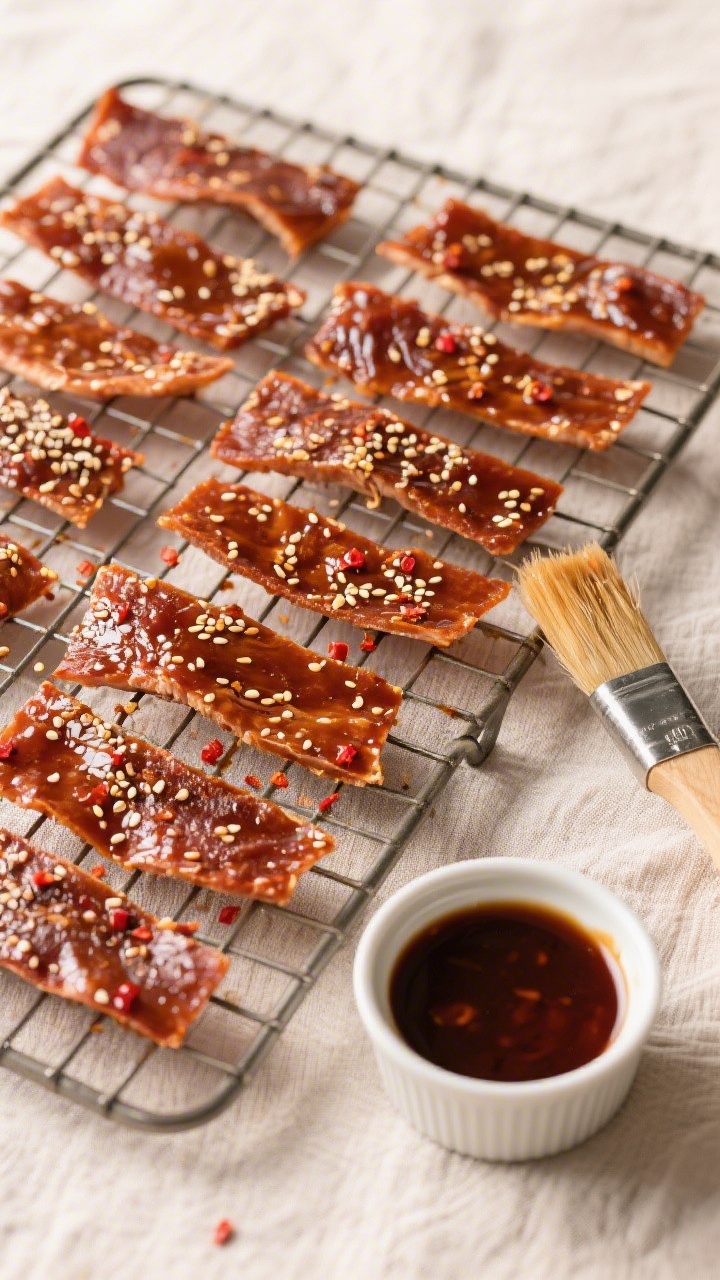
- Optional quick glaze. For a slightly glossy finish, simmer the leftover marinade in a small saucepan for 3–4 minutes to reduce, then whisk in 1 teaspoon cornstarch dissolved in 1 teaspoon water. Cook 30–60 seconds until lightly thickened. Set aside.
- Preheat the air fryer to 180–200°F (80–95°C). If your air fryer doesn’t go that low, use the lowest setting and prop the lid or door slightly ajar if your model allows, or run shorter cycles to avoid cooking instead of drying.
- Arrange the turkey. Lightly spray the basket or racks.
Lay slices in a single layer without overlapping. Work in batches if needed.
- Air fry to dehydrate. Cook at 180–200°F for 2–3 hours, flipping every 30–45 minutes. Rotate racks if your air fryer has multiple levels. Check for doneness at the 2-hour mark: the jerky should be dry on the surface, darker in color, and bendy with a slight crack but not snap.
- Optional finish with glaze. In the last 10 minutes, brush a thin layer of the reduced marinade on the strips for extra shine and flavor.
Don’t overdo it or the jerky will get sticky.
- Cool and condition. Let jerky cool completely on a rack. Place in a loosely covered container for 24 hours, shaking once or twice. Conditioning helps distribute remaining moisture so all pieces have the same texture.
- Store properly. Transfer to airtight containers or vacuum-seal for longer storage.
How to Store
- Room temperature: Up to 1 week in an airtight jar or bag, kept in a cool, dark spot. Use oxygen absorbers for best results.
- Refrigerator: 2–3 weeks.
Keep the container sealed and remove as much air as possible after each use.
- Freezer: 2–3 months. For best texture, vacuum-seal or double-bag and thaw in the fridge.
- Check for moisture: If you see condensation in the container, return the jerky to the air fryer at low temp for 15–20 minutes to dry further.
Benefits of This Recipe
- Lean protein: Turkey breast keeps calories and fat in check while delivering a satisfying chew.
Faster than traditional methods:
- Customizable flavor: Adjust sweetness, spice, and salt to match your taste or dietary needs.
- Meal prep friendly: Make a large batch for snacks, hikes, or quick post-workout bites.
- Budget-conscious: Whole turkey breast often costs less than prepackaged jerky per ounce.
Pitfalls to Watch Out For
- Slicing too thick: Thick pieces can turn tough outside and under-dried inside. Aim for 1/8–1/4 inch.
- Skipping the pat-dry step: Excess surface moisture slows drying and can lead to a steamed texture.
- Temperature too high: If you cook at 250°F or above, the meat can harden before it fully dries.
- Overcrowding: Overlapping slices trap steam and cause uneven results.
Keep a single layer.
- Too much sugar: A very sweet marinade can make the jerky sticky and burn-prone. Balance with soy and vinegar.
Alternatives
- Different proteins: Try chicken breast, eye of round beef, or venison. Adjust time based on thickness and fat content.
- Sweeteners: Swap brown sugar for honey, maple syrup, or coconut sugar.
Reduce amounts if you prefer a drier finish.
- Gluten-free: Use tamari or coconut aminos. Note that coconut aminos are sweeter and less salty; reduce added sugar.
- Spice profiles: Add gochugaru for a Korean twist, a splash of mirin for classic teriyaki depth, or smoked paprika for a subtle smokiness.
- No soy: Combine coconut aminos with a dash of fish sauce and rice vinegar for savory depth.
Can I make this without marinating overnight?
You can, but the flavor won’t penetrate as deeply. If you’re short on time, marinate at least 2–3 hours and slice the turkey thinner.
Brushing with the reduced glaze near the end helps boost flavor.
How do I know when the jerky is done?
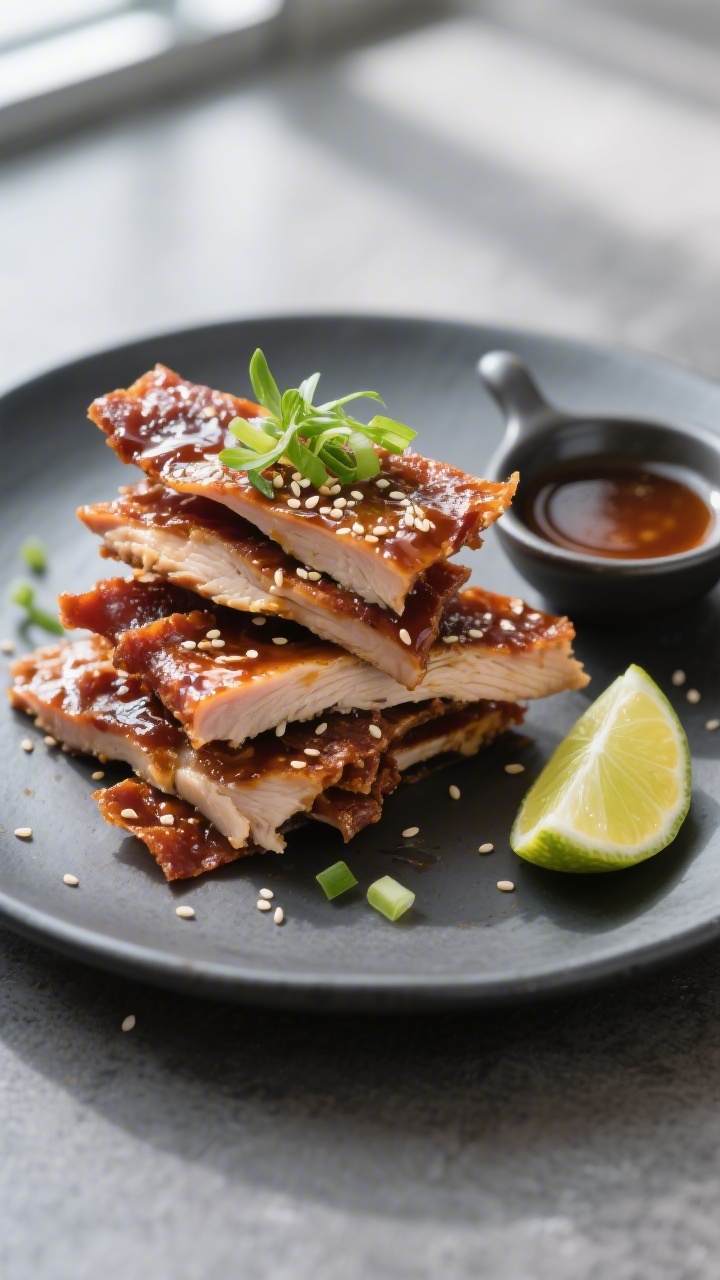
It should be dry to the touch and darkened, but still bend without snapping. When you bend a piece, you should see fine fibers and maybe a slight crack, not a clean break. If it snaps, it’s over-dried.
What if my air fryer’s lowest temp is 300°F?
Use short cycles: run 5–7 minutes, pause 5 minutes with the basket pulled out to vent, and repeat, flipping often.
It takes attention but can work. Alternatively, use your oven on its lowest setting with the door slightly ajar.
Is it safe to use the leftover marinade as a glaze?
Yes, as long as you boil it for several minutes to kill any bacteria, then thicken if desired. Never brush raw marinade on cooked jerky without cooking it first.
Can I make it completely sugar-free?
Yes, but the texture will be drier and less glossy.
Replace the sugar with a non-sugar sweetener that can handle heat, or skip sweeteners and rely on soy, ginger, garlic, and pepper for flavor.
How thin should I slice the turkey?
Aim for 1/8–1/4 inch. Thinner slices finish faster and are more tender-chewy. Even thickness is more important than exact measurement for consistent drying.
Do I need curing salt?
Not for quick, refrigerated jerky. If you plan to store at room temperature for longer than a week, consider using a small amount of Prague Powder #1 according to package directions, and always follow safe handling practices.
In Conclusion
Air fryer teriyaki turkey jerky brings big flavor, lean protein, and simple prep together in a snack that feels special.
With a smart marinade, low-temp drying, and a quick optional glaze, you get that classic jerky chew without fuss. Make a batch on the weekend, and you’ll have a reliable, tasty bite ready for busy days, hikes, or road trips. Once you nail your preferred sweetness and spice, this will become a go-to recipe you’ll make on repeat.
Air Fryer Teriyaki Turkey Jerky – Lean, Flavorful, and Easy
Ingredients
- Turkey: 1.5–2 pounds turkey breast or turkey tenderloins, very lean, trimmed of fat
- Soy sauce or tamari: 1/2 cup (use low-sodium to control salt)
- Pineapple juice or apple juice: 1/3 cup (adds sweetness and a touch of tang)
- Brown sugar or honey: 2–3 tablespoons
- Rice vinegar: 1 tablespoon
- Sesame oil: 1 teaspoon
- Garlic: 3 cloves, minced (or 1 teaspoon garlic powder)
- Fresh ginger: 1 tablespoon grated (or 1 teaspoon ground ginger)
- Black pepper: 1/2 teaspoon
- Red pepper flakes or sriracha: optional, to taste
- Onion powder: 1/2 teaspoon (optional)
- Cornstarch: 1 teaspoon (optional, for a light glaze)
- Sesame seeds: optional, for finishing
- Cooking spray: for the air fryer basket or racks
Instructions
- Partially freeze the turkey for slicing. Place the turkey in the freezer for 45–60 minutes until firm but not solid. This makes it easier to cut thin, even slices.
- Make the teriyaki marinade. In a bowl, whisk soy sauce, pineapple juice, brown sugar, rice vinegar, sesame oil, garlic, ginger, black pepper, and red pepper flakes.Taste and adjust sweetness or heat. It should be savory with a gentle sweet finish.
- Slice the turkey thinly. Using a sharp knife, slice against the grain into 1/8–1/4 inch thick strips. Thinner slices dry faster and stay more tender.
- Marinate. Add the turkey strips to the marinade, ensuring everything is coated.Cover and refrigerate 6–12 hours. Overnight marinating gives the best flavor.
- Drain and pat dry. Remove turkey from the marinade and pat each strip dry with paper towels. This step is key for proper drying and browning.
- Optional quick glaze. For a slightly glossy finish, simmer the leftover marinade in a small saucepan for 3–4 minutes to reduce, then whisk in 1 teaspoon cornstarch dissolved in 1 teaspoon water. Cook 30–60 seconds until lightly thickened. Set aside.
- Preheat the air fryer to 180–200°F (80–95°C). If your air fryer doesn’t go that low, use the lowest setting and prop the lid or door slightly ajar if your model allows, or run shorter cycles to avoid cooking instead of drying.
- Arrange the turkey. Lightly spray the basket or racks.Lay slices in a single layer without overlapping. Work in batches if needed.
- Air fry to dehydrate. Cook at 180–200°F for 2–3 hours, flipping every 30–45 minutes. Rotate racks if your air fryer has multiple levels. Check for doneness at the 2-hour mark: the jerky should be dry on the surface, darker in color, and bendy with a slight crack but not snap.
- Optional finish with glaze. In the last 10 minutes, brush a thin layer of the reduced marinade on the strips for extra shine and flavor.Don’t overdo it or the jerky will get sticky.
- Cool and condition. Let jerky cool completely on a rack. Place in a loosely covered container for 24 hours, shaking once or twice. Conditioning helps distribute remaining moisture so all pieces have the same texture.
- Store properly. Transfer to airtight containers or vacuum-seal for longer storage.
Printable Recipe Card
Want just the essential recipe details without scrolling through the article? Get our printable recipe card with just the ingredients and instructions.