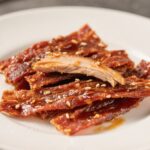
Air Fryer Teriyaki Turkey Jerky - Lean, Flavorful, and Easy
Servings 8 servings
Ingredients
- Turkey: 1.5–2 pounds turkey breast or turkey tenderloins, very lean, trimmed of fat
- Soy sauce or tamari: 1/2 cup (use low-sodium to control salt)
- Pineapple juice or apple juice: 1/3 cup (adds sweetness and a touch of tang)
- Brown sugar or honey: 2–3 tablespoons
- Rice vinegar: 1 tablespoon
- Sesame oil: 1 teaspoon
- Garlic: 3 cloves, minced (or 1 teaspoon garlic powder)
- Fresh ginger: 1 tablespoon grated (or 1 teaspoon ground ginger)
- Black pepper: 1/2 teaspoon
- Red pepper flakes or sriracha: optional, to taste
- Onion powder: 1/2 teaspoon (optional)
- Cornstarch: 1 teaspoon (optional, for a light glaze)
- Sesame seeds: optional, for finishing
- Cooking spray: for the air fryer basket or racks
Instructions
- Partially freeze the turkey for slicing. Place the turkey in the freezer for 45–60 minutes until firm but not solid. This makes it easier to cut thin, even slices.
- Make the teriyaki marinade. In a bowl, whisk soy sauce, pineapple juice, brown sugar, rice vinegar, sesame oil, garlic, ginger, black pepper, and red pepper flakes. Taste and adjust sweetness or heat. It should be savory with a gentle sweet finish.
- Slice the turkey thinly. Using a sharp knife, slice against the grain into 1/8–1/4 inch thick strips. Thinner slices dry faster and stay more tender.
- Marinate. Add the turkey strips to the marinade, ensuring everything is coated. Cover and refrigerate 6–12 hours. Overnight marinating gives the best flavor.
- Drain and pat dry. Remove turkey from the marinade and pat each strip dry with paper towels. This step is key for proper drying and browning.
- Optional quick glaze. For a slightly glossy finish, simmer the leftover marinade in a small saucepan for 3–4 minutes to reduce, then whisk in 1 teaspoon cornstarch dissolved in 1 teaspoon water. Cook 30–60 seconds until lightly thickened. Set aside.
- Preheat the air fryer to 180–200°F (80–95°C). If your air fryer doesn’t go that low, use the lowest setting and prop the lid or door slightly ajar if your model allows, or run shorter cycles to avoid cooking instead of drying.
- Arrange the turkey. Lightly spray the basket or racks. Lay slices in a single layer without overlapping. Work in batches if needed.
- Air fry to dehydrate. Cook at 180–200°F for 2–3 hours, flipping every 30–45 minutes. Rotate racks if your air fryer has multiple levels. Check for doneness at the 2-hour mark: the jerky should be dry on the surface, darker in color, and bendy with a slight crack but not snap.
- Optional finish with glaze. In the last 10 minutes, brush a thin layer of the reduced marinade on the strips for extra shine and flavor. Don’t overdo it or the jerky will get sticky.
- Cool and condition. Let jerky cool completely on a rack. Place in a loosely covered container for 24 hours, shaking once or twice. Conditioning helps distribute remaining moisture so all pieces have the same texture.
- Store properly. Transfer to airtight containers or vacuum-seal for longer storage.