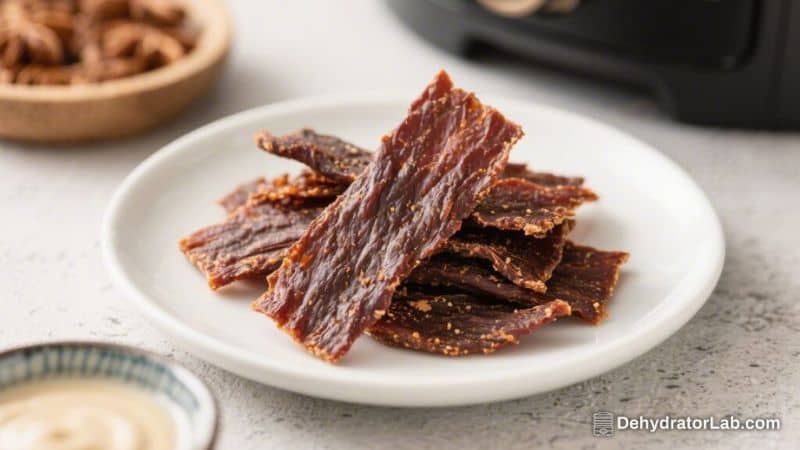
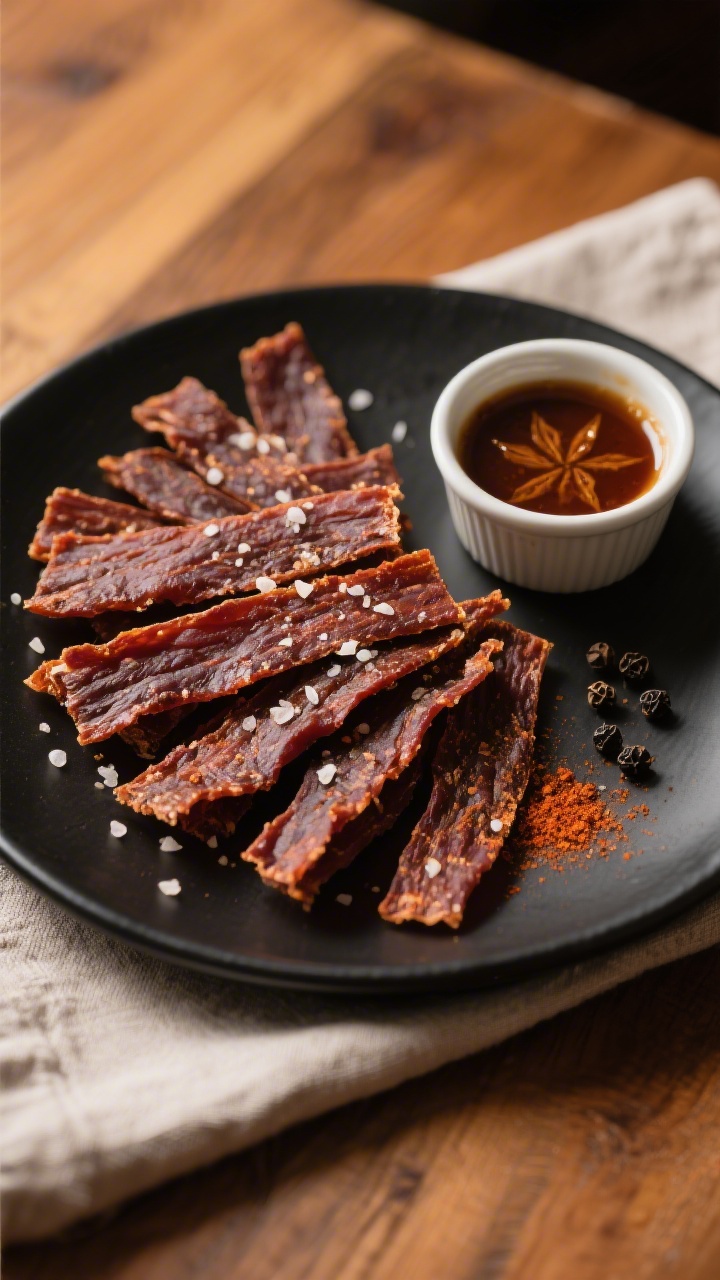
Bison jerky is meaty, bold, and surprisingly simple to make at home—especially with an air fryer. If you’re looking for a lean, protein-packed snack that doesn’t taste like a health compromise, this one checks all the boxes. The air fryer gives you quick, reliable results without babysitting the oven for hours.
You’ll get chewy, tender strips with a deep, smoky-sweet flavor and a clean finish. Once you try it, you’ll wonder why you ever bought jerky at the store.
In this article:
What Makes This Special
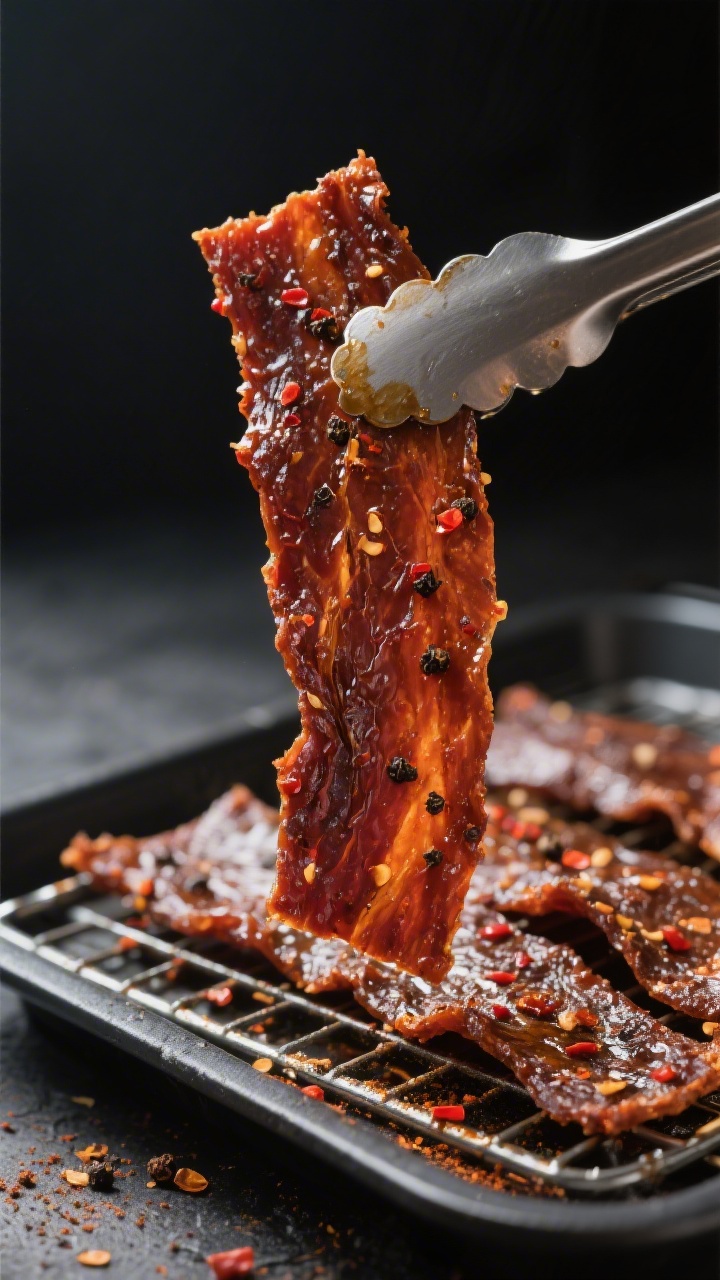
Bison is naturally leaner than beef, which makes for a cleaner-tasting jerky that isn’t greasy. It also has a slightly sweeter, richer flavor that plays well with savory marinades and a touch of heat.
Using the air fryer speeds up the process while still delivering that classic jerky chew. The marinade balances salty, sweet, tangy, and smoky notes, so every bite hits all the right spots. Best of all, you control the sodium, sugar, and spice level—no mystery ingredients.
Shopping List
- 2 pounds bison eye of round or top round (partially frozen for easy slicing)
- 1/3 cup low-sodium soy sauce or tamari (for gluten-free)
- 2 tablespoons Worcestershire sauce
- 1 tablespoon apple cider vinegar (or rice vinegar)
- 1 tablespoon maple syrup (or brown sugar)
- 1 teaspoon liquid smoke (optional but excellent)
- 1 teaspoon smoked paprika
- 1 teaspoon garlic powder
- 1 teaspoon onion powder
- 1/2 to 1 teaspoon black pepper
- 1/2 teaspoon red pepper flakes (optional, for heat)
- 1/2 teaspoon kosher salt (adjust to taste)
- Cooking spray or a small amount of neutral oil for the basket
- Paper towels (for patting dry)
- Zip-top bag or shallow dish (for marinating)
How to Make It
- Trim and chill the meat: Trim any visible fat from the bison.
Fat doesn’t dehydrate well and can cause off flavors over time. Partially freeze the meat for 60–90 minutes so it’s firm but sliceable.
- Slice thin and even: Cut the bison into 1/8- to 1/4-inch-thick strips. Slice against the grain for a more tender chew, or with the grain if you like it extra chewy.
Keep thickness consistent for even drying.
- Mix the marinade: In a bowl, combine soy sauce, Worcestershire, vinegar, maple syrup, liquid smoke, smoked paprika, garlic powder, onion powder, black pepper, red pepper flakes, and salt. Taste and adjust salt or sweetness.
- Marinate: Add the bison strips to the marinade, making sure every piece is coated. Seal and chill for 8–24 hours.
Longer equals deeper flavor.
- Prep for air frying: Drain the meat and pat very dry with paper towels. Removing surface moisture helps the jerky dry faster and prevents steaming.
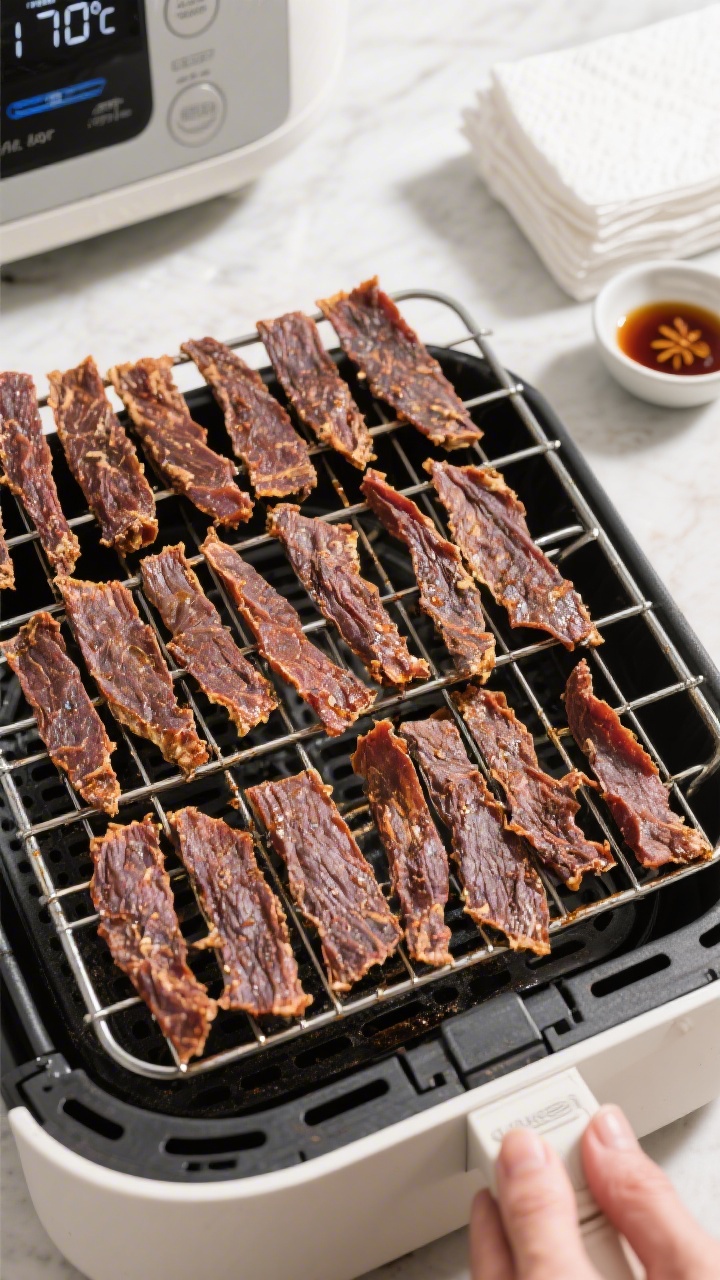
- Preheat and set up: Lightly oil or spray the air fryer basket or racks. Preheat to 170–180°F (75–82°C) or the lowest possible setting.
If your model only goes down to 200°F, we’ll adjust timing and check more frequently.
- Arrange the strips: Lay the bison in a single layer with space between pieces. Do not overlap. If you have racks, use them to increase capacity and airflow.
- Dry in batches: Air fry for 2 to 3.5 hours, flipping and rotating racks every 30–45 minutes.
At 170–180°F, start checking at the 2-hour mark. At 200°F, check at 90 minutes and monitor closely.
- Test for doneness: Jerky should be dry, darkened, and bend without snapping. When bent, it should crack slightly on the surface but not break.
If it tears or feels wet, it needs more time.
- Condition the jerky: Let the pieces cool completely on a rack. Then place them loosely in a clean jar or container for 24 hours at room temp, shaking once or twice. This helps even out residual moisture.
- Store properly: Move to airtight containers or vacuum-seal once conditioned.
See storage tips below.
Storage Instructions
- Room temperature: Up to 1 week in a cool, dry place if fully dried and conditioned.
- Refrigerator: 2–3 weeks in an airtight container or zip-top bag. Add a small food-safe desiccant packet if you have one.
- Freezer: Up to 3–4 months. Vacuum-seal for best texture and to prevent freezer burn.
- Check weekly: If you see condensation or soft spots, return the jerky to the air fryer at low temp for 15–20 minutes, cool, and recondition.
Benefits of This Recipe
- High protein, low fat: Bison is lean and nutrient-dense, making this a smart snack for workouts, hikes, and busy days.
- No additives: You control the sodium, sugar, and heat.
No preservatives or mystery flavors.
- Fast and convenient: The air fryer shortens the dehydrating time and keeps the kitchen cool.
- Customizable flavor: Tweak the marinade to suit smoky, sweet, or spicy preferences.
- Budget-friendly: Homemade jerky costs less per ounce than premium store-bought versions.
What Not to Do
- Don’t skip trimming fat: Fat turns rancid faster and ruins shelf life.
- Don’t crowd the basket: Overlapping pieces trap moisture and cause steaming instead of drying.
- Don’t rush the drying: Higher heat isn’t better; it cooks the meat instead of dehydrating it.
- Don’t store while warm: Warm jerky releases moisture in the container and encourages spoilage.
- Don’t forget to taste the marinade: Balance salt and sweet before you commit the meat.
Alternatives
- Flavor swaps: Use honey instead of maple. Add sriracha or gochujang for a spicy kick. Try a teriyaki vibe with a splash of mirin and extra ginger.
- Gluten-free: Use tamari or coconut aminos in place of soy sauce and a gluten-free Worcestershire.
- No liquid smoke: Add extra smoked paprika, or finish with a sprinkle of ground chipotle for a natural smoky note.
- Different cuts: If bison round isn’t available, use bison sirloin tip or flank.
The key is lean and well-trimmed.
- Oven method: Set the oven to its lowest temp (often 170–200°F). Place strips on wire racks over sheet pans and prop the door slightly ajar for airflow. Timing is similar.
FAQ
Do I need curing salt to make jerky safely?
No, not for short-term storage when you keep it refrigerated or frozen.
Curing salt (Prague Powder #1) adds extra protection for room-temperature storage and a classic jerky color, but it’s optional here. If you plan to keep jerky at room temp longer than a week, consider using it per package directions.
How thin should I slice the bison?
Aim for 1/8 to 1/4 inch thick. Thinner dries faster and is more tender; thicker will be chewier and take longer.
The most important thing is keeping slices consistent.
My air fryer won’t go below 200°F. Can I still make this?
Yes. Dry in shorter intervals and check early and often.
Flip every 30 minutes, and start testing at 90 minutes. Expect a slightly shorter overall time, but be careful not to cook the meat—look for pliable, dry strips that bend and lightly crack.
How do I know the jerky is done?
When a cooled piece bends and shows faint surface cracking without snapping. It should feel dry to the touch, not sticky or wet.
If it breaks cleanly, it’s over-dried; if it feels soft or spongy, keep going.
Can I reduce the sodium?
Use low-sodium soy sauce, cut the salt in half, and skip the Worcestershire if needed. Boost flavor with extra garlic, pepper, and smoked paprika to keep it tasty.
Is bison gamey?
Good-quality bison is mild, clean, and slightly sweet. Any strong flavor often comes from fat or poor handling.
Trimming well and using a balanced marinade keeps it pleasantly bold, not gamey.
Can I use frozen bison?
Yes. Thaw it in the fridge until mostly defrosted but still firm. Partially frozen meat is actually easier to slice thin and even.
Why “condition” the jerky after drying?
Conditioning equalizes moisture between pieces, so you don’t have some strips that are too wet while others are brittle.
It helps prevent mold and improves shelf life and texture.
What’s the best way to pack jerky for hiking?
Use small, airtight bags or vacuum-sealed pouches with desiccant packs. Keep portions modest so you only open what you’ll eat that day. If it’s hot out, stash it in an insulated pocket.
Can I sweeten it without sugar?
Maple and honey are the most natural options, but you can also use a small amount of zero-calorie sweetener if you prefer.
Keep sweetness light—just enough to balance the salt and smoke.
Final Thoughts
Air fryer bison jerky is lean, bold, and easy to pull off at home. With a smart marinade and low, steady heat, you get classic jerky texture in a fraction of the time. Keep the slices even, don’t rush the drying, and give it a day to condition—it’s worth it.
Make a big batch, stash some in the freezer, and you’ll always have a clean, satisfying snack ready to go.
Air Fryer Bison Jerky – Lean, Flavorful, and Fast
Ingredients
- 2 pounds bison eye of round or top round (partially frozen for easy slicing)
- 1/3 cup low-sodium soy sauce or tamari (for gluten-free)
- 2 tablespoons Worcestershire sauce
- 1 tablespoon apple cider vinegar (or rice vinegar)
- 1 tablespoon maple syrup (or brown sugar)
- 1 teaspoon liquid smoke (optional but excellent)
- 1 teaspoon smoked paprika
- 1 teaspoon garlic powder
- 1 teaspoon onion powder
- 1/2 to 1 teaspoon black pepper
- 1/2 teaspoon red pepper flakes (optional, for heat)
- 1/2 teaspoon kosher salt (adjust to taste)
- Cooking spray or a small amount of neutral oil for the basket
- Paper towels (for patting dry)
- Zip-top bag or shallow dish (for marinating)
Instructions
- Trim and chill the meat: Trim any visible fat from the bison.Fat doesn’t dehydrate well and can cause off flavors over time. Partially freeze the meat for 60–90 minutes so it’s firm but sliceable.
- Slice thin and even: Cut the bison into 1/8- to 1/4-inch-thick strips. Slice against the grain for a more tender chew, or with the grain if you like it extra chewy.Keep thickness consistent for even drying.
- Mix the marinade: In a bowl, combine soy sauce, Worcestershire, vinegar, maple syrup, liquid smoke, smoked paprika, garlic powder, onion powder, black pepper, red pepper flakes, and salt. Taste and adjust salt or sweetness.
- Marinate: Add the bison strips to the marinade, making sure every piece is coated. Seal and chill for 8–24 hours.Longer equals deeper flavor.
- Prep for air frying: Drain the meat and pat very dry with paper towels. Removing surface moisture helps the jerky dry faster and prevents steaming.
- Preheat and set up: Lightly oil or spray the air fryer basket or racks. Preheat to 170–180°F (75–82°C) or the lowest possible setting.If your model only goes down to 200°F, we’ll adjust timing and check more frequently.
- Arrange the strips: Lay the bison in a single layer with space between pieces. Do not overlap. If you have racks, use them to increase capacity and airflow.
- Dry in batches: Air fry for 2 to 3.5 hours, flipping and rotating racks every 30–45 minutes.At 170–180°F, start checking at the 2-hour mark. At 200°F, check at 90 minutes and monitor closely.
- Test for doneness: Jerky should be dry, darkened, and bend without snapping. When bent, it should crack slightly on the surface but not break.If it tears or feels wet, it needs more time.
- Condition the jerky: Let the pieces cool completely on a rack. Then place them loosely in a clean jar or container for 24 hours at room temp, shaking once or twice. This helps even out residual moisture.
- Store properly: Move to airtight containers or vacuum-seal once conditioned.See storage tips below.
Printable Recipe Card
Want just the essential recipe details without scrolling through the article? Get our printable recipe card with just the ingredients and instructions.