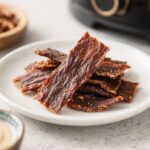
Air Fryer Bison Jerky - Lean, Flavorful, and Fast
Servings 8 servings
Ingredients
- 2 pounds bison eye of round or top round (partially frozen for easy slicing)
- 1/3 cup low-sodium soy sauce or tamari (for gluten-free)
- 2 tablespoons Worcestershire sauce
- 1 tablespoon apple cider vinegar (or rice vinegar)
- 1 tablespoon maple syrup (or brown sugar)
- 1 teaspoon liquid smoke (optional but excellent)
- 1 teaspoon smoked paprika
- 1 teaspoon garlic powder
- 1 teaspoon onion powder
- 1/2 to 1 teaspoon black pepper
- 1/2 teaspoon red pepper flakes (optional, for heat)
- 1/2 teaspoon kosher salt (adjust to taste)
- Cooking spray or a small amount of neutral oil for the basket
- Paper towels (for patting dry)
- Zip-top bag or shallow dish (for marinating)
Instructions
- Trim and chill the meat: Trim any visible fat from the bison. Fat doesn’t dehydrate well and can cause off flavors over time. Partially freeze the meat for 60–90 minutes so it’s firm but sliceable.
- Slice thin and even: Cut the bison into 1/8- to 1/4-inch-thick strips. Slice against the grain for a more tender chew, or with the grain if you like it extra chewy. Keep thickness consistent for even drying.
- Mix the marinade: In a bowl, combine soy sauce, Worcestershire, vinegar, maple syrup, liquid smoke, smoked paprika, garlic powder, onion powder, black pepper, red pepper flakes, and salt. Taste and adjust salt or sweetness.
- Marinate: Add the bison strips to the marinade, making sure every piece is coated. Seal and chill for 8–24 hours. Longer equals deeper flavor.
- Prep for air frying: Drain the meat and pat very dry with paper towels. Removing surface moisture helps the jerky dry faster and prevents steaming.
- Preheat and set up: Lightly oil or spray the air fryer basket or racks. Preheat to 170–180°F (75–82°C) or the lowest possible setting. If your model only goes down to 200°F, we’ll adjust timing and check more frequently.
- Arrange the strips: Lay the bison in a single layer with space between pieces. Do not overlap. If you have racks, use them to increase capacity and airflow.
- Dry in batches: Air fry for 2 to 3.5 hours, flipping and rotating racks every 30–45 minutes. At 170–180°F, start checking at the 2-hour mark. At 200°F, check at 90 minutes and monitor closely.
- Test for doneness: Jerky should be dry, darkened, and bend without snapping. When bent, it should crack slightly on the surface but not break. If it tears or feels wet, it needs more time.
- Condition the jerky: Let the pieces cool completely on a rack. Then place them loosely in a clean jar or container for 24 hours at room temp, shaking once or twice. This helps even out residual moisture.
- Store properly: Move to airtight containers or vacuum-seal once conditioned. See storage tips below.