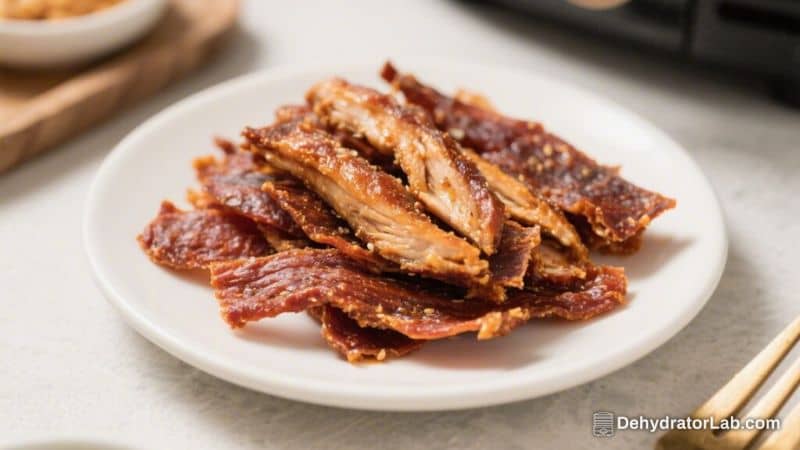
If you love chewy, savory snacks with a deep smoky kick, this Air Fryer Smoky Chicken Jerky will be your new favorite. It’s tender, protein-packed, and surprisingly easy to make at home. You don’t need a dehydrator or any special gear—just your air fryer and a few pantry staples.
The result is a satisfying, portable snack that works for hikes, work breaks, or post-workout fuel. Once you try it, you’ll wonder why you ever bought store-bought jerky.
In this article:
TL;DR: Key Takeaways
- 🐔 Partially freeze chicken breast for 45–60 minutes before slicing thin (1/8–1/4 inch) against the grain for tender jerky.
- 🌡️ Marinate 4+ hours, then air fry at 180–190°F (82–88°C) for 2.5–4 hours, flipping every 45–60 minutes.
- 🌡️ Because chicken is poultry, bring strips to 165°F (74°C) internal at some point during the process for food safety.
- ✅ Done when dry, darkened, and flexible — a strip should crack slightly when bent but not snap clean in half.
Why This Recipe Works
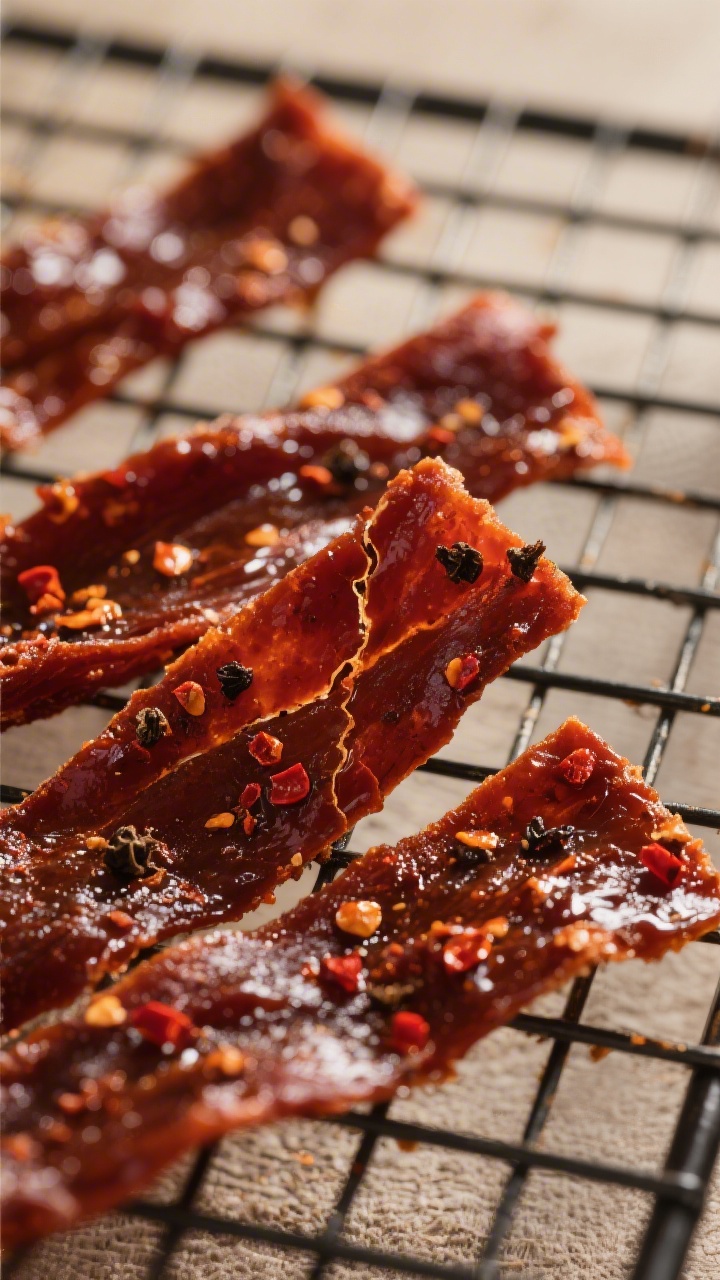
This method keeps chicken breast juicy while drying it into a classic jerky texture. The air fryer maintains steady, low heat and strong airflow, which helps remove moisture quickly and evenly.
The marinade adds layers of flavor—smoky, salty, slightly sweet—without overpowering the meat. A brief partial freeze helps you slice the chicken thinly and evenly, which is the key to consistent drying and great texture. And because you control the ingredients, it’s cleaner and lighter than most commercial options.
Shopping List
- Chicken: 1.5–2 pounds boneless, skinless chicken breasts
- Low-sodium soy sauce (or tamari for gluten-free)
- Worcestershire sauce
- Liquid smoke (hickory or applewood)
- Brown sugar or maple syrup
- Smoked paprika
- Garlic powder
- Onion powder
- Black pepper
- Red pepper flakes (optional, for heat)
- Apple cider vinegar or rice vinegar
- Olive oil (just a touch, optional)
- Nonstick spray for the air fryer basket
- Paper towels for blotting
- Zip-top bag or shallow dish for marinating
Step-by-Step Instructions
- Partially freeze the chicken. Place chicken breasts on a plate and freeze for 45–60 minutes.
This firms them up so you can slice thin, even pieces without shredding.
- Make the marinade. In a bowl, combine 1/3 cup low-sodium soy sauce, 1 tablespoon Worcestershire, 1 teaspoon liquid smoke, 1 tablespoon brown sugar, 1 teaspoon smoked paprika, 1/2 teaspoon garlic powder, 1/2 teaspoon onion powder, 1/4 teaspoon black pepper, a pinch of red pepper flakes (optional), and 1 teaspoon apple cider vinegar. Add 1 teaspoon olive oil if you want a slightly richer mouthfeel.
- Slice the chicken. Using a sharp knife, slice against the grain into strips about 1/8–1/4 inch thick. Thinner slices dry faster and give a chewier bite.
Try to keep them uniform for even results.
- Marinate. Add the strips to the marinade. Toss to coat well. Press out air and seal the bag (or cover the dish).
Refrigerate for at least 4 hours, ideally overnight, for deep flavor.
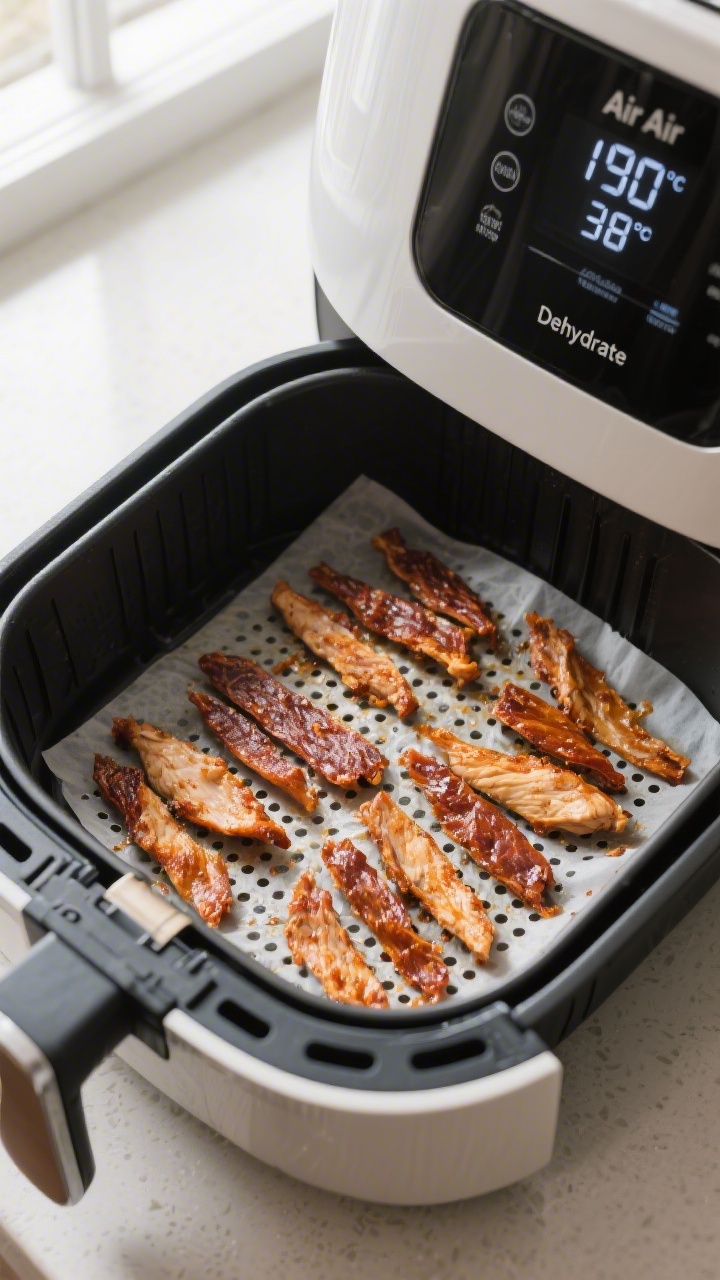
- Prep the air fryer. Remove the chicken from the fridge 15 minutes before cooking. Preheat your air fryer to 180–190°F (82–88°C) if it has a low-temperature setting that goes this low. Most Dehydrate modes top out around 175°F (80°C), so if yours does, use Air Fry or Bake at 180–190°F instead. If your air fryer’s lowest setting is 200°F (93°C), that works—just watch closely.
Lightly spray the basket or use a perforated liner.
- Blot the strips. Lift chicken from the marinade, letting excess drip off. Pat each strip with paper towels to remove surface moisture. This speeds drying and improves texture.
- Arrange in a single layer. Lay strips in the basket without overlap.
Airflow is crucial. Work in batches if needed.
- Dry low and slow. Air fry for 2.5–4 hours, flipping every 45–60 minutes. Time varies by thickness, air fryer model, and humidity.
If using 200°F, start checking at 2 hours.
- Test for doneness. Jerky should be dry to the touch, darkened, and flexible, not brittle. Bend a strip: it should crack slightly on the surface but not snap in half. If it feels moist or spongy in the center, keep going.
- Optional safety step. To ensure food safety, you can bring strips to a brief internal temp of 165°F (74°C) at the start or end of drying.
One method: air fry at 300°F (150°C) for 3–4 minutes before lowering the temp to dehydrate. Then proceed with low-temp drying.
- Cool completely. Let jerky cool on a rack for 30–45 minutes. Cooling sets the texture and prevents condensation in storage.
- Condition before storing. Place cooled jerky in a loosely covered container or paper bag for 24 hours at room temp, shaking once or twice.
If any pieces sweat or show moisture droplets, dry them a bit longer.
Keeping It Fresh
Store fully dried jerky in an airtight container or zip-top bag. For short-term snacking, keep it at room temperature for up to 1 week in a cool, dry spot. For longer storage, refrigerate for 2–3 weeks or freeze for up to 3 months.
To avoid sogginess, include a small food-safe desiccant pack or layer with paper towels to absorb any residual moisture. Always check for off smells, unusual softness, or mold before eating.
Health Benefits
- High protein, low fat: Chicken breast keeps calories in check while delivering steady energy and satiety.
- Lower sodium option: Using low-sodium soy sauce and controlling the marinade lets you reduce salt compared to store-bought jerky.
- No preservatives: You skip artificial additives and excess sugar often found in packaged versions.
- Smoky flavor without smoke: A tiny amount of liquid smoke gives depth without grilling or smoking—great for indoor cooking.
What Not to Do
- Don’t skip blotting. Surface moisture slows drying and can cause steaming instead of dehydrating.
- Don’t crowd the basket. Overlapping strips trap moisture and lead to uneven texture.
- Don’t use thick cuts. Anything over 1/4 inch takes too long to dry and can turn tough on the outside while staying soft inside.
- Don’t rely on time alone. Always test texture; air fryers vary. Look for flexible-dry, not wet or brittle.
- Don’t store while warm. Warm jerky releases moisture in a sealed container, inviting spoilage.
Alternatives
- Flavor swaps: Try teriyaki (add ginger and more brown sugar), chipotle-lime (chipotle powder and lime zest), or herb-garlic (Italian seasoning and extra garlic).
- Sugar-free: Skip the sweetener and add a pinch more smoked paprika for balance.
- Gluten-free: Use tamari or coconut aminos (note coconut aminos are sweeter; reduce added sugar).
- Different cuts: Chicken thighs work and stay tender; trim extra fat and dry slightly longer.
- No liquid smoke: Increase smoked paprika and add a splash of strong brewed black tea or lapsang souchong for subtle smokiness.
- Oven method: Place strips on a wire rack over a sheet pan at 175–200°F (79–93°C), door cracked slightly, for 3–5 hours, flipping occasionally.
FAQ
How do I know the jerky is safe to eat?
Ensure the chicken reaches an internal temperature of 165°F (74°C) at some point—either with a brief initial cook at higher heat or at the end.
Then finish drying at low temperature until the texture is dry and flexible. Cool and store properly.
Can I make it without liquid smoke?
Yes. Use extra smoked paprika and a touch of blackstrap molasses or dark soy for depth.
It won’t be as smoky, but it will still be rich and satisfying.
Why is my jerky tough?
It was likely sliced too thick or dried too hot. Keep slices 1/8–1/4 inch thick, maintain low heat, and flip periodically. Also, cut against the grain for a more tender chew.
Can I reduce the sodium?
Use low-sodium soy, dilute the marinade with 1–2 tablespoons of water, and skip the Worcestershire.
Season with more smoked paprika and garlic instead of saltier sauces.
How long does it really take in the air fryer?
Most batches take 2.5–4 hours depending on thickness, moisture, and your air fryer’s airflow. Start checking at 2 hours and continue in 20–30 minute increments until it passes the bend test.
Do I need a special dehydrate setting?
No, but it helps. If your air fryer’s lowest setting is 200°F (93°C), it will still work.
Watch closely and flip more often to prevent over-drying at the edges.
Can I use frozen chicken?
Thaw completely first for safe, even slicing and marinating. Partially freeze after thawing to help with clean, thin cuts.
Is sugar necessary?
No, but a little sugar balances salt and smoke, and helps with browning and texture. If avoiding sugar, skip it and add a pinch more spices.
Personal Tips You Can Steal
I do the quick high-heat sear at the very start now, not the end — 3-4 minutes at 300°F right after loading the basket, then I drop the temperature and let it dry low and slow. Doing the safety step first means I’m not second-guessing whether the jerky is fully food-safe after hours of drying, and it doesn’t affect the final texture at all.
Final Thoughts
Air Fryer Smoky Chicken Jerky is simple, lean, and bold on flavor.
With a smart marinade, thin slices, and low slow drying, you’ll get reliable results every time. Make a double batch, stash some in the fridge or freezer, and you have a clean, high-protein snack ready whenever hunger hits. It’s the kind of homemade treat that feels special but fits into any busy week. For more chicken options, try BBQ Chicken Jerky or Honey Chicken Jerky.
P.S. Do the food-safety sear at the very start, not the end — 3-4 minutes at 300°F right when you load the basket, then drop to low and slow 🙂
Air Fryer Smoky Chicken Jerky – Lean, Flavor-Packed Snack Made Simple
Ingredients
- Chicken: 1.5–2 pounds boneless, skinless chicken breasts
- Low-sodium soy sauce (or tamari for gluten-free)
- Worcestershire sauce
- Liquid smoke (hickory or applewood)
- Brown sugar or maple syrup
- Smoked paprika
- Garlic powder
- Onion powder
- Black pepper
- Red pepper flakes (optional, for heat)
- Apple cider vinegar or rice vinegar
- Olive oil (just a touch, optional)
- Nonstick spray for the air fryer basket
- Paper towels for blotting
- Zip-top bag or shallow dish for marinating
Instructions
- Partially freeze the chicken. Place chicken breasts on a plate and freeze for 45–60 minutes.This firms them up so you can slice thin, even pieces without shredding.
- Make the marinade. In a bowl, combine 1/3 cup low-sodium soy sauce, 1 tablespoon Worcestershire, 1 teaspoon liquid smoke, 1 tablespoon brown sugar, 1 teaspoon smoked paprika, 1/2 teaspoon garlic powder, 1/2 teaspoon onion powder, 1/4 teaspoon black pepper, a pinch of red pepper flakes (optional), and 1 teaspoon apple cider vinegar. Add 1 teaspoon olive oil if you want a slightly richer mouthfeel.
- Slice the chicken. Using a sharp knife, slice against the grain into strips about 1/8–1/4 inch thick. Thinner slices dry faster and give a chewier bite.Try to keep them uniform for even results.
- Marinate. Add the strips to the marinade. Toss to coat well. Press out air and seal the bag (or cover the dish).Refrigerate for at least 4 hours, ideally overnight, for deep flavor.
- Prep the air fryer. Remove the chicken from the fridge 15 minutes before cooking. Preheat your air fryer to 180–190°F (82–88°C) if it has a dehydrate or low-temp setting. If your air fryer’s lowest setting is 200°F (93°C), that works—just watch closely.Lightly spray the basket or use a perforated liner.
- Blot the strips. Lift chicken from the marinade, letting excess drip off. Pat each strip with paper towels to remove surface moisture. This speeds drying and improves texture.
- Arrange in a single layer. Lay strips in the basket without overlap.Airflow is crucial. Work in batches if needed.
- Dry low and slow. Air fry for 2.5–4 hours, flipping every 45–60 minutes. Time varies by thickness, air fryer model, and humidity.If using 200°F, start checking at 2 hours.
- Test for doneness. Jerky should be dry to the touch, darkened, and flexible, not brittle. Bend a strip: it should crack slightly on the surface but not snap in half. If it feels moist or spongy in the center, keep going.
- Optional safety step. To ensure food safety, you can bring strips to a brief internal temp of 165°F (74°C) at the start or end of drying.One method: air fry at 300°F (150°C) for 3–4 minutes before lowering the temp to dehydrate. Then proceed with low-temp drying.
- Cool completely. Let jerky cool on a rack for 30–45 minutes. Cooling sets the texture and prevents condensation in storage.
- Condition before storing. Place cooled jerky in a loosely covered container or paper bag for 24 hours at room temp, shaking once or twice.If any pieces sweat or show moisture droplets, dry them a bit longer.
Printable Recipe Card
Want just the essential recipe details without scrolling through the article? Get our printable recipe card with just the ingredients and instructions.