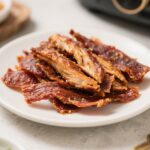
Air Fryer Smoky Chicken Jerky - Lean, Flavor-Packed Snack Made Simple
Servings 6 servings
Ingredients
- Chicken: 1.5–2 pounds boneless, skinless chicken breasts
- Low-sodium soy sauce (or tamari for gluten-free)
- Worcestershire sauce
- Liquid smoke (hickory or applewood)
- Brown sugar or maple syrup
- Smoked paprika
- Garlic powder
- Onion powder
- Black pepper
- Red pepper flakes (optional, for heat)
- Apple cider vinegar or rice vinegar
- Olive oil (just a touch, optional)
- Nonstick spray for the air fryer basket
- Paper towels for blotting
- Zip-top bag or shallow dish for marinating
Instructions
- Partially freeze the chicken. Place chicken breasts on a plate and freeze for 45–60 minutes. This firms them up so you can slice thin, even pieces without shredding.
- Make the marinade. In a bowl, combine 1/3 cup low-sodium soy sauce, 1 tablespoon Worcestershire, 1 teaspoon liquid smoke, 1 tablespoon brown sugar, 1 teaspoon smoked paprika, 1/2 teaspoon garlic powder, 1/2 teaspoon onion powder, 1/4 teaspoon black pepper, a pinch of red pepper flakes (optional), and 1 teaspoon apple cider vinegar. Add 1 teaspoon olive oil if you want a slightly richer mouthfeel.
- Slice the chicken. Using a sharp knife, slice against the grain into strips about 1/8–1/4 inch thick. Thinner slices dry faster and give a chewier bite. Try to keep them uniform for even results.
- Marinate. Add the strips to the marinade. Toss to coat well. Press out air and seal the bag (or cover the dish). Refrigerate for at least 4 hours, ideally overnight, for deep flavor.
- Prep the air fryer. Remove the chicken from the fridge 15 minutes before cooking. Preheat your air fryer to 180–190°F (82–88°C) if it has a dehydrate or low-temp setting. If your air fryer’s lowest setting is 200°F (93°C), that works—just watch closely. Lightly spray the basket or use a perforated liner.
- Blot the strips. Lift chicken from the marinade, letting excess drip off. Pat each strip with paper towels to remove surface moisture. This speeds drying and improves texture.
- Arrange in a single layer. Lay strips in the basket without overlap. Airflow is crucial. Work in batches if needed.
- Dry low and slow. Air fry for 2.5–4 hours, flipping every 45–60 minutes. Time varies by thickness, air fryer model, and humidity. If using 200°F, start checking at 2 hours.
- Test for doneness. Jerky should be dry to the touch, darkened, and flexible, not brittle. Bend a strip: it should crack slightly on the surface but not snap in half. If it feels moist or spongy in the center, keep going.
- Optional safety step. To ensure food safety, you can bring strips to a brief internal temp of 165°F (74°C) at the start or end of drying. One method: air fry at 300°F (150°C) for 3–4 minutes before lowering the temp to dehydrate. Then proceed with low-temp drying.
- Cool completely. Let jerky cool on a rack for 30–45 minutes. Cooling sets the texture and prevents condensation in storage.
- Condition before storing. Place cooled jerky in a loosely covered container or paper bag for 24 hours at room temp, shaking once or twice. If any pieces sweat or show moisture droplets, dry them a bit longer.