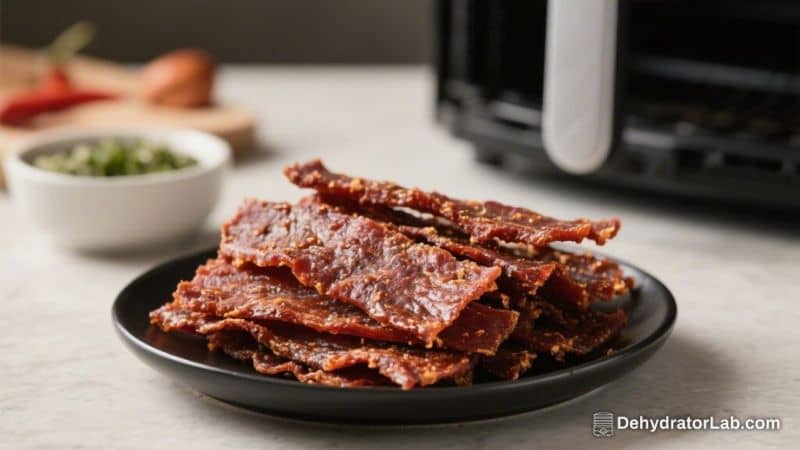
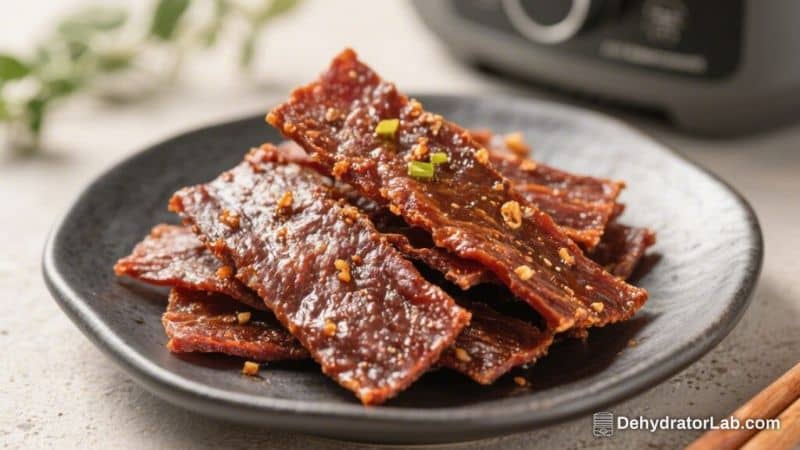
If you love snackable, bold flavors, this Air Fryer Korean Beef Jerky hits the sweet spot. It’s packed with soy, garlic, ginger, and a hint of heat—the kind of snack you reach for again and again. The best part?
You can make it at home without a dehydrator, and it turns out tender-chewy with beautifully caramelized edges. Whether you’re meal prepping or just stocking the pantry, this recipe is simple, fast, and seriously satisfying.
In this article:
TL;DR: Key Takeaways
- 🌶️ Gochujang + gochugaru let you dial the heat from mild to fiery
- 🌡️ Dry at 180-200°F (82-93°C) for 2-3 hours, flipping and rotating racks every 30-45 minutes
- 🍯 Optional finish: brush thinned honey in the last 10 minutes for a glossy, lightly sticky glaze
- 📦 Condition 12-24 hours in a loosely covered container before storing — evens out texture across the batch
What Makes This Special
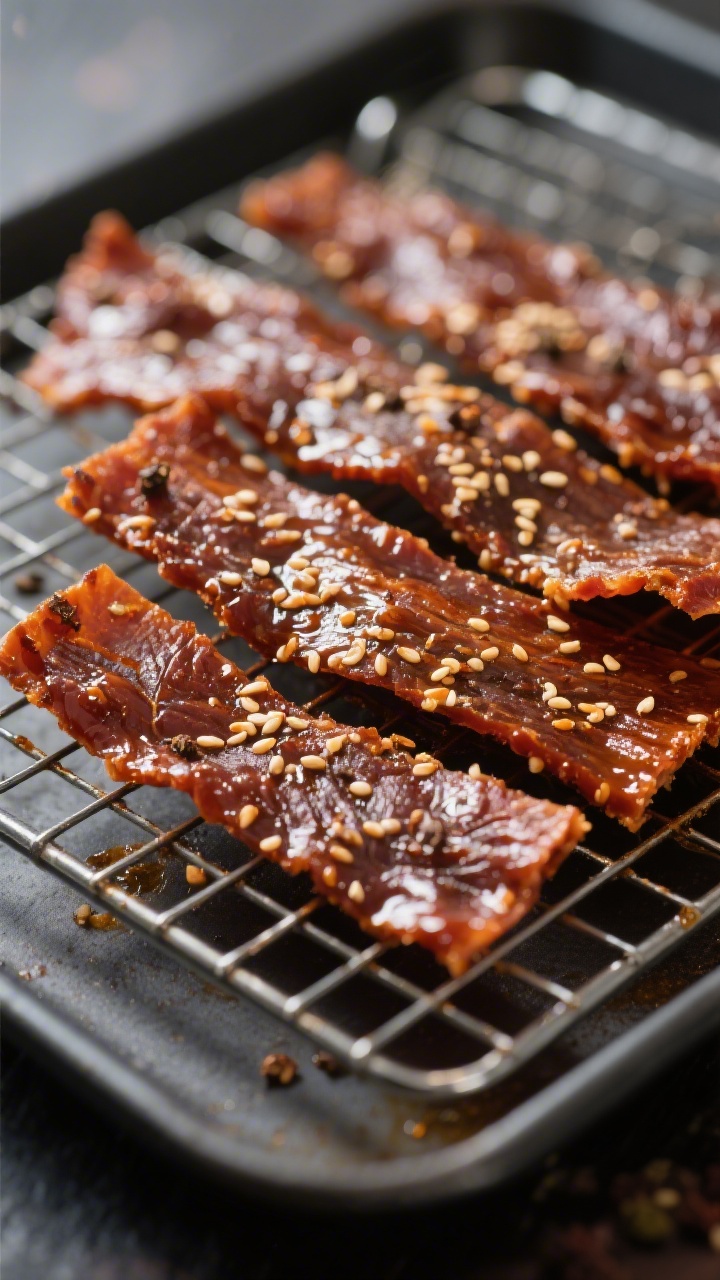
This jerky balances sweet, salty, spicy, and umami in a way that feels classic and crave-worthy. The air fryer speeds up the process and gives you more control over texture.
A quick marinade locks in flavor without needing fancy ingredients or special equipment. Plus, you can easily adjust the heat level and sweetness to match your taste. It’s a high-protein, portable snack that doesn’t feel like “diet food.”
Shopping List
- Beef: 1.5 to 2 pounds lean beef (eye of round, top round, sirloin tip, or flank), trimmed
- Soy sauce: Low-sodium preferred
- Brown sugar: Light or dark
- Gochujang: Korean red chili paste
- Gochugaru: Korean red pepper flakes (optional for extra heat)
- Rice vinegar (or apple cider vinegar)
- Toasted sesame oil
- Garlic: Fresh cloves, minced
- Ginger: Fresh, grated
- Honey (or maple syrup)
- Black pepper
- Onion powder (optional)
- Sesame seeds (optional, for finishing)
- Green onions (optional, thinly sliced, for finishing)
- Nonstick spray or a little neutral oil for the air fryer rack
Step-by-Step Instructions
- Partially freeze the beef: Place the trimmed beef in the freezer for 45–60 minutes. Slightly firm meat is easier to slice thinly and evenly.
- Make the marinade: In a large bowl, whisk 1/2 cup low-sodium soy sauce, 3 tablespoons brown sugar, 1 tablespoon gochujang, 1–2 teaspoons gochugaru (optional), 1 tablespoon rice vinegar, 1 teaspoon toasted sesame oil, 2 tablespoons honey, 3 minced garlic cloves, 1 tablespoon grated ginger, 1 teaspoon black pepper, and 1/2 teaspoon onion powder (optional).
- Slice the beef: Using a sharp knife, slice the beef against the grain into 1/8- to 1/4-inch thick strips. Thinner strips yield drier, crisper jerky; thicker strips stay chewier.
- Marinate: Add the beef to the marinade and toss to coat.
Cover and refrigerate for at least 6 hours, preferably overnight (12–18 hours for maximum flavor). Stir once or twice to ensure even soaking.
- Drain and pat dry: Remove the beef from the marinade and pat each strip dry with paper towels. This step helps the jerky dehydrate instead of steam.
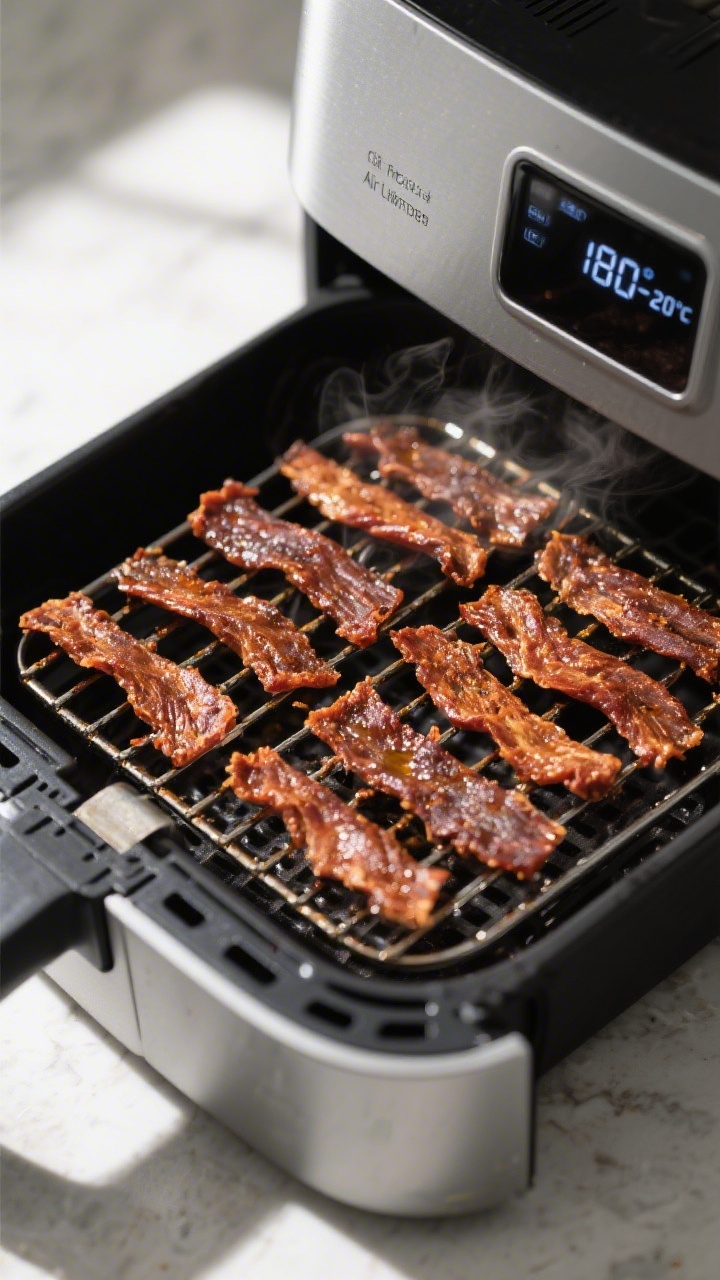
- Prep the air fryer: Lightly oil or spray the basket or racks. Preheat to 180–200°F (82–93°C) if your air fryer allows.
If not, set it to the lowest possible temperature.
- Arrange the strips: Lay the beef in a single layer with space between pieces. Avoid overlapping. If you have a rack-style air fryer, use multiple racks.
- Cook low and slow: Air fry at 180–200°F for 2 to 3 hours, flipping and rotating racks every 30–45 minutes. Check early and often—different models vary.
If your air fryer’s minimum temp is higher (like 250°F), reduce time and monitor closely.
- Test for doneness: Jerky should be dry to the touch, darker in color, and bend without snapping. When bent, it should crack slightly on the surface but not break cleanly.
- Optional finish: For a glossy, lightly sticky finish, brush very thinly with honey diluted with a splash of water during the last 10 minutes. Sprinkle sesame seeds if you like.
- Cool and condition: Let jerky cool completely on a rack.
Place cooled jerky in a clean, loosely covered container or paper bag for 12–24 hours to equalize moisture. This prevents some pieces from being too dry or too soft.
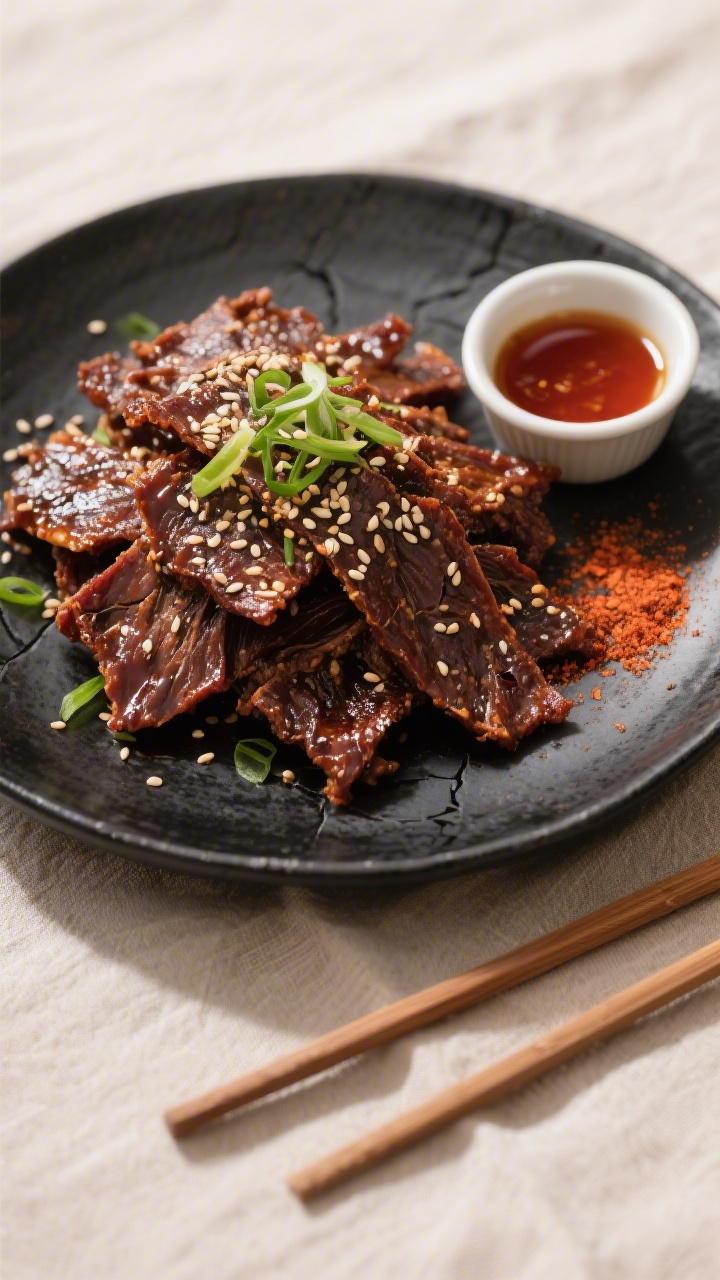
- Garnish and serve: Toss with a few sesame seeds and sliced green onions just before eating if you want a fresh pop of flavor.
Storage Instructions
- Short-term: Store in an airtight container at room temperature for up to 3–4 days if fully dried.
- Refrigerator: Keep in a sealed bag or jar for 2–3 weeks. Add a small paper towel to absorb excess moisture.
- Freezer: Vacuum-sealed or tightly wrapped jerky keeps 2–3 months. Thaw at room temperature inside the packaging to avoid condensation.
- Check regularly: If you see condensation, soft spots, or off smells, refrigerate immediately and consume soon.
Benefits of This Recipe
- Fast and accessible: No dehydrator needed, and it’s quicker than oven-drying.
- High protein, low fuss: Keeps you full without a long ingredient list or complicated steps.
- Custom heat level: Gochujang and gochugaru let you dial the spice from mild to fiery.
- Big flavor payoff: Soy, garlic, and ginger build deep umami with caramelized edges.
- Budget-friendly: Round cuts are affordable and perfect for jerky.
What Not to Do
- Don’t skip drying the strips before air frying.
Excess marinade leads to steaming and uneven texture.
- Don’t crowd the basket. Overlapping pieces won’t dry properly and may burn at the edges.
- Don’t crank the heat too high. High temps cook instead of dehydrate, causing tough or brittle jerky.
- Don’t use fatty cuts. Visible fat turns rancid faster and shortens shelf life.
- Don’t store before cooling. Trapped steam equals soggy jerky and potential spoilage.
Alternatives
- Different cuts: Try flank for a chewier bite or top round for a leaner, cleaner texture.
- Lower sodium: Use low-sodium soy sauce and cut the amount by 2 tablespoons; add 1 tablespoon water to balance.
- Sweeter or less sweet: Increase or decrease honey and brown sugar by 1 tablespoon to match your taste.
- No gochujang on hand: Use 1 tablespoon ketchup plus 1/2 teaspoon chili paste or sriracha as a rough stand-in.
- Gluten-free: Swap tamari or coconut aminos for soy sauce; note coconut aminos are sweeter, so reduce sugar.
- Smoky touch: Add 1/4 teaspoon liquid smoke to the marinade for a campfire vibe.
FAQ
Do I have to slice against the grain?
For classic chew without stringiness, yes—slice against the grain. If you want extra chew, slice with the grain, but it will be tougher to bite.
How do I know my air fryer is at the right temperature?
If your model doesn’t show exact temps, choose the lowest setting and extend time. You’re aiming for gentle drying, not cooking.
Jerky should never sizzle.
Can I make this less spicy?
Absolutely. Reduce or omit gochugaru and cut the gochujang to 1–2 teaspoons. The marinade will still be savory, sweet, and garlicky.
What if my jerky is too dry?
Next batch, slice slightly thicker and shorten the time.
You can also add a touch more honey to help retain moisture and softness.
Is curing salt necessary?
For home batches eaten within a couple of weeks and stored properly, curing salt isn’t required. If you plan to store for longer at room temperature, research and use curing salts carefully.
Can I use chicken or pork instead?
You can, but adjust for food safety. Slice thin, marinate, and dry thoroughly.
Keep everything clean and refrigerate or freeze to store.
Why condition the jerky after drying?
Conditioning evens out moisture between pieces, reducing the risk of mold and giving you a consistent texture across the batch.
How do I keep the jerky from sticking to the basket?
Lightly oil the basket or racks and pat the beef dry before cooking. Flipping during drying also helps prevent sticking.
Can I double the batch?
Yes, but work in batches or use multiple racks. Crowding will slow drying and can lead to uneven results.
Personal Tips You Can Steal
I always taste my marinade before it touches the meat, adjusting the gochujang up or down since brands vary a lot in heat and saltiness. I also toss the sesame seeds and green onion on right before eating, not before storing — they go stale and lose their pop if they sit on the jerky for days.
Wrapping Up
This Air Fryer Korean Beef Jerky brings big flavor with minimal effort.
With a smart marinade, low heat, and a bit of patience, you’ll get tender-chewy strips that taste like they came from a specialty shop. Make it mild or spicy, sweet or savory—it’s flexible and dependable. Keep a jar on the counter, and you’ll have a snack that actually satisfies whenever cravings hit. If you enjoyed this, our Teriyaki Beef Jerky and Sweet Heat Beef Jerky offer similar sweet-savory profiles worth trying.
P.S. If you like this flavor profile, it works just as well swapped onto turkey or chicken breast — just shorten the dry time since poultry finishes faster. 🙂
Air Fryer Korean Beef Jerky – Sweet, Savory, and Perfectly Chewy
Ingredients
- Beef: 1.5 to 2 pounds lean beef (eye of round, top round, sirloin tip, or flank), trimmed
- Soy sauce: Low-sodium preferred
- Brown sugar: Light or dark
- Gochujang: Korean red chili paste
- Gochugaru: Korean red pepper flakes (optional for extra heat)
- Rice vinegar (or apple cider vinegar)
- Toasted sesame oil
- Garlic: Fresh cloves, minced
- Ginger: Fresh, grated
- Honey (or maple syrup)
- Black pepper
- Onion powder (optional)
- Sesame seeds (optional, for finishing)
- Green onions (optional, thinly sliced, for finishing)
- Nonstick spray or a little neutral oil for the air fryer rack
Instructions
- Partially freeze the beef: Place the trimmed beef in the freezer for 45–60 minutes. Slightly firm meat is easier to slice thinly and evenly.
- Make the marinade: In a large bowl, whisk 1/2 cup low-sodium soy sauce, 3 tablespoons brown sugar, 1 tablespoon gochujang, 1–2 teaspoons gochugaru (optional), 1 tablespoon rice vinegar, 1 teaspoon toasted sesame oil, 2 tablespoons honey, 3 minced garlic cloves, 1 tablespoon grated ginger, 1 teaspoon black pepper, and 1/2 teaspoon onion powder (optional).
- Slice the beef: Using a sharp knife, slice the beef against the grain into 1/8- to 1/4-inch thick strips. Thinner strips yield drier, crisper jerky; thicker strips stay chewier.
- Marinate: Add the beef to the marinade and toss to coat.Cover and refrigerate for at least 6 hours, preferably overnight (12–18 hours for maximum flavor). Stir once or twice to ensure even soaking.
- Drain and pat dry: Remove the beef from the marinade and pat each strip dry with paper towels. This step helps the jerky dehydrate instead of steam.
- Prep the air fryer: Lightly oil or spray the basket or racks. Preheat to 180–200°F (82–93°C) if your air fryer allows.If not, set it to the lowest possible temperature.
- Arrange the strips: Lay the beef in a single layer with space between pieces. Avoid overlapping. If you have a rack-style air fryer, use multiple racks.
- Cook low and slow: Air fry at 180–200°F for 2 to 3 hours, flipping and rotating racks every 30–45 minutes. Check early and often—different models vary.If your air fryer’s minimum temp is higher (like 250°F), reduce time and monitor closely.
- Test for doneness: Jerky should be dry to the touch, darker in color, and bend without snapping. When bent, it should crack slightly on the surface but not break cleanly.
- Optional finish: For a glossy, lightly sticky finish, brush very thinly with honey diluted with a splash of water during the last 10 minutes. Sprinkle sesame seeds if you like.
- Cool and condition: Let jerky cool completely on a rack.Place cooled jerky in a clean, loosely covered container or paper bag for 12–24 hours to equalize moisture. This prevents some pieces from being too dry or too soft.
- Garnish and serve: Toss with a few sesame seeds and sliced green onions just before eating if you want a fresh pop of flavor.
Printable Recipe Card
Want just the essential recipe details without scrolling through the article? Get our printable recipe card with just the ingredients and instructions.