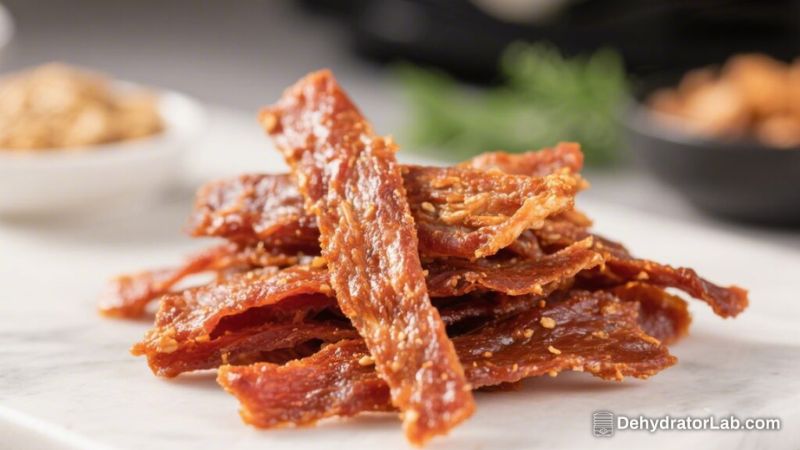
If you love savory snacks but want something cleaner than chips or store-bought jerky, this air fryer chicken jerky is a game-changer. It’s lean, full of flavor, and surprisingly easy to make at home. You don’t need a dehydrator or special tools—just your air fryer and a little patience.
The result is a chewy, satisfying snack that’s perfect for meal prep, hiking, or a quick protein boost. Once you try it, you’ll wonder why you ever paid for the packaged kind.
In this article:
TL;DR: Key Takeaways
- 🐔 Slice partially frozen chicken breast against the grain into 1/8–1/4 inch strips, then marinate at least 4 hours, ideally overnight.
- 🌡️ Air fry at 180–200°F (82–93°C) for 2–3 hours, flipping every 30–45 minutes, until dry, firm, and bendable without snapping.
- 🎨 Fully customizable — sweet and smoky, teriyaki, lemon pepper, or spicy chili lime all work with the same base method.
- 🫙 Condition finished jerky for 24 hours in a loosely sealed jar to even out moisture before long-term storage.
What Makes This Special
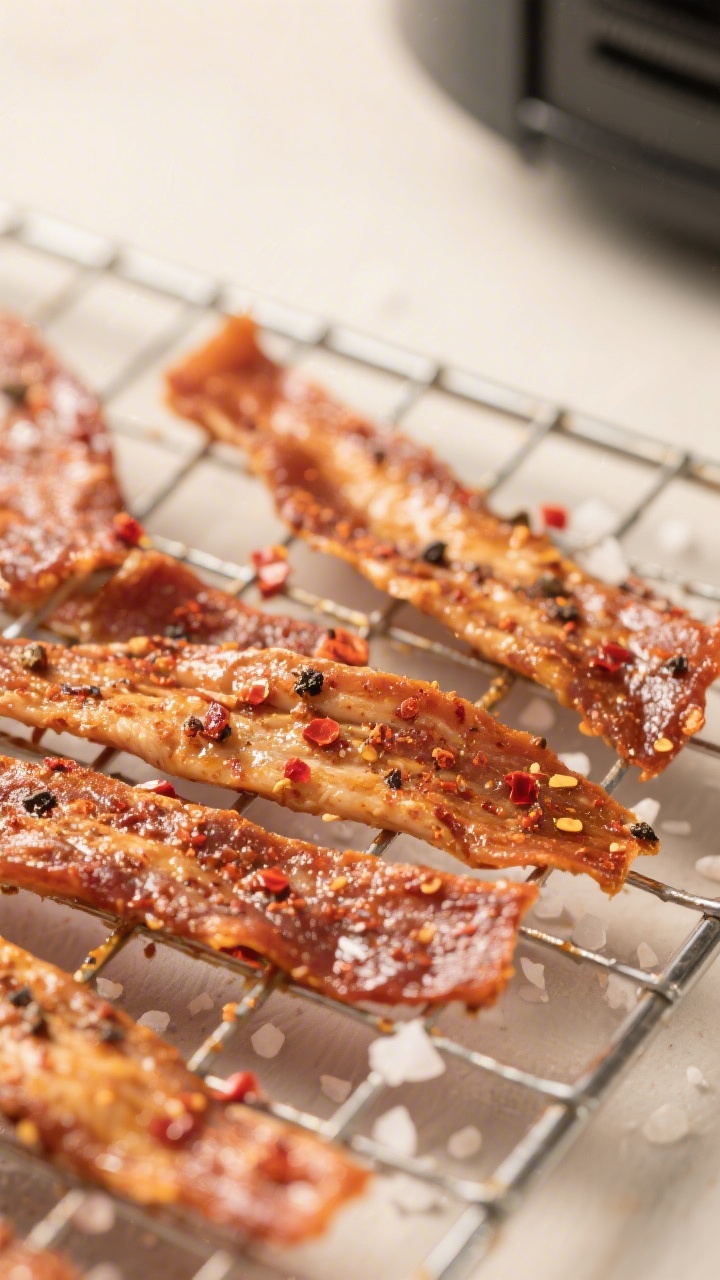
This recipe uses lean chicken breast, so you get a high-protein snack without a lot of fat. The air fryer speeds up the drying process while keeping the texture pleasantly chewy.
You can customize the flavor profile to suit your taste—smoky, spicy, sweet, or umami. It also stores well and travels easily, making it ideal for busy days. Best of all, you control the ingredients, so there are no hidden sugars or preservatives unless you want them.
Shopping List
- Chicken: 1.5–2 pounds boneless, skinless chicken breasts (or chicken thighs for richer flavor)
- Soy sauce or tamari: 1/4 cup (use tamari or coconut aminos for gluten-free)
- Worcestershire sauce: 1 tablespoon
- Honey or maple syrup: 1–2 teaspoons (optional, for balance)
- Apple cider vinegar or rice vinegar: 1 tablespoon
- Garlic powder: 1 teaspoon
- Onion powder: 1 teaspoon
- Smoked paprika: 1 teaspoon
- Black pepper: 1/2 teaspoon
- Red pepper flakes or cayenne: 1/4–1/2 teaspoon (optional, for heat)
- Liquid smoke: 1/4 teaspoon (optional, adds classic jerky flavor)
- Neutral oil: 1 teaspoon (optional, helps prevent sticking)
- Nonstick spray or parchment air fryer liners: as needed
Instructions
- Partially freeze the chicken. Place chicken breasts in the freezer for 45–60 minutes.
This firms them up and makes slicing easier. You want them cold, not rock solid.
- Slice into thin strips. Using a sharp knife, slice the chicken against the grain into strips about 1/8 to 1/4 inch thick. Thinner slices dry faster and more evenly.
- Mix the marinade. In a bowl, whisk soy (or tamari), Worcestershire, vinegar, honey, garlic powder, onion powder, smoked paprika, black pepper, and optional heat and liquid smoke.
- Marinate. Add chicken strips to the marinade and toss to coat. Cover and refrigerate for at least 4 hours, ideally overnight for deeper flavor.
Stir once halfway if you can.
- Drain and pat dry. Remove chicken from the marinade and pat each strip dry with paper towels. Dry surfaces dehydrate better and won’t steam in the air fryer.
- Preheat the air fryer. Set to 180–200°F (82–93°C), or the lowest setting your air fryer allows. Some models don’t go that low; if needed, set to 210–220°F and monitor closely.
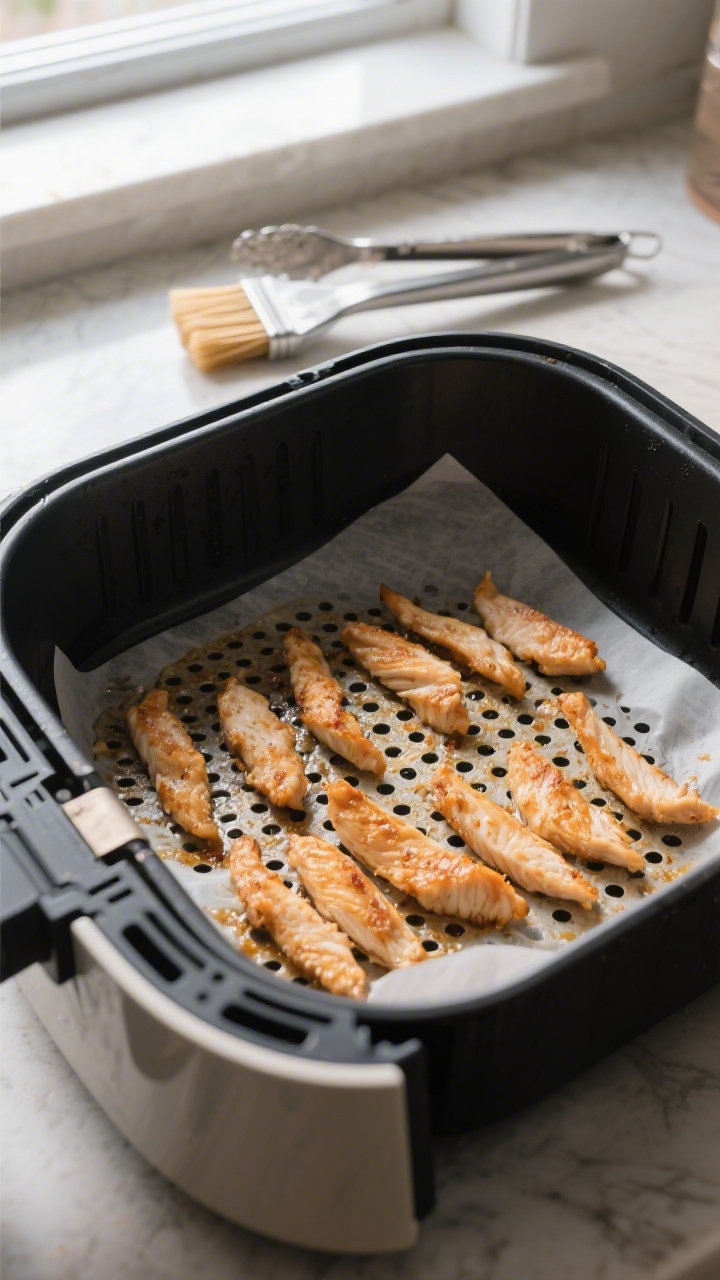
- Arrange the strips. Lightly spray the basket or use a perforated liner. Lay strips in a single layer with space between pieces.
Do not overlap. Work in batches if needed.
- Dry the chicken. Air fry for 2–3 hours total, flipping every 30–45 minutes. Timing varies by thickness and air fryer model. At lower temps, expect closer to 3 hours; at slightly higher temps, start checking around 90 minutes.
- Check for doneness. Jerky is ready when it’s dry to the touch, firm, and bends without snapping.
Tear a piece—there should be no visible moisture inside. If using a thermometer early in the cook, ensure the internal temp hits 165°F once, then you can continue dehydrating to desired dryness.
- Cool completely. Place finished jerky on a rack to cool for 30–45 minutes. Cooling sets the texture and prevents condensation in storage.
- Condition (optional but helpful). For even moisture, place cooled jerky loosely in a clean jar for 24 hours, shaking a couple of times. If condensation appears, return to the air fryer for 15–20 minutes.
Keeping It Fresh
Let the jerky cool fully before storing.
Moisture is the enemy. For short-term storage, use an airtight container at room temperature for up to 3 days. For longer storage, refrigerate up to 2 weeks or freeze up to 3 months.
Best practice: Use vacuum-sealed bags or small zip-top bags and remove as much air as possible.
Add a food-safe desiccant packet if you have one. Always check for off smells or surface moisture before eating.
Health Benefits
- High in protein: Chicken breast delivers lean protein that supports muscle repair and keeps you full longer.
- Lower in fat and sugar: Unlike many store-bought jerkies, this version can be made with minimal sugar and oil.
- Controlled ingredients: You decide the sodium level, sweetener type, and seasoning. That’s great for specific diets.
- Portable nutrition: It’s an easy on-the-go snack for travel, post-workout, or afternoon slumps.
Common Mistakes to Avoid
- Slicing too thick. Thick strips can stay wet inside while burning at the edges.
Aim for 1/8–1/4 inch.
- Skipping the pat-dry step. Excess marinade causes steaming, not drying, and can make the surface sticky.
- Overcrowding the basket. Air needs room to circulate. Cook in batches for even dehydration.
- Using high heat. Temps above 225°F can cook the meat too fast and create hard, brittle edges with a wet center.
- Storing while warm. Trapped steam leads to spoilage. Always cool completely first.
Variations You Can Try
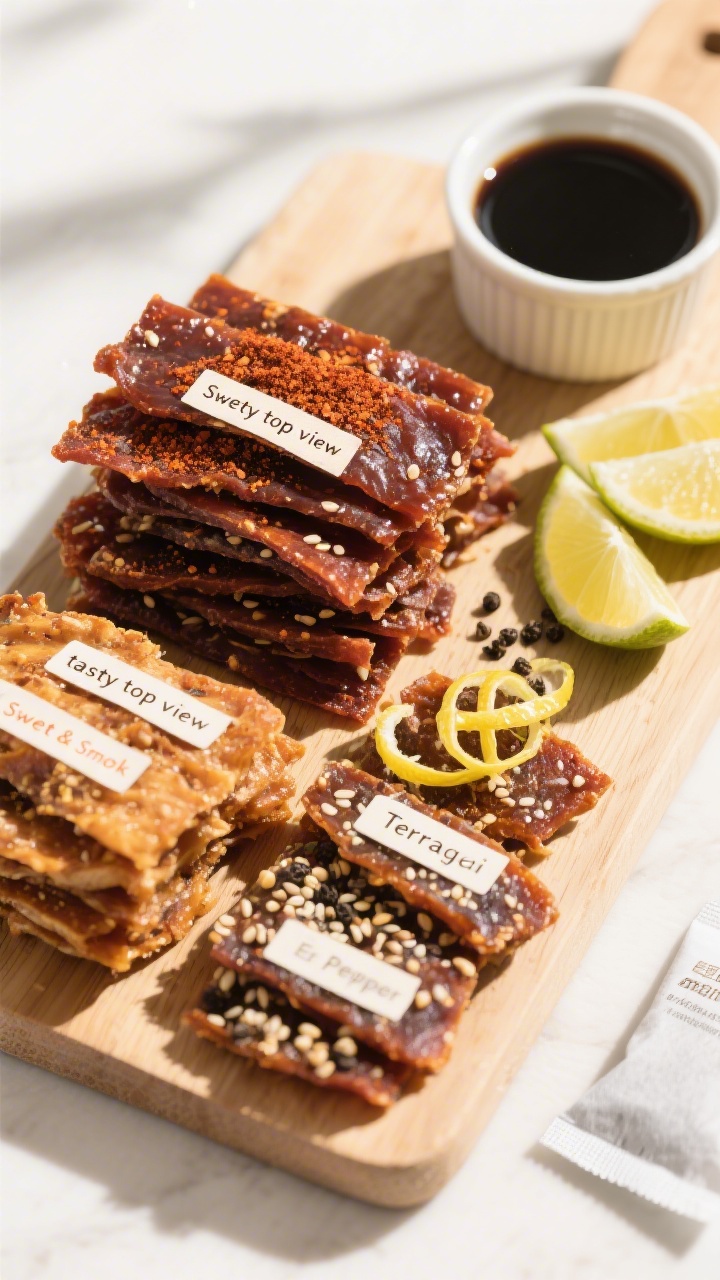
- Sweet and Smoky: Add 1 tablespoon brown sugar and 1/2 teaspoon extra smoked paprika.
- Teriyaki: Swap honey for 1 tablespoon mirin, add 1/2 teaspoon ginger powder, and a dash of sesame oil.
- Lemon Pepper: Add 1 teaspoon lemon zest and 1 teaspoon coarse black pepper; finish with a light sprinkle of flaky salt.
- Spicy Chili Lime: Add chili powder, a pinch of cayenne, and 1 tablespoon lime juice; finish with lime zest after drying.
- Herb and Garlic: Add dried thyme and oregano; great if you want a savory, less sweet profile.
- Thigh Meat Option: Use boneless thighs for a slightly richer, more tender jerky.
It takes a little longer to dry.
FAQ
Do I need to use a dehydrator setting on my air fryer?
No, but it helps if your air fryer can go as low as 180–200°F. If it only goes higher, use the lowest setting and check more often to prevent over-drying.
How do I know when the jerky is done?
It should feel dry and leathery, bend without snapping, and show no visible moisture when torn. If in doubt, give it another 10–15 minutes and check again.
Can I make this without soy?
Yes.
Use coconut aminos for a soy-free option and adjust salt to taste. You can also lean on spices, vinegar, and a little salt to build flavor.
Is sugar necessary?
No. A small amount of honey or maple rounds out the salt and adds browning, but you can skip it.
If you go sugar-free, consider a touch more vinegar for balance.
How long will homemade chicken jerky last?
At room temperature, about 3 days in an airtight container. In the fridge, up to 2 weeks. Frozen, up to 3 months.
Always check for moisture or off smells before eating.
Can I use ground chicken?
You can, but it requires forming thin, even strips or sheets and is trickier to handle. Whole muscle meat is easier and gives a better texture.
What if my jerky turns out tough?
It was likely cut too thin, cooked too hot, or dried too long. Next time, slice slightly thicker, use a lower temperature, and start checking for doneness earlier.
Do I need to pre-cook the chicken?
No.
The air fryer will bring it to a safe internal temperature during the process. If you want extra assurance, you can briefly heat the strips to 165°F early, then continue dehydrating.
Can I double the recipe?
Yes, but dry in batches. Overloading the basket prevents proper airflow and leads to inconsistent results.
How can I make it extra smoky?
Add a few drops of liquid smoke to the marinade, use smoked paprika, or finish with a pinch of chipotle powder.
Personal Tips You Can Steal
I keep a running list of which strip thickness works for which flavor — thinner cuts for the Chili Lime version since the citrus zest needs less drying time to punch through, and slightly thicker for Herb and Garlic since those flavors mellow out and need the extra chew to stand out. It’s a small thing, but matching thickness to flavor profile has made a bigger difference in how each batch tastes than any tweak to the marinade itself.
Final Thoughts
Air fryer chicken jerky is a simple, rewarding project that delivers big flavor with minimal fuss.
With a little planning and low heat, you’ll have a steady supply of clean, high-protein snacks. Use the base recipe once, then tweak the seasonings to match your mood. Whether you like sweet heat, bold smoke, or herb-forward flavors, this method adapts easily.
Keep a batch on hand, and snack time suddenly feels a lot smarter—and a lot tastier. For more chicken variations, try our BBQ Chicken Jerky or Turkey Jerky.
P.S. Match your slice thickness to the flavor — thinner cuts for bright, citrusy marinades and slightly thicker for mellow herb blends that need more chew to stand out 🙂
Air Fryer Chicken Jerky – Simple, Flavorful, High-Protein Snack
Ingredients
- Chicken: 1.5–2 pounds boneless, skinless chicken breasts (or chicken thighs for richer flavor)
- Soy sauce or tamari: 1/4 cup (use tamari or coconut aminos for gluten-free)
- Worcestershire sauce: 1 tablespoon
- Honey or maple syrup: 1–2 teaspoons (optional, for balance)
- Apple cider vinegar or rice vinegar: 1 tablespoon
- Garlic powder: 1 teaspoon
- Onion powder: 1 teaspoon
- Smoked paprika: 1 teaspoon
- Black pepper: 1/2 teaspoon
- Red pepper flakes or cayenne: 1/4–1/2 teaspoon (optional, for heat)
- Liquid smoke: 1/4 teaspoon (optional, adds classic jerky flavor)
- Neutral oil: 1 teaspoon (optional, helps prevent sticking)
- Nonstick spray or parchment air fryer liners: as needed
Instructions
- Partially freeze the chicken. Place chicken breasts in the freezer for 45–60 minutes.This firms them up and makes slicing easier. You want them cold, not rock solid.
- Slice into thin strips. Using a sharp knife, slice the chicken against the grain into strips about 1/8 to 1/4 inch thick. Thinner slices dry faster and more evenly.
- Mix the marinade. In a bowl, whisk soy (or tamari), Worcestershire, vinegar, honey, garlic powder, onion powder, smoked paprika, black pepper, and optional heat and liquid smoke.
- Marinate. Add chicken strips to the marinade and toss to coat. Cover and refrigerate for at least 4 hours, ideally overnight for deeper flavor.Stir once halfway if you can.
- Drain and pat dry. Remove chicken from the marinade and pat each strip dry with paper towels. Dry surfaces dehydrate better and won’t steam in the air fryer.
- Preheat the air fryer. Set to 180–200°F (82–93°C), or the lowest setting your air fryer allows. Some models don’t go that low; if needed, set to 210–220°F and monitor closely.
- Arrange the strips. Lightly spray the basket or use a perforated liner. Lay strips in a single layer with space between pieces.Do not overlap. Work in batches if needed.
- Dry the chicken. Air fry for 2–3 hours total, flipping every 30–45 minutes. Timing varies by thickness and air fryer model. At lower temps, expect closer to 3 hours; at slightly higher temps, start checking around 90 minutes.
- Check for doneness. Jerky is ready when it’s dry to the touch, firm, and bends without snapping.Tear a piece—there should be no visible moisture inside. If using a thermometer early in the cook, ensure the internal temp hits 165°F once, then you can continue dehydrating to desired dryness.
- Cool completely. Place finished jerky on a rack to cool for 30–45 minutes. Cooling sets the texture and prevents condensation in storage.
- Condition (optional but helpful). For even moisture, place cooled jerky loosely in a clean jar for 24 hours, shaking a couple of times. If condensation appears, return to the air fryer for 15–20 minutes.
Printable Recipe Card
Want just the essential recipe details without scrolling through the article? Get our printable recipe card with just the ingredients and instructions.