
Ever eaten a handful of nuts and felt heavy afterward, even though the label said “natural”?
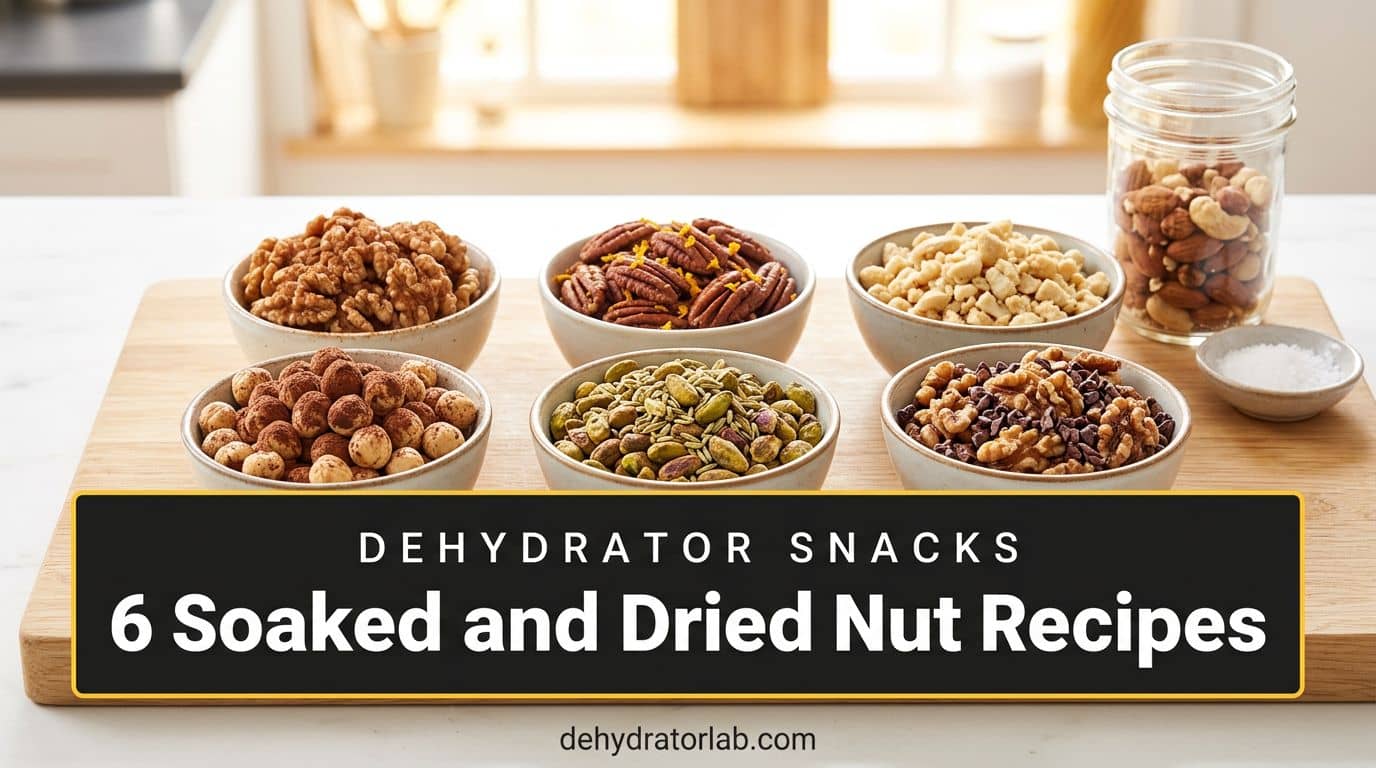
Soaking and low-heat drying gives walnuts, pecans, and cashews a milder taste and a cleaner crunch, and it opens the door to flavors that actually stick. The gut-health part of the story is more nuanced than most blogs admit, so I’ll sort out what holds up. Here are six recipes, and the straight facts that go with them.
As an Amazon Associate, I earn from qualifying purchases. If you make a purchase after clicking on a link I may earn a small commission at no extra cost to you if items are purchased.
In this article:
TL;DR: Key Takeaways
- 🥜 Soaking changes the taste and texture of nuts. Research does not show it meaningfully lowers phytate or improves nutrient absorption.
- 🧊 Soak in the fridge, not on the counter. Salmonella grew in nuts soaked at room temperature in an Oregon State study.
- 🌡️ Dry at 115–120°F (46–49°C) for about 12 to 20 hours, until a cooled nut snaps.
- 🥣 The gut case for nuts rests on eating them regularly, and the trials so far are short and early.
- 🧂 Keep the soak lightly salted, rinse, then add flavors after draining.
- 📦 Cool the nuts completely, store them airtight, and keep long-term batches cold.
I’ve already covered the almond side of this topic in my 8 flavored and activated almond recipes and the basic soak-and-dry method in how to dehydrate nuts. So this list skips almonds and builds on other nuts. If you want a broader low-temperature machine, my raw food dehydrator picks cover units that hold a low setting.
Every recipe follows one base method. Cover 2 cups of raw nuts with cold water by about 2 inches in a lidded jar, stir in 1 teaspoon of salt, and soak in the refrigerator. Drain through a large colander, throw out the soak water, and rinse. Then toss with the flavors, spread the nuts in a single layer on a lined tray, and dry. The soak times below are my own estimates, and the jar I use is below.

- 1/2 Gallon (64oz) Jars – Includes two plastic airtight, leakproof lids as well as two 7" rubber bands, two sheets of 12"…
- Kombucha Starter Kit – Perfect small glass jars for brewing, canning, storing, or decorating. This 1790 kombucha jar is …
- Airtight & Leakproof Plastic Lid – Our lid comes with a removable seal. It will not corrode or rust like metal lids.
1. Walnuts with Cinnamon and Ginger
Walnut skins can taste bitter, and soaking softens that edge. Soak 2 cups of walnut halves in the fridge for about 4 to 6 hours, drain, and rinse.
Toss them with 1 teaspoon of cinnamon, 1/2 teaspoon of ginger powder, 2 teaspoons of maple syrup, and a pinch of salt. Spread them out and dry at 115–120°F (46–49°C) for about 12 to 20 hours.
Lay the halves flat so they don’t touch, because a crowded tray dries unevenly and leaves soft spots in the middle. Walnuts are oily, so taste one after it cools. A warm walnut always feels softer than it is. Mild walnut, warm spice.

2. Pecans with Cardamom and Orange Zest
Pecans are sweet and buttery already, so they need very little help. Soak 2 cups of pecan halves in the fridge for about 4 to 6 hours, then drain and rinse.
Toss them with 1/2 teaspoon of cardamom, the zest of 1 orange, 2 teaspoons of honey, and a pinch of salt. Fresh zest adds moisture, so spread the nuts thin and dry at 115–120°F (46–49°C) for about 12 to 18 hours.
Pecans have little crevices that hold on to moisture, so check a few nuts from the center of the tray and not only the edges. Zest sticks best when the nuts are still damp from the rinse, so toss them right away.
If you’d like dried orange peel on hand for next time, my dehydrated orange slices show how. Buttery pecan, bright citrus.

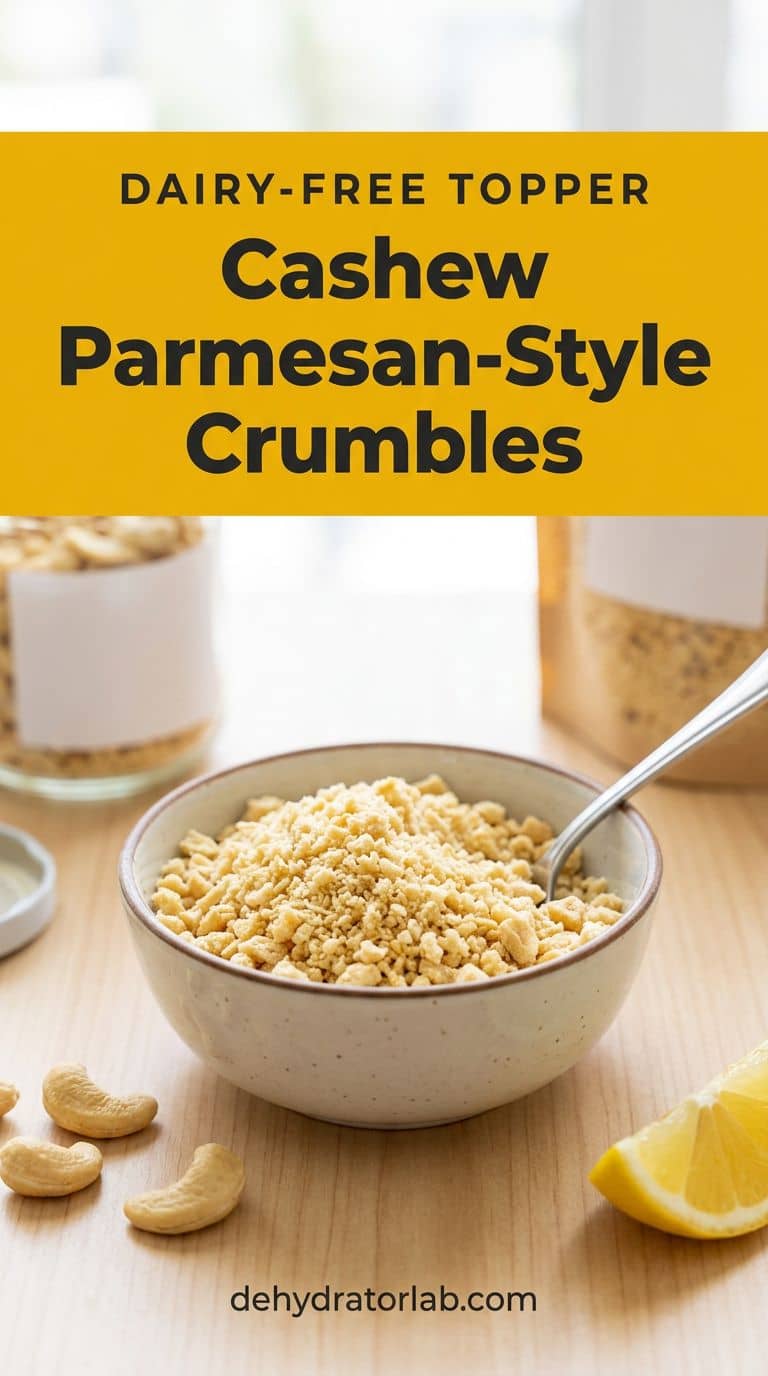
3. Cashew Parmesan-Style Crumbles
This is the odd one out: a dairy-free topping instead of a snack. Cashews are soft, so they need a shorter soak of about 2 to 4 hours in the fridge. That matters, because the Oregon State University study found Salmonella grew in cashews, almonds, hazelnuts, and peanuts when they soaked at room temperature.
Drain and rinse 1 cup of cashews, then pulse them with 3 tablespoons of nutritional yeast, 1 tablespoon of lemon juice, 1/2 teaspoon of garlic powder, and 1/2 teaspoon of salt until it looks like coarse crumbs. Don’t blend it smooth. Spread it thin on a silicone sheet and dry at 115–120°F (46–49°C) for about 8 to 12 hours, breaking it up halfway.
Because the crumbs start wet and have lemon juice in them, I keep them in the fridge. They are great on soup, popcorn, and roasted veggies. Cheesy crunch, no dairy.
4. Hazelnuts with Cocoa and Sea Salt
Hazelnuts are dense and a little tannic, so they take the longest soak here. Soak 2 cups in the fridge for about 8 hours, then drain and rinse.
Toss them with 1 tablespoon of cocoa powder, 2 teaspoons of maple syrup, and 1/2 teaspoon of flaky sea salt. Dry at 115–120°F (46–49°C) for about 14 to 20 hours. They’re done when a cooled hazelnut snaps with no soft spot in the middle.
Dense nuts hold water deep in the center. If you bite one and it feels cool and chalky-soft, it needs more time, even if the outside is crisp.
- Soak them in the fridge, because hazelnuts are one of the nuts in the Salmonella study.
- Sift the cocoa over the nuts and toss gently.
- Taste after cooling, because warm hazelnuts lie.

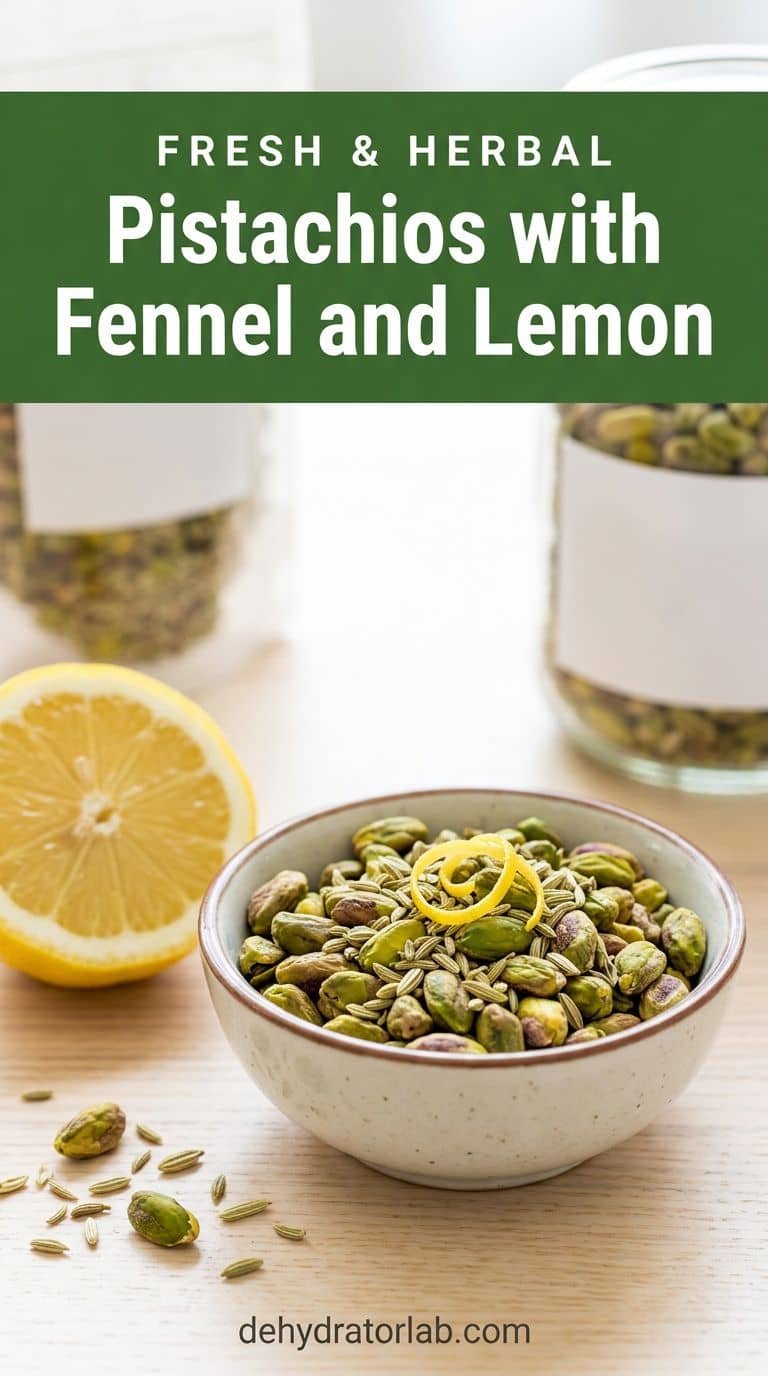
5. Pistachios with Fennel and Lemon
Pistachios are the nut I soak the least, so I keep it short at about 3 to 4 hours in the fridge. Drain and rinse 2 cups of shelled raw pistachios, then toss them with 1 teaspoon of crushed fennel seeds, 1 teaspoon of dehydrated lemon zest, and 1/2 teaspoon of salt.
Dry at 115–120°F (46–49°C) for about 10 to 16 hours. Fennel seeds are a classic after-dinner chew in many cuisines, and they give these a fresh, faintly sweet finish.
Buy raw, shelled, unsalted pistachios, since salted ones will taste far too salty once the flavor concentrates. Crush the seeds just before you use them, because they lose their aroma fast. Fresh, green, and herbal.
6. Walnut and Cacao Nib Crumble for Yogurt
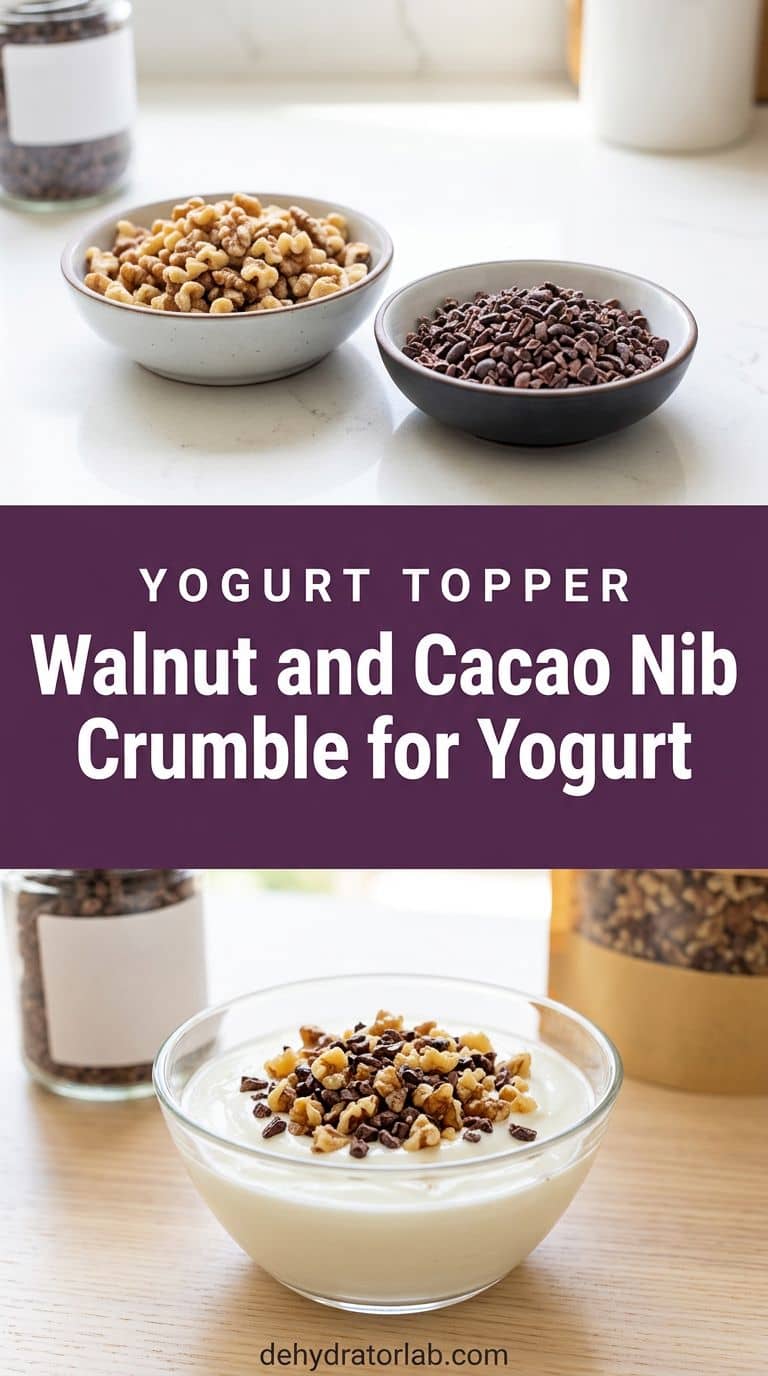
This one is a topper for plain yogurt or kefir, and it works well with my 8 dehydrated dessert topping recipes. Soak 2 cups of walnuts in the fridge for about 4 to 6 hours, drain, rinse, and chop them coarsely.
Toss with 2 tablespoons of cacao nibs, 1 teaspoon of maple syrup, 1/2 teaspoon of vanilla, and a pinch of salt. Chopped pieces dry faster than halves, so plan for about 8 to 14 hours at 115–120°F (46–49°C).
Plain yogurt and kefir bring their own live cultures if the label says so, and the crumble gives them a crunch. My dehydrated Greek yogurt chips are another crunchy yogurt idea. Crunch on top, tang underneath.
Quick Reference: Soak, Dry, and Store
| Recipe | Soak | Dry at | Keeps |
|---|---|---|---|
| Walnuts, cinnamon and ginger | Fridge, 4–6 h | 115–120°F (46–49°C), 12–20 h | Airtight, 2–3 weeks |
| Pecans, cardamom and orange | Fridge, 4–6 h | 115–120°F (46–49°C), 12–18 h | Airtight, 2–3 weeks |
| Cashew parmesan crumbles | Fridge, 2–4 h | 115–120°F (46–49°C), 8–12 h | Fridge, about 2 weeks |
| Hazelnuts, cocoa and sea salt | Fridge, about 8 h | 115–120°F (46–49°C), 14–20 h | Airtight, 2–3 weeks |
| Pistachios, fennel and lemon | Fridge, 3–4 h | 115–120°F (46–49°C), 10–16 h | Airtight, 2–3 weeks |
| Walnut cacao nib crumble | Fridge, 4–6 h | 115–120°F (46–49°C), 8–14 h | Fridge, about 2 weeks |
These soak times, drying times, and storage lengths are my own estimates from home batches. They shift with the size of the nut, your machine, the humidity, and how heavy the tray is. Humid kitchens run toward the long end.
What Soaking Does (and Doesn’t) Do for Your Gut
Here’s the part most nut blogs skip. A 2020 study by Kumari and colleagues in Food Chemistry, summarized by the University of Otago, found that activating nuts did not meaningfully reduce phytate, with changes ranging from about 12 percent lower to 10 percent higher. Soaking also generally lowered mineral levels. The authors say their work does not support claims that activating nuts improves nutrient availability.
So why do I soak? For texture, a milder taste, and because flavors stick better to a damp surface. Soaking isn’t a digestive upgrade, and my older guide on how to dehydrate nuts leans harder on that idea than the research supports. If you’d rather skip the soak, dry raw nuts with the same flavors and expect a shorter drying time.
What about nuts and the gut itself? In a randomized crossover trial of 194 healthy adults, eating 43 grams of walnuts a day for 8 weeks increased Bifidobacteria and Ruminococcaceae, while some Clostridium cluster XIVa members decreased. The authors say longer studies are needed. A broader review of nuts and gastrointestinal health concludes that although some studies show nuts promote a healthy microbiota, clinical trials are still inconclusive.
My takeaway is simple. Nuts are a good food to eat regularly, and a crunchy topper on plain yogurt or kefir is an easy habit. None of this is medical advice, and I’m not claiming a snack fixes anything. If you have digestive problems, talk to your doctor.
Soaking Safely
The Oregon State study tested 15 grains, nuts, and seeds soaked for 24 hours. Salmonella populations grew significantly in almonds, cashews, hazelnuts, peanuts, and buckwheat when they soaked at room temperature. The researchers named refrigeration and salt in the soak as the most practical fixes.
That’s why every recipe here soaks in the fridge with a little salt, and why I never leave a jar on the counter overnight. I also throw out the soak water, rinse the nuts, and move them to the dehydrator soon after. Drying at 115–120°F (46–49°C) is gentle, so I don’t treat it as a pasteurizing step.
Storing Your Nuts
Let every batch cool completely on the tray before it goes into a jar, because warm nuts trap steam and go soft. Store them in airtight glass jars. Nut oils turn rancid over time, so I keep batches I won’t finish in two weeks in the fridge or freezer. Nuts are high in fat, so for longer storage keep them in the fridge or freezer; my notes on how long dehydrated food lasts cover the timelines.
Personal Tips You Can Steal
I always label the soak jar with the time I started, because a forgotten jar is the one that worries me. I soak in the back of the fridge, where the temperature stays steady. I set a timer for the short soaks, since cashews turn mushy fast.
I test one nut from every tray after it cools, never while it’s warm. I toast a spoonful of the cashew crumbles in a dry pan before serving, and the flavor deepens. I keep a small jar of the walnut crumble next to the yogurt, and I eat it before it has a chance to get stale.
Final Thoughts
Soaked and dried nuts are worth making for the crunch and the flavor alone. Start with the walnuts and the pecans, then try the cashew crumbles when you want a topping that works on everything.
Related reading: 8 flavored and activated almond recipes, 7 seasoned pumpkin seed recipes, 10 trail mix recipes, and 8 homemade dehydrated cracker recipes.
P.S. If a batch comes out chewy, don’t toss it. Give it a few more hours on the tray and let it cool before you taste it again. 🙂