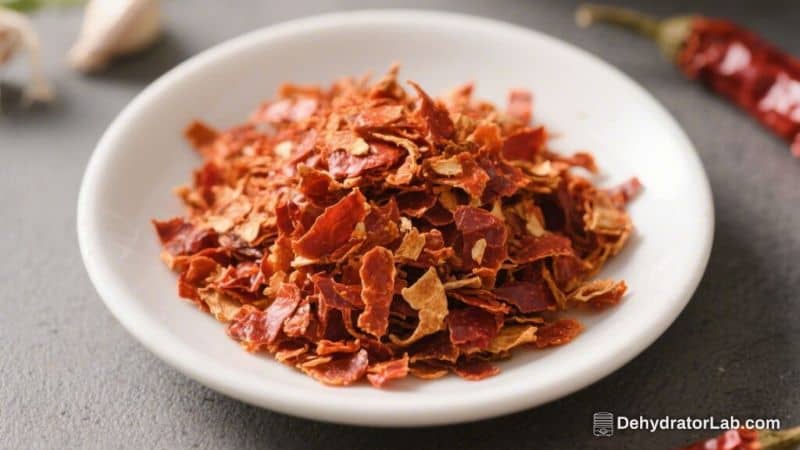
Love hot sauce but wish it traveled better, stored longer, and sprinkled like a seasoning? Dehydrated hot sauce flakes do exactly that. They capture the tang, heat, and depth of your favorite hot sauce in a crunchy, shelf-stable form.
You can shake them over eggs, pizza, tacos, popcorn—anything that needs a quick blast of flavor. No risk of leaking bottles, and no refrigeration needed. If you enjoy DIY pantry projects, this one is simple, satisfying, and incredibly useful.
In this article:
Why This Recipe Works
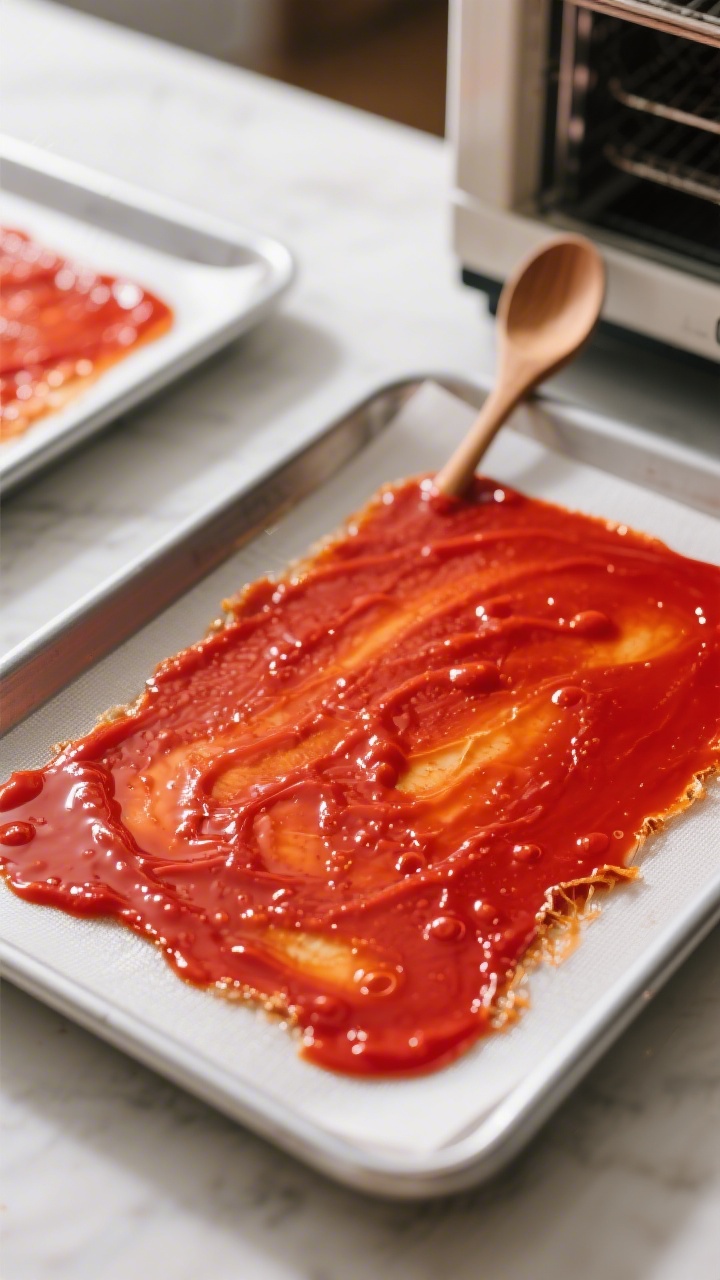
Dehydrating hot sauce removes water while keeping the flavor compounds and heat.
That means you end up with a concentrated seasoning that stores well and tastes bright. A little vinegar in the sauce helps preserve color and tang during drying. Using low heat protects the flavors and prevents bitterness.
Finally, blending the dried sheets into flakes gives you a versatile texture you can sprinkle or pinch.
TL;DR: Key Takeaways
- 🌶️ Spread hot sauce 1 to 2 millimeters thin — thick spots stay chewy instead of crisping.
- 🌡️ Dry at 125°F to 135°F (52°C to 57°C) for 6 to 10 hours until it snaps cleanly.
- 🧊 Cool fully before grinding — warm sheets trap steam and clump instead of flaking.
- 🏷️ Label every jar — dried hot sauce sheets from different bottles all look the same.
Shopping List
- Your favorite hot sauce (8–16 ounces). Choose a smooth, vinegar-based sauce for best results.
- Optional flavor add-ins (blend with the sauce before drying):
- Garlic powder or roasted garlic paste
- Onion powder
- Smoked paprika or chipotle powder
- Lime zest or lemon zest
- A touch of honey or maple syrup for balance
- Nonstick option: Silicone dehydrator sheets or parchment paper
- Equipment: Dehydrator or oven, blender or spice grinder, airtight jars
Step-by-Step Instructions
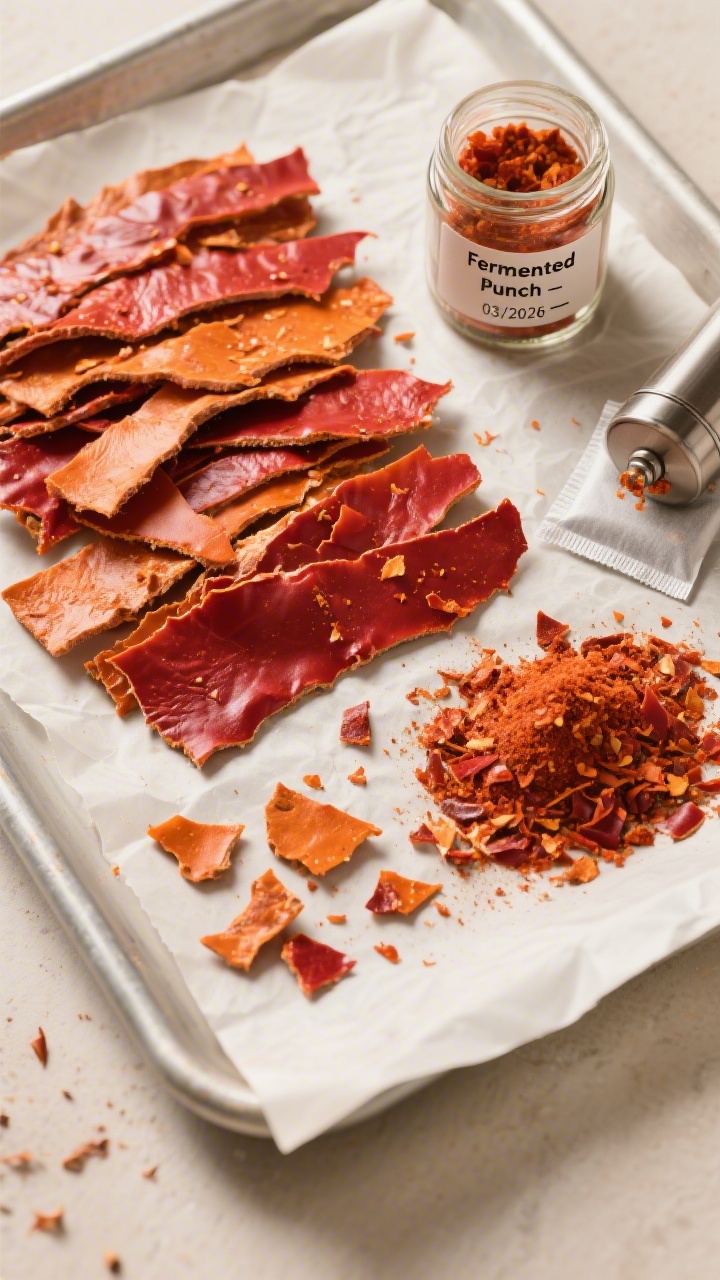
- Choose your sauce. Pick a hot sauce you genuinely love. Smooth sauces dehydrate more evenly than chunky ones.
If your sauce is very thick, add a tablespoon of water to help it spread thinly.
- Line your trays. Use silicone dehydrator sheets or parchment paper to prevent sticking. If using an oven, line baking sheets with parchment.
- Spread thin and even. Pour the sauce onto the lined trays and spread it into a thin, even layer—about 1–2 millimeters thick. Thick spots will dry slowly and turn chewy.
- Set the temperature. For a dehydrator, aim for 125–135°F (52–57°C).
For an oven, set it to the lowest temperature possible (often 170–200°F / 75–95°C) and prop the door open slightly with a wooden spoon to help moisture escape.
- Dry patiently. Dehydrate for 6–10 hours, depending on thickness, humidity, and temperature. In an oven, it may take 3–6 hours at higher temps. Rotate trays halfway for even results.
- Check for doneness. The sauce should form a brittle sheet that snaps cleanly.
If it bends or feels tacky, keep drying. No moisture should remain—that’s key for crisp flakes and long shelf life.
- Cool completely. Let the dried sheets cool on the trays for 20–30 minutes. Cooling firms them up and reduces clumping during grinding.
- Break and blend. Snap the sheets into pieces and pulse in a blender or spice grinder until you have flakes. Stop before it turns to powder unless that’s what you prefer.
- Season to taste (optional). Stir in a pinch of salt, a little garlic powder, or a touch of sugar if you want a sweet-heat balance.
Keep additions light to preserve the hot sauce’s core flavor.
- Jar and label. Transfer to clean, airtight jars. Label with the sauce type and date.
Storage Instructions
- Keep flakes in an airtight container in a cool, dark place. Light and air dull the flavor over time.
- For extra protection against moisture, add a food-safe desiccant pack to the jar.
- Properly dried and stored flakes last 6–12 months with good flavor.
They’re still safe beyond that but may lose brightness.
- Keep a small jar for daily use and the rest sealed for long-term freshness.
Health Benefits
- Capsaicin kick: Chili peppers contain capsaicin, which may support metabolism and help reduce perceived pain.
- Lower sodium control: Making your own flakes helps you manage salt levels compared to some store-bought seasonings.
- Flavor without fat: Intense heat and tang boost taste without added oils or heavy sauces.
- Potential antioxidants: Peppers and spices contain natural antioxidants that support overall wellness.
Common Mistakes to Avoid
- Spreading too thick: Thick layers stay sticky and never become truly crisp.
- Rushing the process: High heat can scorch the sauce and create bitter notes. Low and slow is safer.
- Skipping the cool-down: Grinding warm sheets traps residual steam and encourages clumping.
- Storing while warm: Trapped moisture shortens shelf life and softens flakes.
- Not labeling: You will forget which sauce you used. Labels save guesswork, especially if you make multiple batches.
Variations You Can Try
- Smoky Flakes: Stir in a half teaspoon of smoked paprika per cup of sauce before drying for a barbecue-like finish.
- Citrus-Lime Heat: Blend in fresh lime zest for brightness that pops on seafood and salads.
- Garlic Bomb: Add roasted garlic paste for savory depth.
Go light to avoid gumminess.
- Sweet Heat: Mix in a teaspoon of honey or maple syrup per cup of sauce for a balanced glaze-like flavor that shines on roasted veggies.
- Fermented Punch: Use a funky, fermented hot sauce for complex tang. These often dry beautifully and taste layered.
- Crunch Mix: After grinding, fold in sesame seeds or crushed nori for a spicy sprinkle over rice and noodles.
FAQ
Can I use chunky hot sauces?
Yes, but you’ll get better texture if you blend the sauce smooth first. Strain out seeds or pulp if you want a clean, uniform flake.
What if I don’t have a dehydrator?
An oven on its lowest setting works.
Keep the door slightly open to let moisture escape and check often to prevent scorching.
How can I tell when it’s fully dry?
The sheet should be brittle and snap cleanly with no tacky spots. If in doubt, keep drying for another 30–60 minutes and retest.
Are these flakes the same as chili flakes?
Not exactly. Chili flakes are dried peppers.
These are dehydrated hot sauce, so they deliver pepper heat plus vinegar tang and any seasonings found in the sauce.
Can I make a powder instead of flakes?
Absolutely. Just grind longer until you get a fine powder. It’s great for spice rubs and seasoning blends.
Do I need to refrigerate the finished flakes?
No.
If fully dried and stored airtight, they’re shelf-stable. Refrigeration isn’t necessary but won’t hurt if the container is sealed tight.
Will the heat level change after dehydrating?
Flavors concentrate, so the heat often feels a bit stronger. Start with a light sprinkle and adjust to taste.
Can I combine different sauces in one batch?
Yes, just blend them together first for even drying.
Mixing can create unique flavor profiles, but note the final heat can be unpredictable.
Is parchment paper safe at dehydrating temps?
Yes. At low dehydrating temperatures, parchment is safe and prevents sticking. Avoid wax paper, which can melt.
What should I put these flakes on?
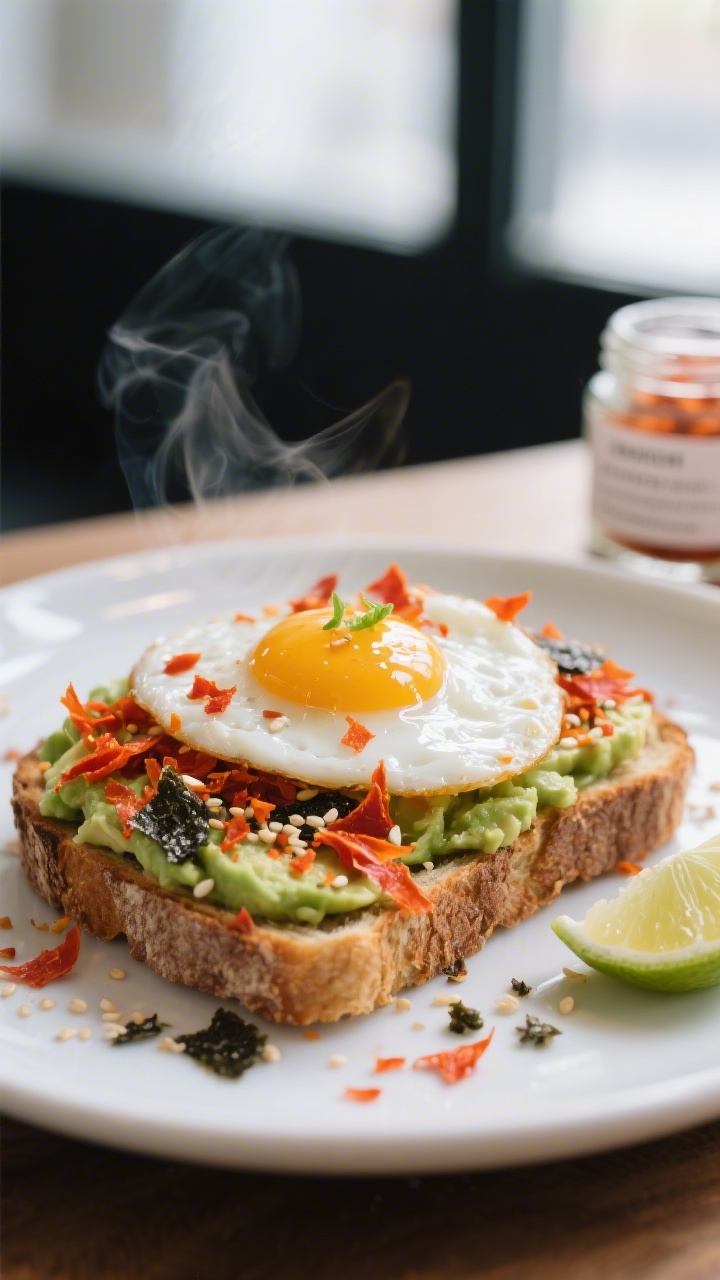
Try eggs, avocado toast, pizza, tacos, ramen, roasted vegetables, grilled chicken, popcorn, or even a spicy rim for cocktails.
They add fast heat and zing.
Personal Tips You Can Steal
I keep a running rotation of two or three sauces going instead of committing to a full jar of just one — a small batch of a fermented hot sauce (from the variations above) dries beautifully and gives you something totally different from the usual vinegar-based stuff. Also, if your sauce is thick, thin it with a tablespoon of water before spreading rather than trying to spread it thick and hoping the dehydrator sorts it out — it won’t.
Final Thoughts
Dehydrated hot sauce flakes are a smart way to capture your favorite hot sauce flavor in a mess-free, long-lasting format. The method is simple, the ingredients are minimal, and the result is a powerful pantry staple. Make a couple of varieties, label them, and keep them within arm’s reach.
You’ll find yourself reaching for these flakes every time a dish needs heat, brightness, and a little personality.
P.S. Keep a small shaker jar of these by the stove — you’ll reach for them way more often than the bottled version once they’re this easy to grab. 🙂
Dehydrated Hot Sauce Flakes – A Bold, Shelf-Stable Flavor Booster
Ingredients
- Your favorite hot sauce (8–16 ounces). Choose a smooth, vinegar-based sauce for best results.
- Optional flavor add-ins (blend with the sauce before drying): Garlic powder or roasted garlic paste
- Onion powder
- Smoked paprika or chipotle powder
- Lime zest or lemon zest
- A touch of honey or maple syrup for balance
- Nonstick option: Silicone dehydrator sheets or parchment paper
- Equipment: Dehydrator or oven, blender or spice grinder, airtight jars
Instructions
- Choose your sauce. Pick a hot sauce you genuinely love. Smooth sauces dehydrate more evenly than chunky ones.If your sauce is very thick, add a tablespoon of water to help it spread thinly.
- Line your trays. Use silicone dehydrator sheets or parchment paper to prevent sticking. If using an oven, line baking sheets with parchment.
- Spread thin and even. Pour the sauce onto the lined trays and spread it into a thin, even layer—about 1–2 millimeters thick. Thick spots will dry slowly and turn chewy.
- Set the temperature. For a dehydrator, aim for 125–135°F (52–57°C).For an oven, set it to the lowest temperature possible (often 170–200°F / 75–95°C) and prop the door open slightly with a wooden spoon to help moisture escape.
- Dry patiently. Dehydrate for 6–10 hours, depending on thickness, humidity, and temperature. In an oven, it may take 3–6 hours at higher temps. Rotate trays halfway for even results.
- Check for doneness. The sauce should form a brittle sheet that snaps cleanly.If it bends or feels tacky, keep drying. No moisture should remain—that’s key for crisp flakes and long shelf life.
- Cool completely. Let the dried sheets cool on the trays for 20–30 minutes. Cooling firms them up and reduces clumping during grinding.
- Break and blend. Snap the sheets into pieces and pulse in a blender or spice grinder until you have flakes. Stop before it turns to powder unless that’s what you prefer.
- Season to taste (optional). Stir in a pinch of salt, a little garlic powder, or a touch of sugar if you want a sweet-heat balance.Keep additions light to preserve the hot sauce’s core flavor.
- Jar and label. Transfer to clean, airtight jars. Label with the sauce type and date.
Related reading: dehydrated scrambled eggs, dehydrated asparagus spears, and dehydrator reviews.
Printable Recipe Card
Want just the essential recipe details without scrolling through the article? Get our printable recipe card with just the ingredients and instructions.