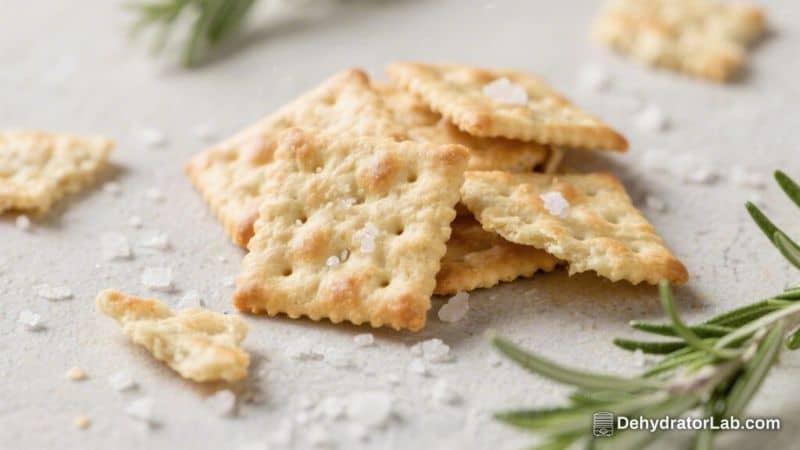
These rosemary sea salt dehydrated crackers are thin, crisp, and packed with clean, herb-forward flavor. They’re perfect for snacking, scooping up dips, or pairing with cheese without overpowering what’s on your plate. You get the crunch you crave without refined flours or added oils.
If you love simple ingredients and bold flavor, this recipe will be your new pantry staple. The steps are easy, and the result feels gourmet—without a lot of fuss.
In this article:
TL;DR: Key Takeaways
- 🌱 Grind half your sunflower and pumpkin seeds into a coarse meal, mix with whole seeds, chia, and flax to bind — no flour or eggs needed.
- 🌡️ Spread 1/8 inch thick and dehydrate at 125–135°F (52–57°C) for 6–10 hours, flipping onto mesh partway through.
- ✅ Score before drying so the sheet snaps into clean squares once fully crisp.
- 🧂 Season boldly, especially on top — flavors mute noticeably as the crackers dehydrate.
What Makes This Special
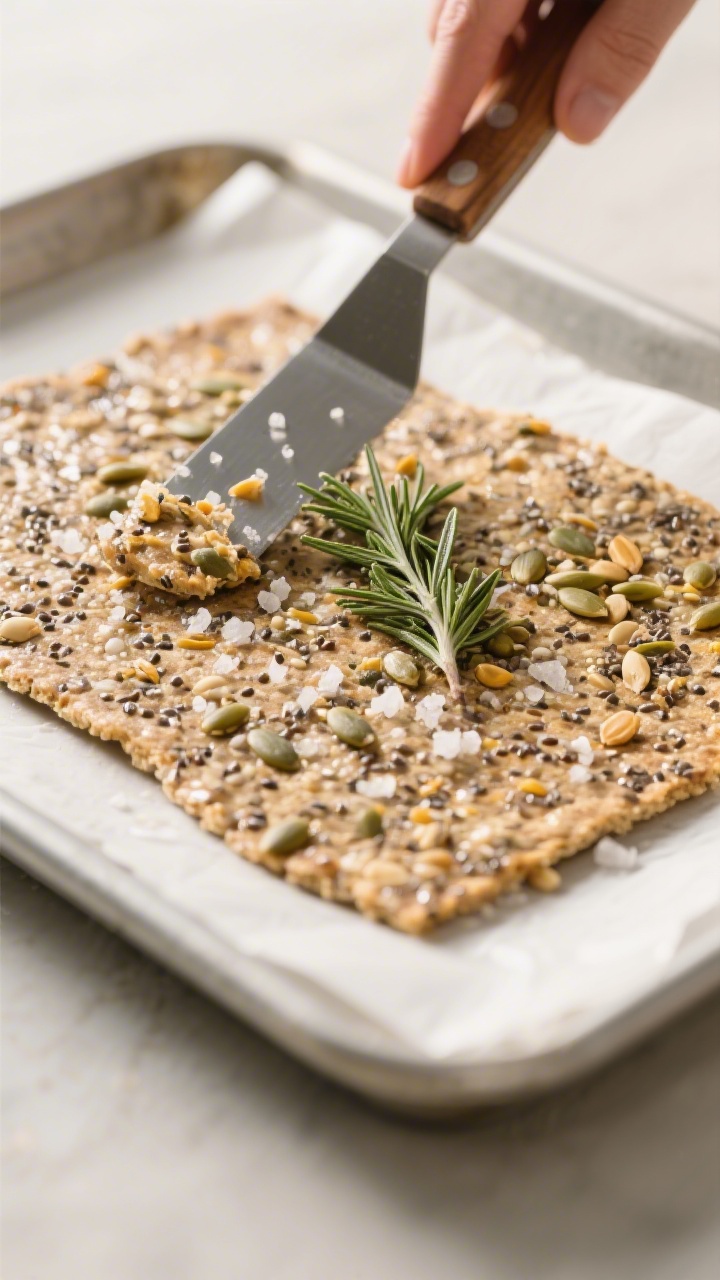
These crackers lean on wholesome seeds and fresh rosemary to create a light, shatter-crisp texture with a savory finish. Dehydrating preserves nutrients and flavor while delivering serious crunch.
There’s no guesswork with rising or rolling dough—just mix, spread, and dehydrate. The rosemary and sea salt combo is bright and aromatic, and the base is naturally gluten-free. Best of all, they store beautifully for weeks when kept dry.
Shopping List
- Sunflower seeds (raw, unsalted)
- Pumpkin seeds (raw, unsalted)
- Chia seeds
- Ground flaxseed (golden or brown)
- Sesame seeds (optional for extra nuttiness)
- Fresh rosemary (finely chopped; dried works in a pinch)
- Sea salt (flake or fine; flake for finishing)
- Garlic powder (optional, for depth)
- Onion powder (optional, for savoriness)
- Black pepper (freshly ground)
- Olive oil (optional, adds richness)
- Lemon zest (optional, brightens the rosemary)
- Water (to hydrate the seeds and bind)
- Parchment paper or silicone dehydrator sheets
How to Make It
- Grind part of the seeds: Add half the sunflower and pumpkin seeds to a food processor.
Pulse until you get a coarse meal, not a paste. This helps the crackers hold together while keeping texture.
- Mix the dry ingredients: In a large bowl, combine the ground seed mix with the remaining whole sunflower and pumpkin seeds, chia seeds, ground flaxseed, and sesame seeds. Stir in chopped fresh rosemary, sea salt, black pepper, and, if using, garlic and onion powder.
Add lemon zest for a fresh note.
- Add water to bind: Pour in water a little at a time, stirring until the mixture is thick and spreadable—like oatmeal. The chia and flax will gel as they sit. Let the mixture rest for 10–15 minutes so it firms up.
- Adjust seasoning: Taste a small bit.
It should be slightly saltier than you want the final cracker since flavors mellow as they dehydrate. Add a drizzle of olive oil if you want a richer, more tender snap.
- Prepare trays: Line dehydrator trays with nonstick sheets or use parchment on baking trays if using your oven on its lowest setting. Lightly brush with olive oil if your sheets tend to stick.
- Spread thin and even: Divide the mixture onto the trays.
Using an offset spatula or the back of a spoon, spread to about 1/8 inch thick. Thinner equals crisper, but make sure there are no holes.
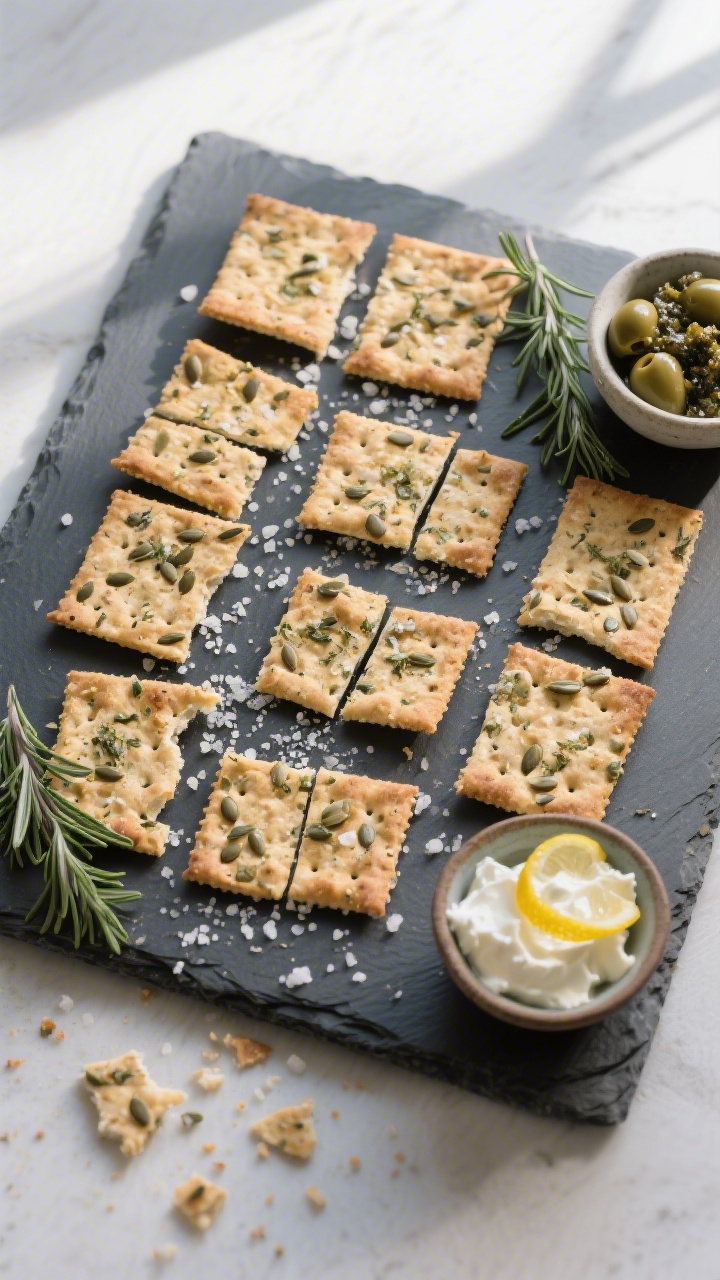
- Score the crackers: Use a knife or pizza wheel to lightly score into squares or rectangles. This makes snapping them apart clean and easy once dry.
- Finish with sea salt: Sprinkle a pinch of flaky sea salt and a little extra rosemary on top. Press gently so it adheres.
- Dehydrate low and slow: Dehydrate at 125–135°F (52–57°C) for 6–10 hours, depending on thickness and humidity.
If using an oven, set it to the lowest temperature, prop the door slightly with a wooden spoon, and bake 2–4 hours, flipping sheets halfway. The crackers are done when completely dry and crisp in the center.
- Flip for even drying: After 3–4 hours in a dehydrator, peel off the nonstick sheet and continue dehydrating directly on the mesh. This ensures both sides dry evenly.
- Cool and snap: Let the sheets cool completely.
Break along the score lines. If any pieces feel soft, return them to the dehydrator for another 30–60 minutes.
Storage Instructions
Cool the crackers fully before storing; any trapped warmth creates steam and softens the crunch. Keep them in an airtight container or glass jar with a tight lid.
For extra insurance, add a small food-safe desiccant pack or a few grains of raw rice in a sachet to absorb moisture. Store at room temperature for up to 3 weeks. If they lose crispness, pop them back in a 200°F (95°C) oven or 135°F (57°C) dehydrator for 10–15 minutes.
Benefits of This Recipe
- Whole-food ingredients: Seeds bring fiber, protein, and healthy fats without refined flours.
- Customizable flavor: Rosemary and sea salt shine, but the base welcomes all kinds of herbs and spices.
- Naturally gluten-free and vegan: No eggs or dairy needed—chia and flax do the binding.
- Meal prep friendly: One batch makes a big jar of snacks that stay crisp for weeks.
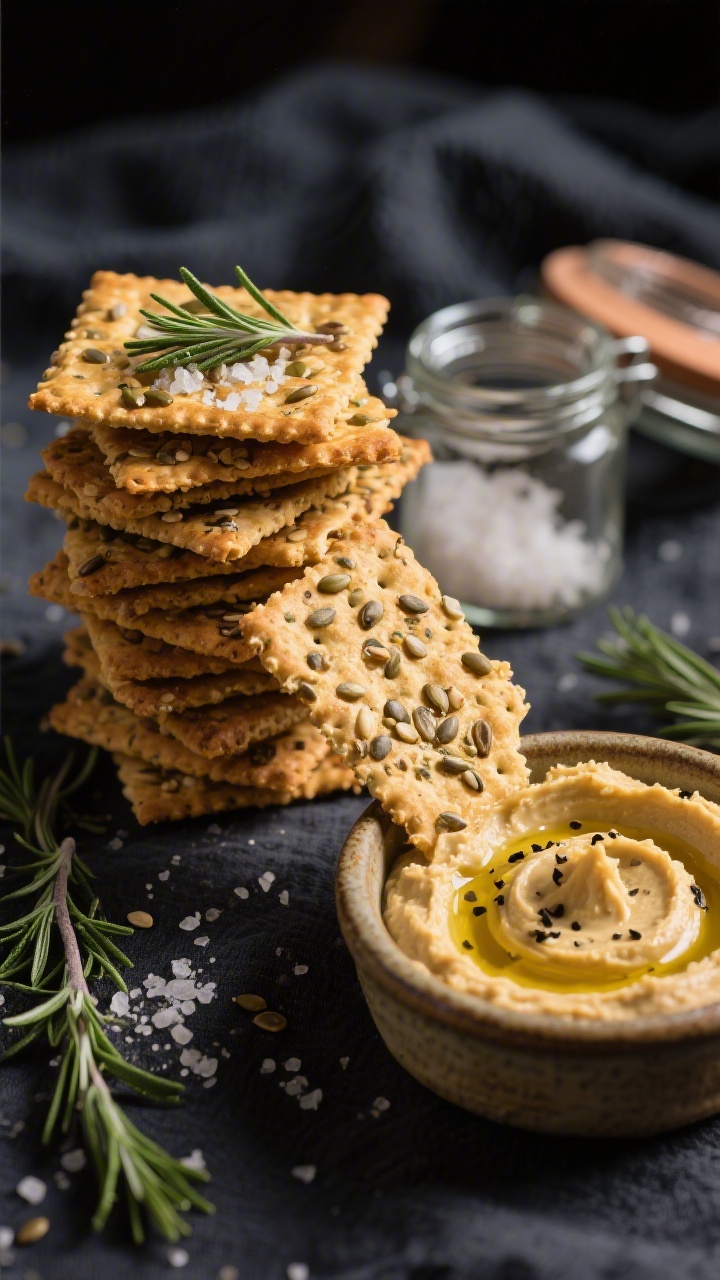
- Great for dips and boards: Sturdy enough for hummus, soft cheeses, smoked salmon, or olive tapenade.
What Not to Do
- Don’t spread too thick: Thick layers lead to leathery centers.
Aim for about 1/8 inch.
- Don’t skip the rest time: The chia and flax need time to gel; otherwise, the sheet may crack unevenly.
- Don’t under-salt: Dehydration mutes flavors. Season boldly, especially on top.
- Don’t store warm: Even slight warmth traps moisture and ruins crispness.
- Don’t rush the dry: High heat can brown and turn the flavor bitter. Low and slow is key.
Variations You Can Try
- Lemon Rosemary: Add extra zest and a touch of cracked pepper for a bright, peppery snap.
- Herbes de Provence: Swap some rosemary for thyme, oregano, and lavender for a floral, savory twist.
- Everything Seed: Add sesame, poppy, dried garlic, and dried onion; finish with flake salt.
- Smoky Paprika: Stir in smoked paprika and a pinch of cayenne for warmth and color.
- Olive and Rosemary: Finely chop oil-cured olives, blot dry, and fold into the mix for briny bites.
- Cheesy (Vegan): Add nutritional yeast and a squeeze of lemon for a parmesan-like note.
FAQ
Can I make these without a dehydrator?
Yes.
Use your oven’s lowest setting, ideally 170–200°F (75–95°C). Prop the door slightly to let moisture escape. Check at the 90-minute mark and flip the sheet for even drying.
They’ll be ready when crisp all the way through.
How do I keep the crackers from sticking?
Use quality parchment or silicone dehydrator sheets. Lightly oil the surface if your batter is very wet. Flip the sheet once the top is dry enough to lift cleanly.
What if I don’t have sunflower or pumpkin seeds?
Use what you have—hemp hearts, extra sesame, or more flax.
Keep some portion ground for binding and some whole for crunch. Aim for a mix of fine and coarse textures.
Can I use dried rosemary?
Absolutely. Use about one-third the amount of dried rosemary compared to fresh, since dried is more concentrated.
Crush it between your fingers to release the oils.
Why are my crackers bending instead of snapping?
They’re not fully dry or were spread too thick. Return them to the dehydrator or oven until the centers are crisp. Make sure to cool completely before testing—they firm up as they cool.
Are these suitable for keto or low-carb diets?
Generally, yes.
They’re seed-based and relatively low in net carbs. Always check your specific macros and adjust seed ratios if needed.
Can I freeze them?
You can, but it’s usually not necessary. If you do, freeze in a sealed bag with air pressed out.
Thaw at room temperature and re-crisp in a warm oven for a few minutes.
How thick should the batter be?
It should hold a mound on a spoon but spread easily with gentle pressure. If it’s runny, add more ground flax. If it’s too stiff, add a splash of water.
What dips pair well with these?
Try hummus, whipped feta, olive tapenade, smoked trout dip, or a simple avocado mash with lemon and chili flakes.
The clean rosemary flavor pairs with both creamy and briny dips.
Can I add sweet notes?
Yes. For a sweet-savory twist, add a pinch of maple sugar and black pepper, then pair with soft goat cheese and figs. Go light so the rosemary still leads.
Personal Tips You Can Steal
I always press the finishing salt and rosemary on with the flat of a spatula rather than just sprinkling and hoping — a light press right before the sheet goes into the dehydrator keeps way more of it stuck on through the full drying time instead of shaking loose once the crackers are brittle. If my batter looks a touch too wet after the rest period, I add a spoonful of ground flax rather than more whole seeds; flax thickens the mix without changing the texture the way extra whole seeds would.
Final Thoughts
These rosemary sea salt dehydrated crackers are crisp, aromatic, and simple to make.
With everyday seeds and fresh herbs, you’ll get a snack that’s both wholesome and impressive. Keep a jar on your counter for last-minute boards, quick lunches, or afternoon crunch sessions. Once you master the base, the variations are endless—and the results are reliably irresistible.
P.S. Press the finishing salt and rosemary on with a spatula before drying, not just sprinkled — it stays put through the full dehydrating time instead of shaking loose later 🙂

Rosemary Sea Salt Dehydrated Crackers – Crisp, Savory, and Naturally Delicious
Ingredients
- Sunflower seeds (raw, unsalted)
- Pumpkin seeds (raw, unsalted)
- Chia seeds
- Ground flaxseed (golden or brown)
- Sesame seeds (optional for extra nuttiness)
- Fresh rosemary (finely chopped; dried works in a pinch)
- Sea salt (flake or fine; flake for finishing)
- Garlic powder (optional, for depth)
- Onion powder (optional, for savoriness)
- Black pepper (freshly ground)
- Olive oil (optional, adds richness)
- Lemon zest (optional, brightens the rosemary)
- Water (to hydrate the seeds and bind)
- Parchment paper or silicone dehydrator sheets
Instructions
- Grind part of the seeds: Add half the sunflower and pumpkin seeds to a food processor.Pulse until you get a coarse meal, not a paste. This helps the crackers hold together while keeping texture.
- Mix the dry ingredients: In a large bowl, combine the ground seed mix with the remaining whole sunflower and pumpkin seeds, chia seeds, ground flaxseed, and sesame seeds. Stir in chopped fresh rosemary, sea salt, black pepper, and, if using, garlic and onion powder.Add lemon zest for a fresh note.
- Add water to bind: Pour in water a little at a time, stirring until the mixture is thick and spreadable—like oatmeal. The chia and flax will gel as they sit. Let the mixture rest for 10–15 minutes so it firms up.
- Adjust seasoning: Taste a small bit.It should be slightly saltier than you want the final cracker since flavors mellow as they dehydrate. Add a drizzle of olive oil if you want a richer, more tender snap.
- Prepare trays: Line dehydrator trays with nonstick sheets or use parchment on baking trays if using your oven on its lowest setting. Lightly brush with olive oil if your sheets tend to stick.
- Spread thin and even: Divide the mixture onto the trays.Using an offset spatula or the back of a spoon, spread to about 1/8 inch thick. Thinner equals crisper, but make sure there are no holes.
- Score the crackers: Use a knife or pizza wheel to lightly score into squares or rectangles. This makes snapping them apart clean and easy once dry.
- Finish with sea salt: Sprinkle a pinch of flaky sea salt and a little extra rosemary on top. Press gently so it adheres.
- Dehydrate low and slow: Dehydrate at 125–135°F (52–57°C) for 6–10 hours, depending on thickness and humidity.If using an oven, set it to the lowest temperature, prop the door slightly with a wooden spoon, and bake 2–4 hours, flipping sheets halfway. The crackers are done when completely dry and crisp in the center.
- Flip for even drying: After 3–4 hours in a dehydrator, peel off the nonstick sheet and continue dehydrating directly on the mesh. This ensures both sides dry evenly.
- Cool and snap: Let the sheets cool completely.Break along the score lines. If any pieces feel soft, return them to the dehydrator for another 30–60 minutes.
Related reading: dehydrated pumpkin powder, dehydrated greek yogurt chips, and dehydrator reviews.
Printable Recipe Card
Want just the essential recipe details without scrolling through the article? Get our printable recipe card with just the ingredients and instructions.