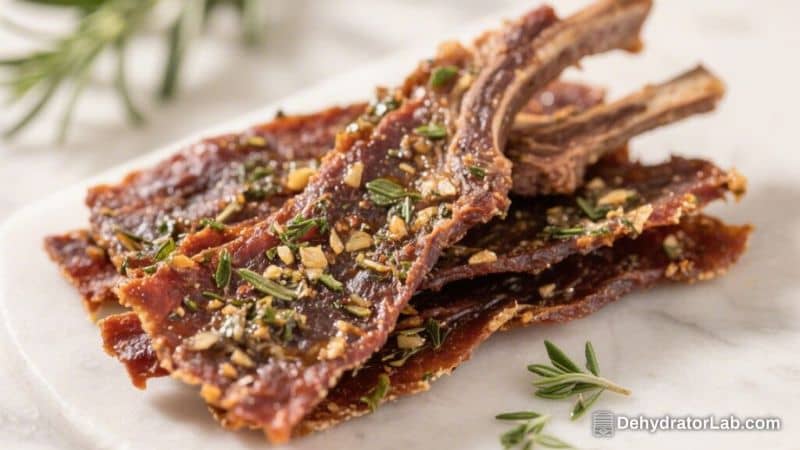
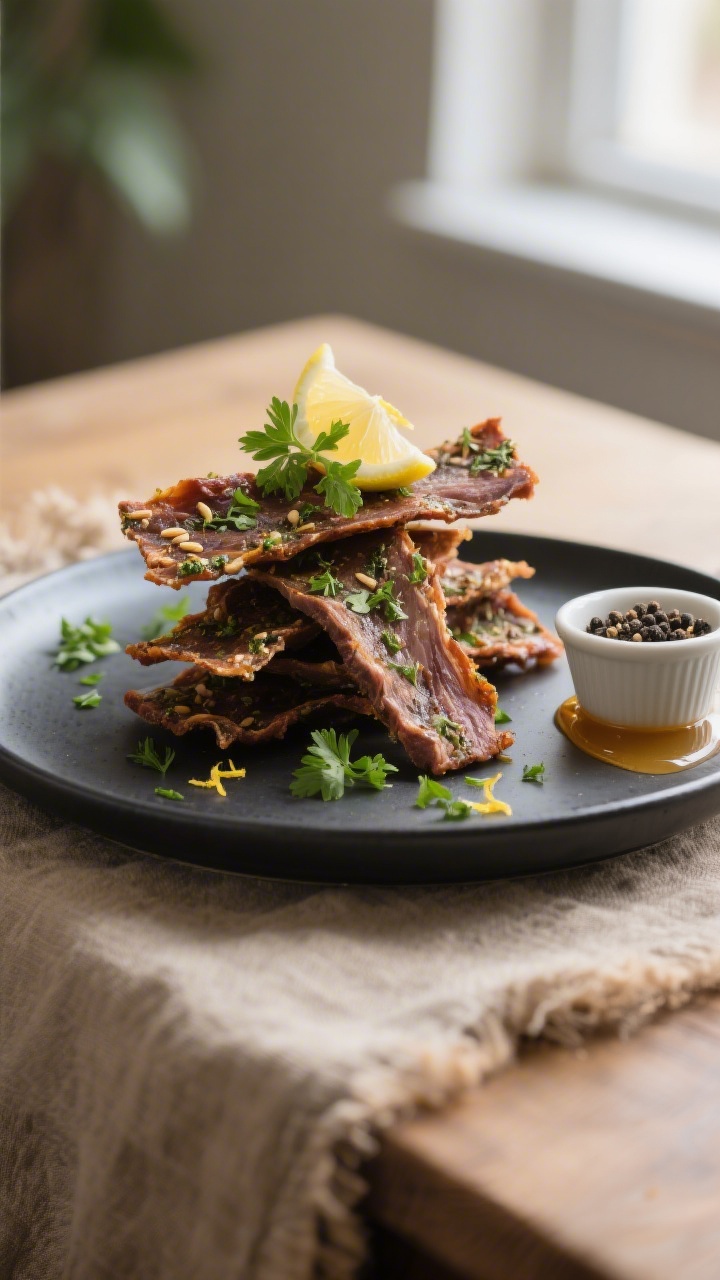
Lamb jerky doesn’t get as much attention as beef, but it should. Lamb brings a deep, rich flavor that plays beautifully with herbs, citrus, and garlic. This recipe keeps the meat tender, aromatic, and just salty enough, with a clean finish that makes it hard to stop snacking.
You’ll get all the chew you expect from jerky without losing that signature lamb character. It’s easy to prep, budget-friendly when you buy the right cut, and perfect for meal prep, hiking snacks, or a quick protein bite.
In this article:
Why This Recipe Works
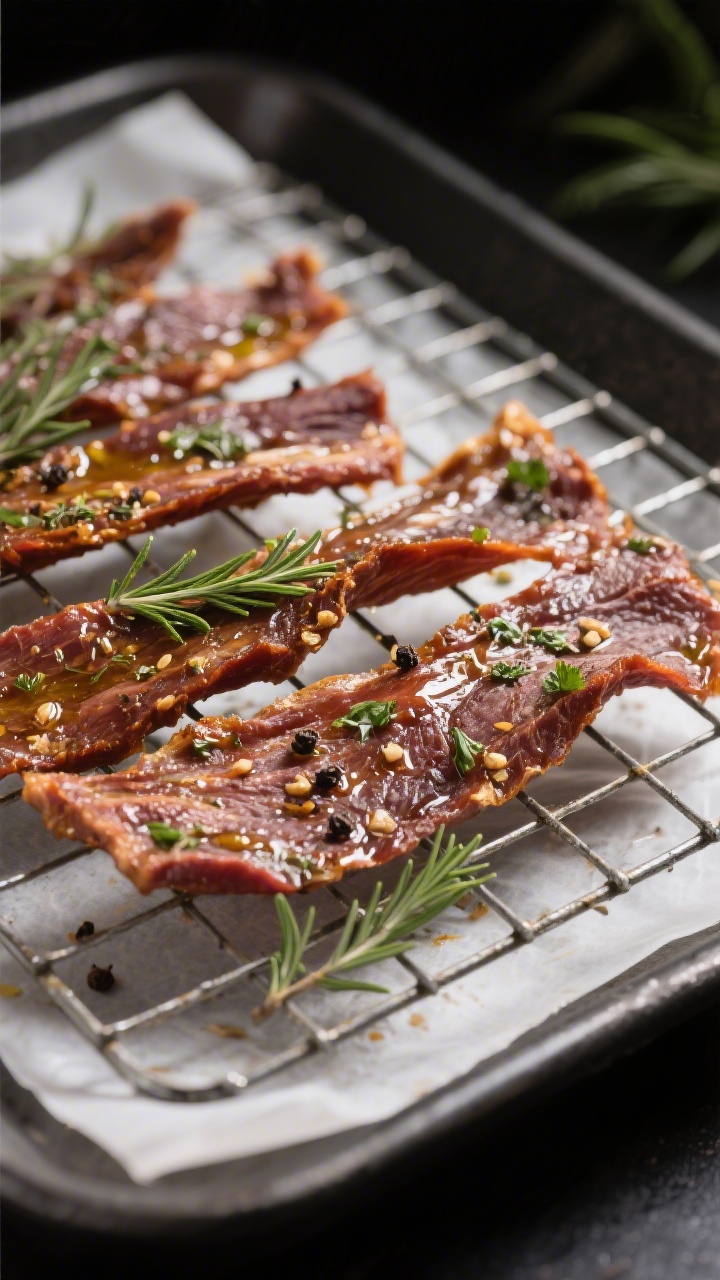
This jerky leans on a bright herb marinade to tame lamb’s gaminess and amplify its natural savor. Fresh rosemary, thyme, and parsley pair with lemon and garlic to lift the flavor while a touch of honey balances the salt.
A short cure in the fridge seasons the meat all the way through, so every bite tastes right. Slow drying at low heat locks in tenderness and prevents the jerky from turning tough or chalky.
Using lean lamb leg keeps the texture consistent and minimizes excess fat, which can go rancid during storage. Slicing across the grain creates a satisfying, easy-to-chew bite.
The result is jerky that’s bold but clean, savory but fresh, and perfect for packing or gifting.
Ingredients
- 2 pounds lamb leg, well-trimmed of fat
- 1/3 cup low-sodium soy sauce
- 2 tablespoons Worcestershire sauce
- 2 tablespoons fresh lemon juice
- 1 tablespoon honey (or maple syrup)
- 2 tablespoons olive oil
- 4 cloves garlic, minced
- 2 teaspoons kosher salt
- 1 teaspoon freshly ground black pepper
- 2 teaspoons dried rosemary (or 1 tablespoon fresh, finely chopped)
- 2 teaspoons dried thyme (or 1 tablespoon fresh, finely chopped)
- 2 tablespoons fresh parsley, finely chopped
- 1 teaspoon smoked paprika (optional, for a subtle smoky note)
- 1/2 teaspoon red pepper flakes (optional, for heat)
Instructions
- Chill and trim the lamb. Place the lamb leg in the freezer for 45–60 minutes until firm but not frozen solid. This makes slicing easier. Trim away visible fat and silverskin for cleaner drying and better storage.
- Slice evenly. Using a sharp knife, slice the lamb across the grain into strips about 1/8 to 1/4 inch thick.
Thinner slices dry faster and chewier; thicker slices stay meatier. Aim for consistent thickness.
- Make the marinade. In a large bowl, whisk soy sauce, Worcestershire, lemon juice, honey, olive oil, garlic, salt, pepper, rosemary, thyme, parsley, smoked paprika, and red pepper flakes (if using).
- Marinate. Add lamb strips to the bowl and toss to coat. Transfer to a zip-top bag or covered container, pressing out air.
Refrigerate for 8–12 hours, turning once or twice for even seasoning.
- Prep for drying. Remove lamb from the marinade and pat dry thoroughly with paper towels. Do not skip this—excess moisture slows drying and can affect texture.
- Set up your dehydrator or oven.
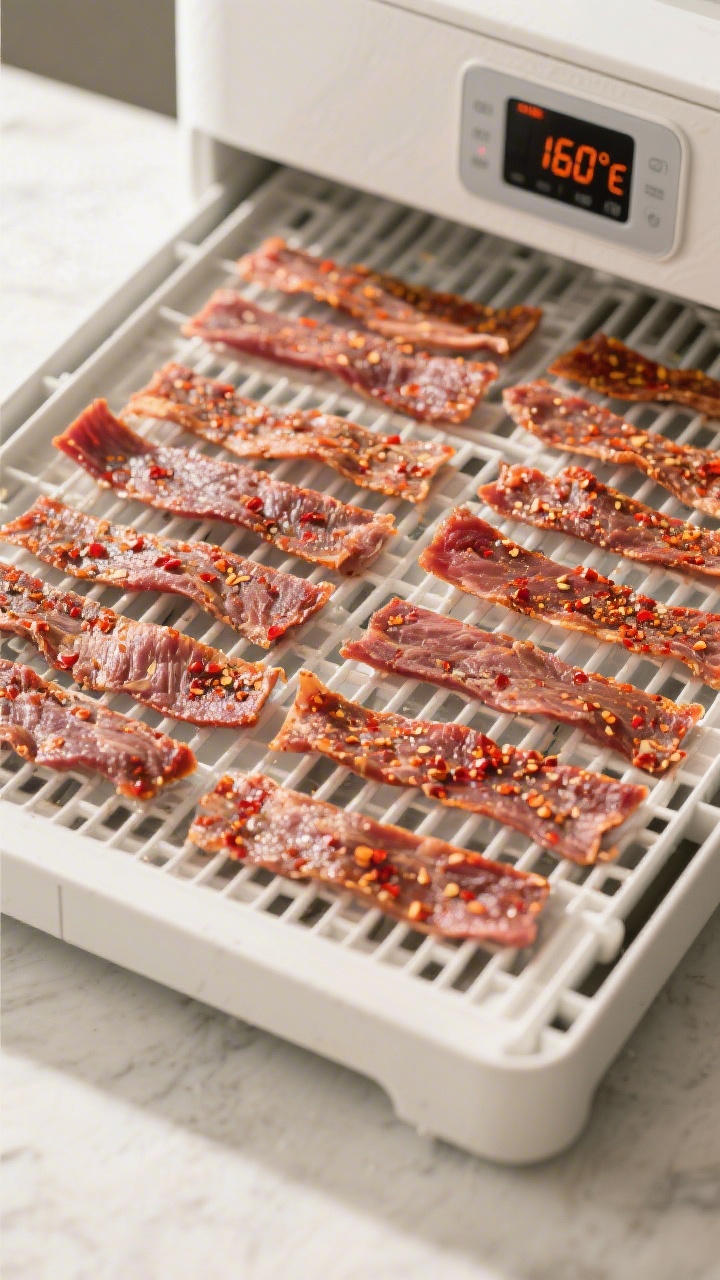
- Dehydrator: Preheat to 160°F (71°C) if your model allows; otherwise set to 150–160°F. Arrange strips in a single layer with space between pieces.
- Oven: Set to the lowest temperature (usually 170–200°F). Line baking sheets with wire racks for airflow.
Lay strips in a single layer, not touching. Prop the oven door open slightly with a wooden spoon to help moisture escape, if safe to do so.
- Dry the jerky. Dry for 3–5 hours in a dehydrator or 4–6 hours in the oven, flipping once halfway. Start checking earlier.
Jerky is done when it’s dry to the touch, slightly firm, and bends and cracks but doesn’t snap.
- Optional safety step. For home food safety, you can preheat strips to 165°F internally in a 275°F oven for 10 minutes before dehydrating, or finish the last few minutes in a hotter oven to bring internal temp to 165°F.
- Cool and condition. Let jerky cool fully on racks. Place in a loosely sealed container or bag for 24 hours, shaking once. If any condensation forms, the batch needs more drying.
- Store. Transfer to airtight containers.
See storage tips below.
Keeping It Fresh
- Short-term: Store at room temperature in an airtight jar or bag for up to 3 days if thoroughly dried.
- Refrigeration: Keeps quality for 2–3 weeks. Use a zip-top bag or vacuum-sealed pouch with a paper towel to catch residual moisture.
- Freezer: For long-term storage (up to 3 months), vacuum seal or double-bag. Thaw in the fridge to avoid condensation.
- Watch the fat: Any visible fat can turn stale faster.
Trim well and eat higher-fat pieces first.
- Label and rotate: Date your bags so you use the oldest first.
Benefits of This Recipe
- High-protein snack: Great between meals, after workouts, or on road trips.
- Big flavor, simple steps: Everyday ingredients create a standout taste without special equipment.
- Balanced seasoning: Herbs and lemon brighten lamb’s richness instead of masking it.
- Flexible method: Works in a dehydrator or a standard oven.
- Make-ahead friendly: Batch it on the weekend and snack all week.
Common Mistakes to Avoid
- Slicing with the grain: This makes jerky tough. Slice across the grain for a better chew.
- Leaving excess fat: Fat slows drying and can go rancid. Trim closely.
- Skipping the pat-dry step: Wet strips steam instead of dry, leading to leathery texture.
- Over-drying: If it snaps, it’s too far.
Aim for bend-and-crack.
- Not conditioning: Packaging hot jerky traps moisture and can cause spoilage. Cool fully first.
- Under-seasoning: Flavors soften as jerky dries. Slightly bolder marinades work best.
Variations You Can Try
- Moroccan-Style: Add ground cumin, coriander, cinnamon, and a pinch of cayenne.
Swap lemon for orange zest.
- Mint and Sumac: Add chopped fresh mint and 1 teaspoon ground sumac for a tangy herbal twist.
- Smoky Harissa: Stir 1–2 teaspoons harissa paste into the marinade and increase smoked paprika.
- Garlic-Pepper: Double the garlic and use coarsely cracked black pepper for a peppery bite.
- Ginger-Soy: Add 1 tablespoon grated fresh ginger and 1 teaspoon sesame oil; top finished jerky with toasted sesame seeds.
FAQ
What’s the best cut of lamb for jerky?
Lamb leg is ideal because it’s lean and easy to slice into uniform strips. You can also use a well-trimmed shoulder, but it may have more connective tissue and fat to remove.
How long should I marinate the lamb?
8–12 hours is the sweet spot. Less than 6 hours can taste under-seasoned, while more than 24 hours can make the texture a bit mushy.
Do I need a dehydrator?
No.
A standard oven set to its lowest temperature with good airflow works well. Use wire racks over sheet pans and keep the door slightly ajar if safe to do so.
How do I know when the jerky is done?
It should feel dry on the surface and bend and crack without snapping. If it snaps cleanly, it’s over-dried.
If it feels soft or spongy, keep drying.
Can I reduce the sodium?
Yes. Use low-sodium soy sauce and cut the salt to 1 teaspoon. Balance with extra lemon juice or herbs so flavor stays bright.
Is lamb jerky safe at room temperature?
It can be if thoroughly dried and stored airtight, but for home kitchens, refrigeration is safer.
For longer storage, freeze or vacuum seal.
Can I make it spicier?
Absolutely. Increase red pepper flakes, add a little cayenne, or blend in harissa or chili paste to the marinade.
What if I don’t like the taste of lamb?
Use extra lemon zest, a touch more parsley, and the smoked paprika option. These brighten and round out the flavor while keeping it savory.
Can I use fresh herbs only?
Yes.
Use about three times the amount of fresh herbs compared to dried. Chop them very fine to help the flavor distribute evenly.
How thick should I slice the meat?
Aim for 1/8 to 1/4 inch. Thinner slices dry faster and are chewier; thicker slices are meatier but take longer to dry evenly.
Wrapping Up
Herb-Marinated Lamb Jerky is a bold, bright take on a classic snack.
With lean lamb, a fragrant herb blend, and a gentle dry, you get tender, savory strips that keep well and taste even better the next day. Follow the trimming, slicing, and drying tips, and you’ll have a reliable, tasty protein staple ready whenever you are. Once you master the base recipe, play with the variations and make it your signature batch.
Herb-Marinated Lamb Jerky – Savory, Tender, and Packed With Flavor
Ingredients
- 2 pounds lamb leg, well-trimmed of fat
- 1/3 cup low-sodium soy sauce
- 2 tablespoons Worcestershire sauce
- 2 tablespoons fresh lemon juice
- 1 tablespoon honey (or maple syrup)
- 2 tablespoons olive oil
- 4 cloves garlic, minced
- 2 teaspoons kosher salt
- 1 teaspoon freshly ground black pepper
- 2 teaspoons dried rosemary (or 1 tablespoon fresh, finely chopped)
- 2 teaspoons dried thyme (or 1 tablespoon fresh, finely chopped)
- 2 tablespoons fresh parsley, finely chopped
- 1 teaspoon smoked paprika (optional, for a subtle smoky note)
- 1/2 teaspoon red pepper flakes (optional, for heat)
Instructions
- Chill and trim the lamb. Place the lamb leg in the freezer for 45–60 minutes until firm but not frozen solid. This makes slicing easier. Trim away visible fat and silverskin for cleaner drying and better storage.
- Slice evenly. Using a sharp knife, slice the lamb across the grain into strips about 1/8 to 1/4 inch thick.Thinner slices dry faster and chewier; thicker slices stay meatier. Aim for consistent thickness.
- Make the marinade. In a large bowl, whisk soy sauce, Worcestershire, lemon juice, honey, olive oil, garlic, salt, pepper, rosemary, thyme, parsley, smoked paprika, and red pepper flakes (if using).
- Marinate. Add lamb strips to the bowl and toss to coat. Transfer to a zip-top bag or covered container, pressing out air.Refrigerate for 8–12 hours, turning once or twice for even seasoning.
- Prep for drying. Remove lamb from the marinade and pat dry thoroughly with paper towels. Do not skip this—excess moisture slows drying and can affect texture.
- Set up your dehydrator or oven. Dehydrator: Preheat to 160°F (71°C) if your model allows; otherwise set to 150–160°F. Arrange strips in a single layer with space between pieces.
- Oven: Set to the lowest temperature (usually 170–200°F). Line baking sheets with wire racks for airflow.Lay strips in a single layer, not touching. Prop the oven door open slightly with a wooden spoon to help moisture escape, if safe to do so.
- Dry the jerky. Dry for 3–5 hours in a dehydrator or 4–6 hours in the oven, flipping once halfway. Start checking earlier.Jerky is done when it’s dry to the touch, slightly firm, and bends and cracks but doesn’t snap.
- Optional safety step. For home food safety, you can preheat strips to 165°F internally in a 275°F oven for 10 minutes before dehydrating, or finish the last few minutes in a hotter oven to bring internal temp to 165°F.
- Cool and condition. Let jerky cool fully on racks. Place in a loosely sealed container or bag for 24 hours, shaking once. If any condensation forms, the batch needs more drying.
- Store. Transfer to airtight containers.See storage tips below.
Printable Recipe Card
Want just the essential recipe details without scrolling through the article? Get our printable recipe card with just the ingredients and instructions.