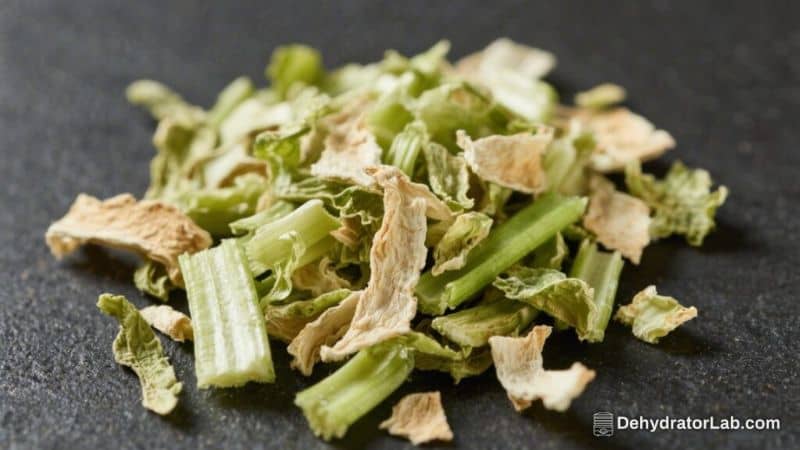
Celery doesn’t always get the spotlight, but dehydrated celery flakes might change your mind. They’re bright, savory, and incredibly useful for soups, sauces, and quick weeknight meals. If you’ve ever had limp celery in the crisper, this is your solution.
With a dehydrator or oven, you can turn bunches of celery into shelf-stable flakes that pack real flavor. It’s simple, budget-friendly, and a great way to reduce food waste.
In this article:
What Makes This Recipe So Good
- Flavor booster: Celery flakes bring a clean, savory note to broths, stews, casseroles, and even salad dressings.
- Long shelf life: Properly dried and stored, they last up to a year or more without losing much punch.
- Zero waste: Use leaves and ribs. Even the trimmings can be dehydrated and used.
- Budget-friendly: Buy celery in bulk or use up what you have.
Dehydrating stretches your grocery dollar.
- Convenient: No chopping at mealtime. Just sprinkle and go.
Ingredients
- 2–3 large bunches of fresh celery (ribs and leaves)
- Optional: 1–2 tablespoons lemon juice (for soaking to help preserve color)
- Optional: A pinch of sea salt (only if you prefer lightly seasoned flakes)
How to Make It
- Prep the celery: Rinse the ribs and leaves thoroughly to remove grit. Trim the root ends and any tough, woody sections.
- Slice evenly: Cut ribs into thin slices, about 1/8 inch thick.
Chop leaves separately. Uniform size helps even drying.
- Optional color soak: Stir lemon juice into a bowl of cold water. Soak the slices and leaves for 5 minutes, then drain and pat dry.
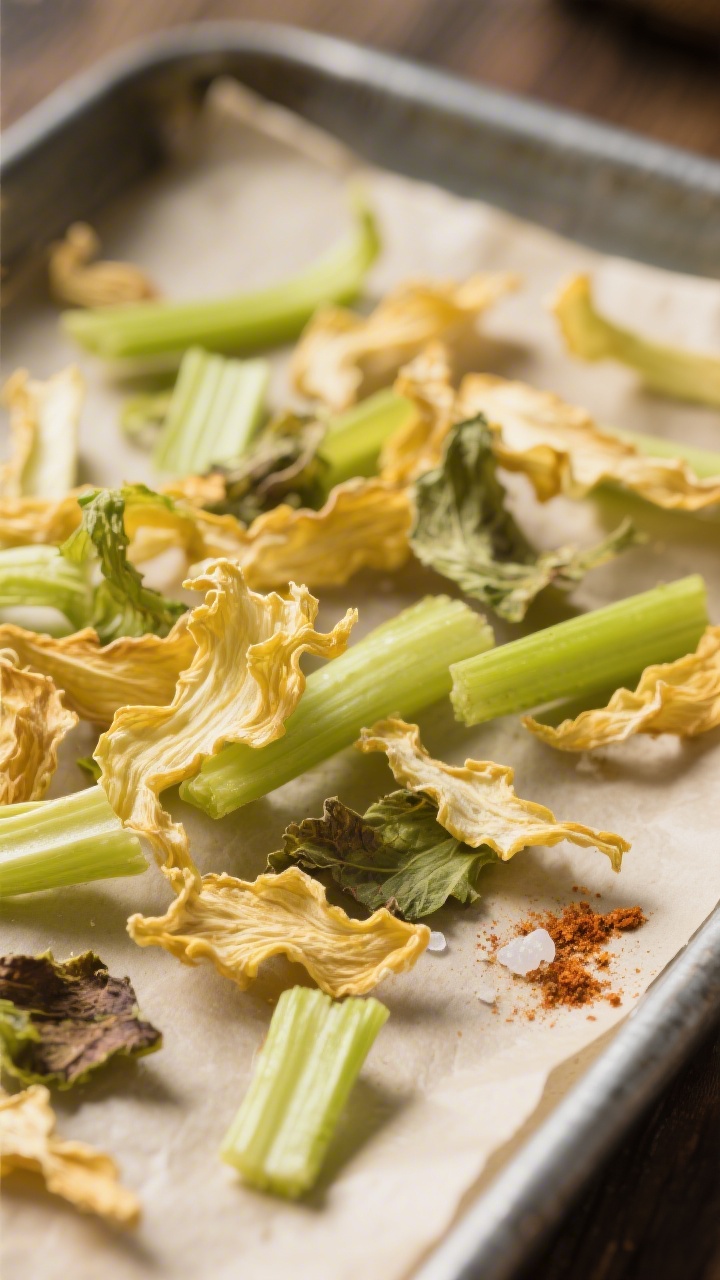
- Arrange on trays: Spread celery in a single layer on dehydrator trays or parchment-lined baking sheets. Don’t overlap.
- Dehydrate (preferred): Set your dehydrator to 125–135°F (52–57°C). Dry ribs and leaves for 6–10 hours.
Leaves usually finish first. Rotate trays if needed.
- Oven method: Set the oven to its lowest temperature (ideally 170–200°F / 77–93°C). Prop the door open slightly to allow moisture to escape.
Dry for 3–6 hours, checking often to prevent browning.
- Check for doneness: The flakes should be brittle and crisp, not leathery. They should snap when pressed between your fingers.
- Cool completely: Let the flakes cool to room temperature on the trays. Trapping residual heat causes condensation in storage.
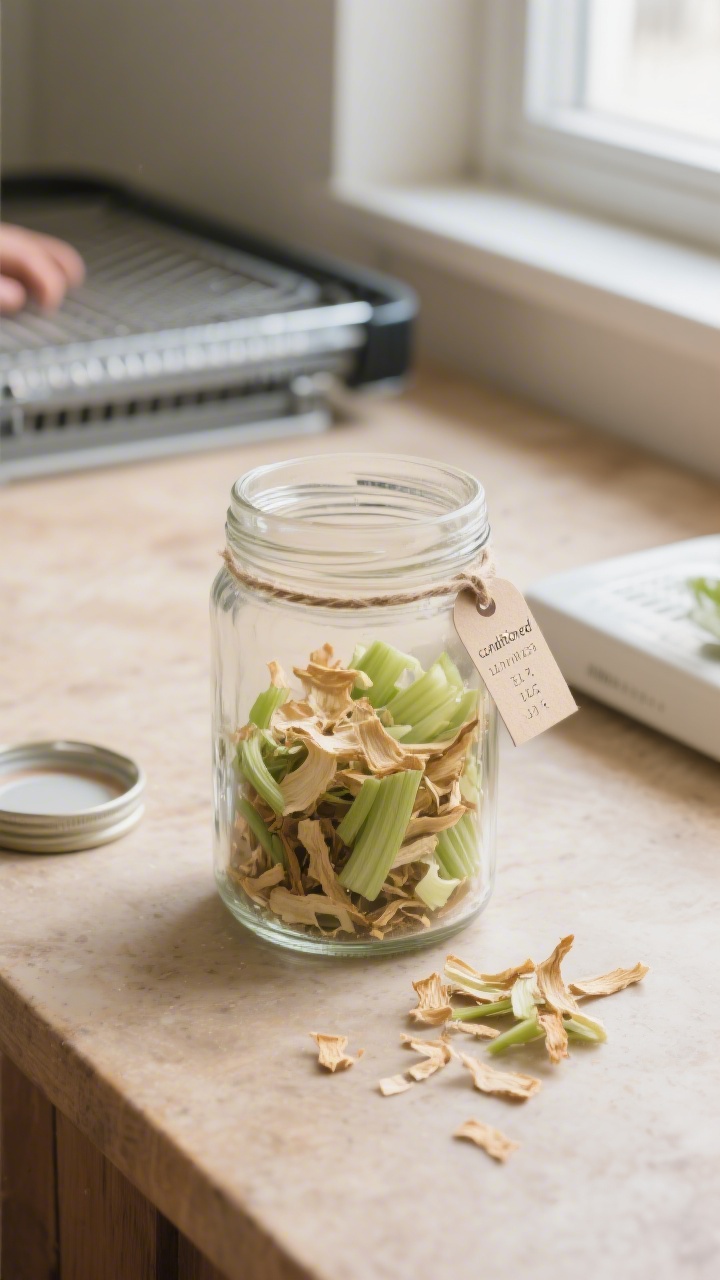
- Condition the flakes: Place cooled flakes in a large jar no more than two-thirds full.
Shake daily for 5–7 days. If any clumping or moisture appears, return them to the dehydrator to finish drying.
- Store: Transfer to an airtight container, label with the date, and keep in a cool, dark cabinet.
Keeping It Fresh
- Use airtight containers: Mason jars, vacuum-sealed bags, or sealed tins work best.
- Add an oxygen absorber: For very long-term storage, an oxygen absorber packet helps preserve color and flavor.
- Keep away from light and heat: A pantry or cupboard is better than a countertop. Light fades flavor.
- Avoid humidity: Don’t store above the stove or dishwasher. Moisture is the enemy of crisp flakes.
- Shelf life: About 12–18 months at peak quality.
If the aroma fades, use a little more in recipes.

Health Benefits
- Naturally low in calories: Celery adds flavor without heaviness, making it great for lighter cooking.
- Good source of plant compounds: Celery contains antioxidants like apigenin and luteolin, which support general wellness.
- Minerals and fiber: You’ll find potassium and small amounts of fiber. Dehydration concentrates flavors but keeps core nutrients intact.
- Helps reduce sodium needs: Celery’s natural savory note can help you season food with slightly less salt.
Pitfalls to Watch Out For
- Thick slices dry unevenly: Keep pieces small and consistent so you don’t end up with partly leathery flakes.
- Overheating in the oven: High heat can brown celery and create a bitter edge. Use the lowest setting and keep the door cracked.
- Skipping the conditioning step: This often leads to hidden moisture and mold later.
Take the extra few days to be safe.
- Storing before fully cool: Even a little warmth can cause condensation and spoilage.
- Adding too much salt: Seasoning is optional. Heavy salting can limit how you use the flakes later.
Recipe Variations
- Celery-leek blend: Dehydrate thin-sliced leeks with celery for a ready-to-go soup base. Mix 1:1 for balance.
- Herbed celery flakes: Toss dried celery with dried parsley, thyme, and a pinch of pepper.
Store as a quick seasoning mix.
- Celery-onion “mirepoix” mix: Dry equal parts celery, onions, and carrots. Combine into a shelf-stable cooking starter.
- Celery salt shortcut: Grind dried celery leaves to a fine powder and mix with fine sea salt (about 1:2). Great on eggs and fries.
- Smoky celery flakes: Add a tiny sprinkle of smoked paprika to the finished flakes for a subtle campfire note.
FAQ
Do I need to blanch the celery before dehydrating?
Blanching isn’t necessary for celery.
A lemon-water soak helps keep color bright, but you can skip it if you don’t mind a slightly darker hue.
How do I know the flakes are fully dry?
They should feel crisp and brittle, not rubbery. When you crush a piece, it should snap cleanly and crumble rather than bend.
Can I use the leaves too?
Absolutely. Celery leaves dry quickly and deliver strong flavor.
They’re great for soups, salad dressings, and homemade seasoning blends.
What’s the best way to use dehydrated celery flakes?
Add them to soups, stews, stocks, casseroles, rice dishes, or marinades. For cold dishes like potato salad, rehydrate in a little warm water for 5–10 minutes first.
How much should I use compared to fresh celery?
Start with about 1 tablespoon dried flakes for each 1/2 cup of chopped fresh celery. Adjust to taste based on the dish and your flakes’ potency.
Can I grind them into powder?
Yes.
Pulse the dried flakes in a spice grinder until you reach the texture you want. Powder is great for rubs, sauces, and celery salt.
My flakes turned brown in the oven. What happened?
The temperature was likely too high or airflow was limited.
Lower the heat, crack the oven door, and check more often. Thin, even slices also help.
How long do they last?
When stored airtight in a cool, dark place, they keep well for 12–18 months. Use your nose—if the aroma fades, just use a bit more.
Do I need special equipment?
A dehydrator gives the most consistent results, but a low oven works.
A sharp knife and airtight containers are the only real essentials.
Can I dehydrate frozen celery?
You can, but the texture may be softer and the flavor slightly muted. Thaw, pat dry thoroughly, and proceed as usual.
Final Thoughts
Dehydrated celery flakes are the kind of quiet pantry hero you appreciate on busy nights. They add depth without fuss, keep for ages, and help you waste less.
Whether you make a simple batch or blend a custom seasoning mix, you’ll reach for them all the time. Keep a jar on hand, and your soups, sauces, and everyday cooking will taste a little brighter.
Dehydrated Celery Flakes – A Handy Pantry Staple
Ingredients
- 2–3 large bunches of fresh celery (ribs and leaves)
- Optional: 1–2 tablespoons lemon juice (for soaking to help preserve color)
- Optional: A pinch of sea salt (only if you prefer lightly seasoned flakes)
Instructions
- Prep the celery: Rinse the ribs and leaves thoroughly to remove grit. Trim the root ends and any tough, woody sections.
- Slice evenly: Cut ribs into thin slices, about 1/8 inch thick.Chop leaves separately. Uniform size helps even drying.
- Optional color soak: Stir lemon juice into a bowl of cold water. Soak the slices and leaves for 5 minutes, then drain and pat dry.
- Arrange on trays: Spread celery in a single layer on dehydrator trays or parchment-lined baking sheets. Don’t overlap.
- Dehydrate (preferred): Set your dehydrator to 125–135°F (52–57°C). Dry ribs and leaves for 6–10 hours.Leaves usually finish first. Rotate trays if needed.
- Oven method: Set the oven to its lowest temperature (ideally 170–200°F / 77–93°C). Prop the door open slightly to allow moisture to escape.Dry for 3–6 hours, checking often to prevent browning.
- Check for doneness: The flakes should be brittle and crisp, not leathery. They should snap when pressed between your fingers.
- Cool completely: Let the flakes cool to room temperature on the trays. Trapping residual heat causes condensation in storage.
- Condition the flakes: Place cooled flakes in a large jar no more than two-thirds full.Shake daily for 5–7 days. If any clumping or moisture appears, return them to the dehydrator to finish drying.
- Store: Transfer to an airtight container, label with the date, and keep in a cool, dark cabinet.
Printable Recipe Card
Want just the essential recipe details without scrolling through the article? Get our printable recipe card with just the ingredients and instructions.