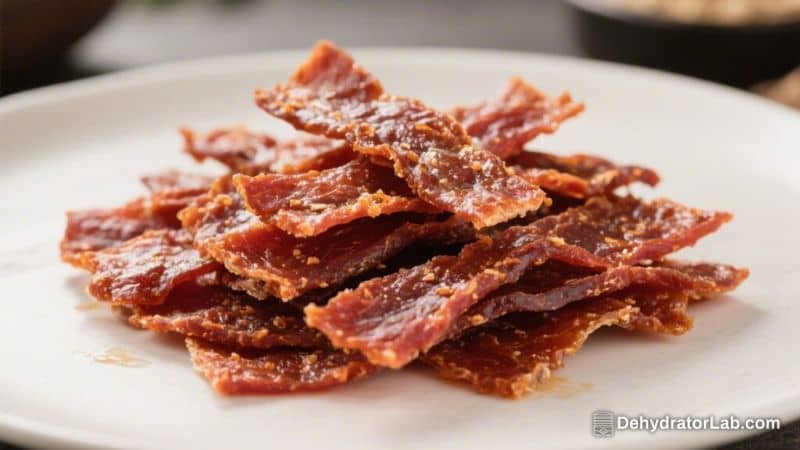
If you love jerky but don’t want to babysit an oven for hours, thin cut jerky in the air fryer is a game changer. It cooks low and steady, turns out tender-chewy, and is ready in a fraction of the time. You control the seasoning, the salt, and the heat.
Plus, it’s a high-protein snack that’s easy to pack and hard to stop eating. Once you try this, you might never buy store-bought jerky again.
In this article:
TL;DR: Key Takeaways
- 🔪 Slice 1/8 inch thick — against the grain for tender, with the grain for classic chew
- 🌡️ Dry at 180-200°F (82-93°C) for 2-3.5 hours, flipping once halfway
- 🔥 Optional food-safety step: bump to 275°F (135°C) for 10 minutes partway through to hit 160°F internal
- 📦 Condition 24 hours in a loosely sealed jar before calling it shelf-stable
Why This Recipe Works
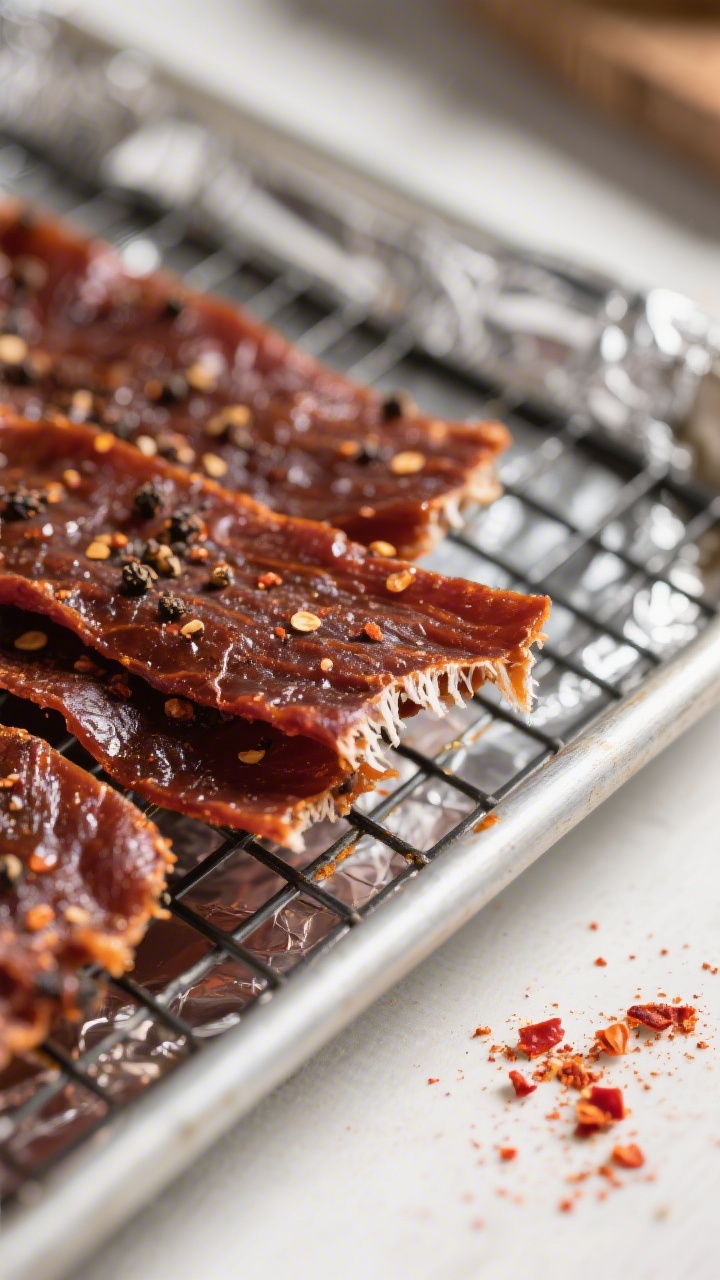
- Thin slices mean faster results: Ultra-thin strips dehydrate quickly and evenly, so you get great texture without waiting all day.
- Air circulation mimics a dehydrator: The air fryer’s fan keeps moisture moving off the surface, creating that classic jerky chew.
- Balanced marinade: A mix of salty, sweet, acidic, and savory ingredients seasons the meat throughout and helps with tenderness.
- Easy to customize: You can dial up the heat, go low-sugar, or tweak the spices to match your taste.
- Less mess, simple cleanup: A foil-lined drip tray and a quick basket wipe-down is all it takes.
Shopping List
- Beef: 1.5 to 2 pounds of lean steak (eye of round, top round, sirloin, or flank). Ask the butcher to slice it thin, or slice it yourself.
- Soy sauce or tamari: 1/3 cup
- Worcestershire sauce: 2 tablespoons
- Brown sugar or maple syrup: 1 to 2 tablespoons (adjust to taste)
- Rice vinegar or apple cider vinegar: 1 tablespoon
- Garlic powder: 1 teaspoon
- Onion powder: 1 teaspoon
- Black pepper: 1 teaspoon
- Smoked paprika or regular paprika: 1 teaspoon
- Red pepper flakes or cayenne: 1/4 to 1/2 teaspoon (optional for heat)
- Liquid smoke: 1/4 teaspoon (optional, for a smoky note)
- Cooking spray or neutral oil: for the basket
- Paper towels: for patting the meat dry
- Zip-top bags or shallow dish: for marinating
Step-by-Step Instructions
- Trim and chill the beef: Use a sharp knife to trim visible fat.
Fat turns rancid faster, so remove as much as you can. Partially freeze the meat for 45–60 minutes to firm it up for thin slicing.
- Slice thin: Cut the beef into strips about 1/8 inch thick. Slice against the grain for a more tender bite, or with the grain for a chewier, classic jerky texture.
Keep thickness consistent for even drying.
- Mix the marinade: In a bowl, whisk soy sauce, Worcestershire, brown sugar, vinegar, garlic powder, onion powder, black pepper, paprika, and optional red pepper flakes and liquid smoke.
- Marinate: Add the beef to a zip-top bag or shallow dish. Pour in the marinade and toss to coat. Press out excess air, seal, and refrigerate at least 4 hours, preferably overnight for deeper flavor.
- Drain and dry: Remove the beef from the marinade and blot each strip with paper towels until no longer wet.
This step is key for proper drying and browning.
- Prep the air fryer: Line the bottom drip tray with foil for easy cleanup if your model allows. Lightly oil the basket or racks. Preheat to 180–200°F (82–93°C) if your air fryer has low-temp settings. Some Dehydrate modes top out around 175°F (80°C); if yours does, use Air Fry or Bake at 180–200°F instead.
If not, use the lowest setting available and check frequently.
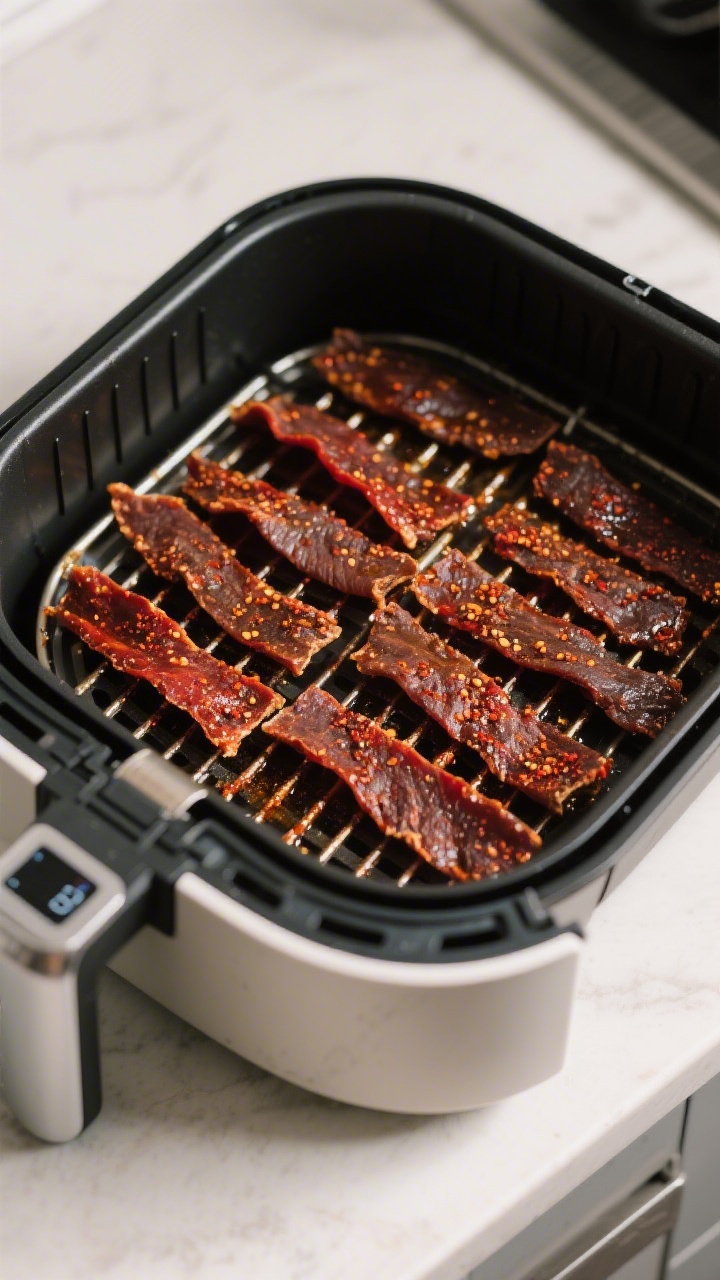
- Arrange the strips: Lay the beef in a single layer with space between pieces. Do not overlap. Work in batches if needed.
For rack-style air fryers, use multiple racks and rotate during cooking.
- Cook low and slow: Air fry at 180–200°F for 2 to 3.5 hours, flipping once halfway through. Thin strips finish sooner; thicker ones need more time. Rotate racks every 30–45 minutes if using more than one.
- Check for doneness: Jerky is done when it’s dry to the touch, darkened, and bends without snapping.
It should show fine white fibers when torn and have a firm, chewy bite.
- Optional heat-treatment step: For food safety, some prefer to bring the jerky to an internal temp of 160°F (71°C) mid-process. You can briefly raise the air fryer to 275°F for 10 minutes after the first 30–60 minutes of drying, then drop back down to finish. This helps pasteurize while preserving texture.
- Cool and condition: Let jerky cool completely on a rack.
Then place it loosely in a jar or bag for 24 hours at room temp, shaking the container once or twice. If condensation appears, it needs more drying time.
How to Store
- Short-term: Keep in an airtight container at room temperature for up to 1 week if very dry and low-fat.
- Refrigerate: Store in the fridge for 2 to 3 weeks. Use a zip-top bag with most of the air pressed out.
- Freeze: For longer storage, freeze for up to 3 months.
Portion into snack-size bags for grab-and-go convenience.
- Avoid moisture: If a piece looks moist or greasy, refrigerate and eat sooner. Excess fat shortens shelf life.
Health Benefits
- High protein, low carb: Jerky delivers a satisfying protein boost that keeps you full without a carb crash.
- Custom sodium and sugar: Make it yourself to control salt and sweeteners. You can scale both down without losing flavor.
- Lean cuts, clean ingredients: Using eye of round or sirloin keeps fat low.
No preservatives or hidden fillers.
- Portable nutrition: Great for hikes, road trips, or busy workdays when you need something substantial and packable.
What Not to Do
- Don’t skip drying the strips: Wet surfaces steam instead of dry, leading to soft, uneven jerky.
- Don’t crowd the basket: Overlapping pieces trap moisture. Airflow is everything.
- Don’t use fatty cuts: Fat doesn’t dehydrate well and can go rancid, shortening shelf life.
- Don’t rush the process: High heat will cook the meat instead of drying it. Aim for low temperature and patience.
- Don’t store while warm: Warm jerky releases moisture in a sealed container, causing condensation and spoilage.
Recipe Variations
- Peppercorn Cracked Black: Add 1–2 teaspoons coarsely cracked black pepper to the marinade and sprinkle extra on the strips before drying.
- Sweet Heat: Stir 1 tablespoon honey and 1/2 teaspoon cayenne or chipotle powder into the marinade.
Finish with a light brush of honey during the last 15 minutes.
- Teriyaki: Swap brown sugar for 1–2 tablespoons mirin and add 1 teaspoon grated ginger. Finish with toasted sesame seeds after drying.
- Garlic-Lime: Use lime juice instead of vinegar and bump garlic powder to 2 teaspoons. Add a pinch of cumin for warmth.
- Low-Sodium: Use low-sodium soy sauce and reduce Worcestershire by half.
Boost flavor with extra onion, garlic, and smoked paprika.
- No-Sugar: Skip added sugar and balance with a splash more vinegar and a touch of liquid smoke for depth.
- Turkey or Venison: Lean game or turkey breast works well. Watch closely—extra-lean meats can dry faster.
FAQ
Can I make jerky without marinating overnight?
Yes. You’ll still get good flavor with a 4-hour marinade if you slice very thin.
Overnight brings the best depth, but thin cuts absorb seasoning more quickly.
What if my air fryer doesn’t go down to 180°F?
Use the lowest setting and keep a close eye on texture. Prop the lid slightly ajar if safe for your model, or crack the basket a touch to release steam. Rotate and check more often.
How do I know when it’s done?
It should feel dry on the surface, bend without snapping, and show white fibers when torn.
If it cracks sharply, it’s too dry; if it feels soft or spongy, give it more time.
Is the liquid smoke necessary?
No. It adds a campfire note but isn’t required. Smoked paprika or a touch more Worcestershire can provide depth without the smoky flavor.
Can I reduce the sodium?
Absolutely.
Use low-sodium soy sauce, cut Worcestershire in half, and add extra spices and vinegar to keep flavor balanced.
Why condition the jerky after drying?
Conditioning evens out moisture across all pieces. If condensation shows up in the container, it’s a sign the jerky needs additional drying to be shelf-stable.
Do I need special racks?
Not required, but racks increase surface area and airflow, which speeds drying. If you only have a basket, cook in smaller batches and flip more often.
Can I use pork or chicken?
Yes, but use lean cuts and follow strict food safety.
For poultry, ensure it reaches 165°F at some point in the process before finishing the dry at lower temps.
Personal Tips You Can Steal
I always slice with a partially frozen roast — 45 to 60 minutes in the freezer firms it up just enough to get consistent 1/8-inch strips without fighting the knife. And I never skip the conditioning step; if I see any fogging in the jar after a day, back it goes into the air fryer for another 20-30 minutes.
Final Thoughts
Air fryer thin cut jerky is simple, fast, and endlessly customizable. With lean meat, a balanced marinade, and low heat, you’ll get that classic chewy texture in a fraction of the usual time. Make a batch on Sunday, stash it for the week, and you’ve got a satisfying, high-protein snack ready whenever hunger hits.
Once you dial in your perfect thickness and seasoning, this will be a regular in your rotation. If you prefer a heartier chew, try our Thick Cut Jerky, or season it up with our Spicy Beef Jerky recipe.
P.S. If I’m short on time, I’ll do a quick weekday batch with just soy sauce, garlic powder, and black pepper — skip the extra marinade time and it’s still solid jerky in under 3 hours. 🙂
Air Fryer Thin Cut Jerky – Easy, Fast, and Packed With Flavor
Ingredients
- Beef: 1.5 to 2 pounds of lean steak (eye of round, top round, sirloin, or flank). Ask the butcher to slice it thin, or slice it yourself.
- Soy sauce or tamari: 1/3 cup
- Worcestershire sauce: 2 tablespoons
- Brown sugar or maple syrup: 1 to 2 tablespoons (adjust to taste)
- Rice vinegar or apple cider vinegar: 1 tablespoon
- Garlic powder: 1 teaspoon
- Onion powder: 1 teaspoon
- Black pepper: 1 teaspoon
- Smoked paprika or regular paprika: 1 teaspoon
- Red pepper flakes or cayenne: 1/4 to 1/2 teaspoon (optional for heat)
- Liquid smoke: 1/4 teaspoon (optional, for a smoky note)
- Cooking spray or neutral oil: for the basket
- Paper towels: for patting the meat dry
- Zip-top bags or shallow dish: for marinating
Instructions
- Trim and chill the beef: Use a sharp knife to trim visible fat.Fat turns rancid faster, so remove as much as you can. Partially freeze the meat for 45–60 minutes to firm it up for thin slicing.
- Slice thin: Cut the beef into strips about 1/8 inch thick. Slice against the grain for a more tender bite, or with the grain for a chewier, classic jerky texture.Keep thickness consistent for even drying.
- Mix the marinade: In a bowl, whisk soy sauce, Worcestershire, brown sugar, vinegar, garlic powder, onion powder, black pepper, paprika, and optional red pepper flakes and liquid smoke.
- Marinate: Add the beef to a zip-top bag or shallow dish. Pour in the marinade and toss to coat. Press out excess air, seal, and refrigerate at least 4 hours, preferably overnight for deeper flavor.
- Drain and dry: Remove the beef from the marinade and blot each strip with paper towels until no longer wet.This step is key for proper drying and browning.
- Prep the air fryer: Line the bottom drip tray with foil for easy cleanup if your model allows. Lightly oil the basket or racks. Preheat to 180–200°F (82–93°C) if your air fryer has low-temp settings.If not, use the lowest setting available and check frequently.
- Arrange the strips: Lay the beef in a single layer with space between pieces. Do not overlap. Work in batches if needed.For rack-style air fryers, use multiple racks and rotate during cooking.
- Cook low and slow: Air fry at 180–200°F for 2 to 3.5 hours, flipping once halfway through. Thin strips finish sooner; thicker ones need more time. Rotate racks every 30–45 minutes if using more than one.
- Check for doneness: Jerky is done when it’s dry to the touch, darkened, and bends without snapping.It should show fine white fibers when torn and have a firm, chewy bite.
- Optional heat-treatment step: For food safety, some prefer to bring the jerky to an internal temp of 160°F (71°C) mid-process. You can briefly raise the air fryer to 275°F for 10 minutes after the first 30–60 minutes of drying, then drop back down to finish. This helps pasteurize while preserving texture.
- Cool and condition: Let jerky cool completely on a rack.Then place it loosely in a jar or bag for 24 hours at room temp, shaking the container once or twice. If condensation appears, it needs more drying time.
Printable Recipe Card
Want just the essential recipe details without scrolling through the article? Get our printable recipe card with just the ingredients and instructions.