
Air fryer salmon jerky is the snack you didn’t know you needed. It’s savory, a little sweet, and full of clean protein and omega-3s. Best of all, it cooks in a fraction of the time compared to oven or dehydrator methods.
With a simple marinade and a few smart tricks, you’ll get crisp edges, tender centers, and big flavor. This is an easy win for meal prep, road trips, or a post-workout bite.
In this article:
Why This Recipe Works
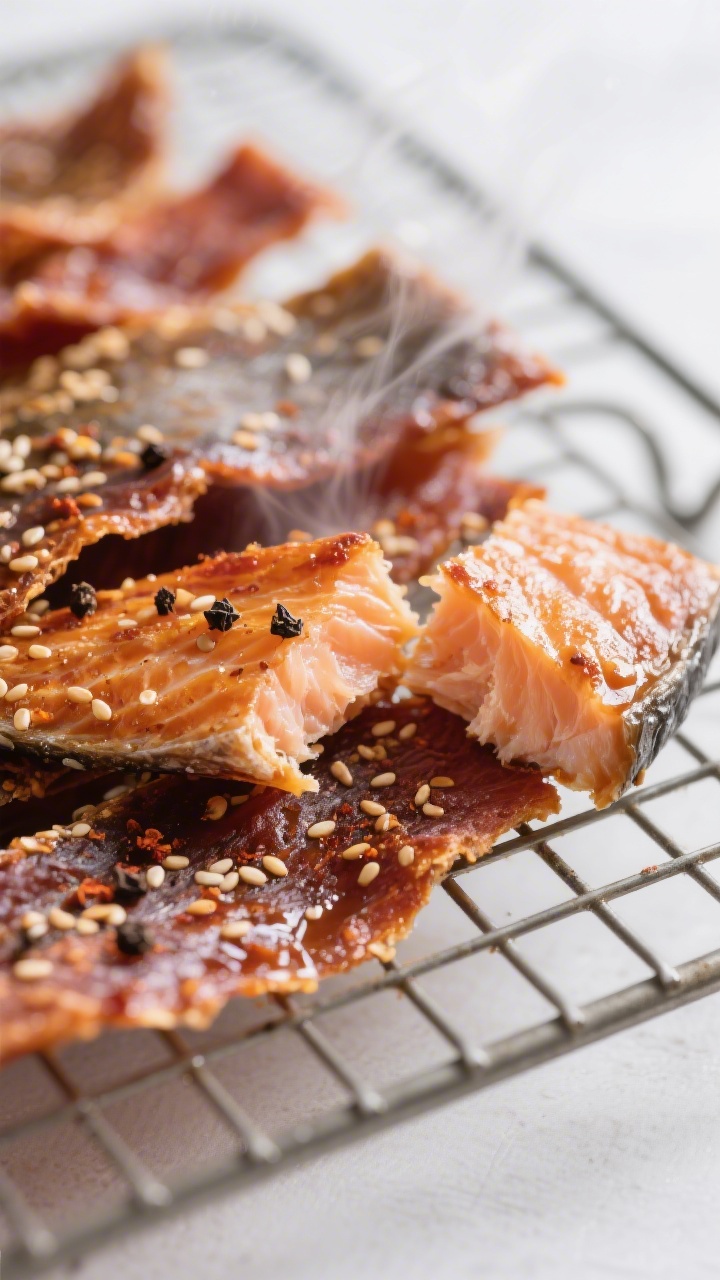
- Fast dehydration effect: The air fryer’s powerful airflow removes moisture quickly, creating that jerky texture without hours of drying.
- Balanced marinade: A mix of salty, sweet, and umami flavors seasons the salmon deeply and helps the pieces caramelize.
- Thin slicing: Cutting the salmon into even, thin strips ensures quick, consistent cooking and the right chew.
- Minimal mess: A parchment liner or lightly oiled basket keeps cleanup simple.
What You’ll Need
- Salmon: 1 to 1.5 pounds skinless salmon fillet, pin bones removed (sockeye or coho are great; farmed Atlantic also works).
- Soy sauce or tamari: 3 tablespoons (tamari for gluten-free).
- Maple syrup or honey: 1.5 tablespoons.
- Rice vinegar or apple cider vinegar: 1 tablespoon.
- Sesame oil: 1 teaspoon.
- Garlic powder: 1 teaspoon.
- Onion powder: 1 teaspoon.
- Smoked paprika: 1 teaspoon (or regular paprika plus a pinch of liquid smoke, optional).
- Black pepper: 1/2 teaspoon.
- Red pepper flakes: 1/4 to 1/2 teaspoon (optional heat).
- Salt: 1/4 teaspoon (adjust to taste based on soy sauce saltiness).
- Lemon zest: 1 teaspoon (brightens the flavor).
- Sesame seeds: 1 tablespoon (optional for texture).
- Nonstick spray or parchment liners: For the air fryer basket.
Instructions
- Chill the salmon for clean slicing: Place the fillet in the freezer for 15–20 minutes. This firms it up so you can cut thin, even strips.
- Make the marinade: In a bowl, whisk soy sauce, maple syrup, vinegar, sesame oil, garlic powder, onion powder, smoked paprika, black pepper, red pepper flakes, salt, and lemon zest.
- Slice the salmon: Using a sharp knife, cut the salmon into 1/4-inch thick strips, about 1 inch wide.
Try to keep them uniform for even drying.
- Marinate: Add the strips to the marinade and toss to coat. Cover and refrigerate for 30–60 minutes. For bolder flavor, go up to 2 hours.
- Preheat the air fryer: Set to 200–210°F (95–100°C).
Low heat helps dehydrate without overcooking.
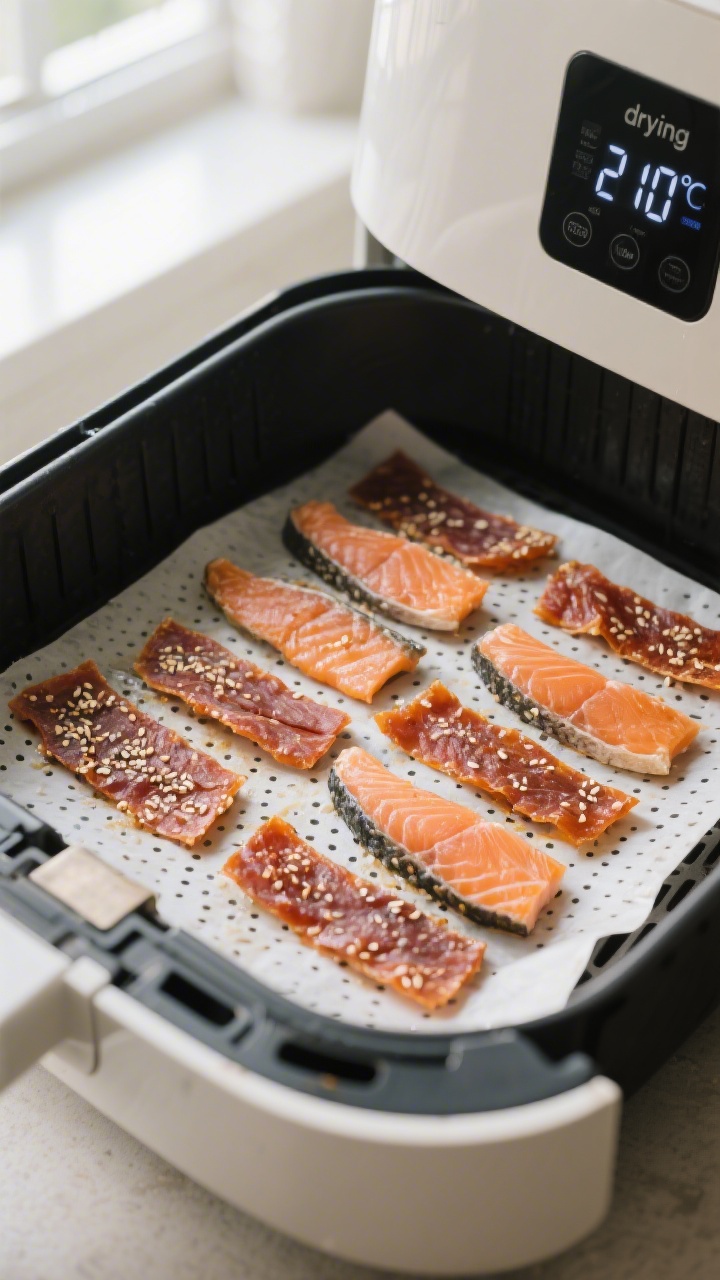
- Prepare the basket: Lightly spray with oil or use perforated parchment. Avoid solid parchment sheets; air needs to circulate.
- Arrange the strips: Shake off excess marinade and lay salmon strips in a single layer with slight gaps. Sprinkle sesame seeds if using.
- Cook low and slow first: Air fry at 200–210°F for 45–60 minutes, flipping halfway.
Check at 35 minutes; edges should be drier and darker.
- Finish to desired texture: Increase to 225–250°F for 5–10 minutes to crisp the edges, watching closely to avoid scorching.
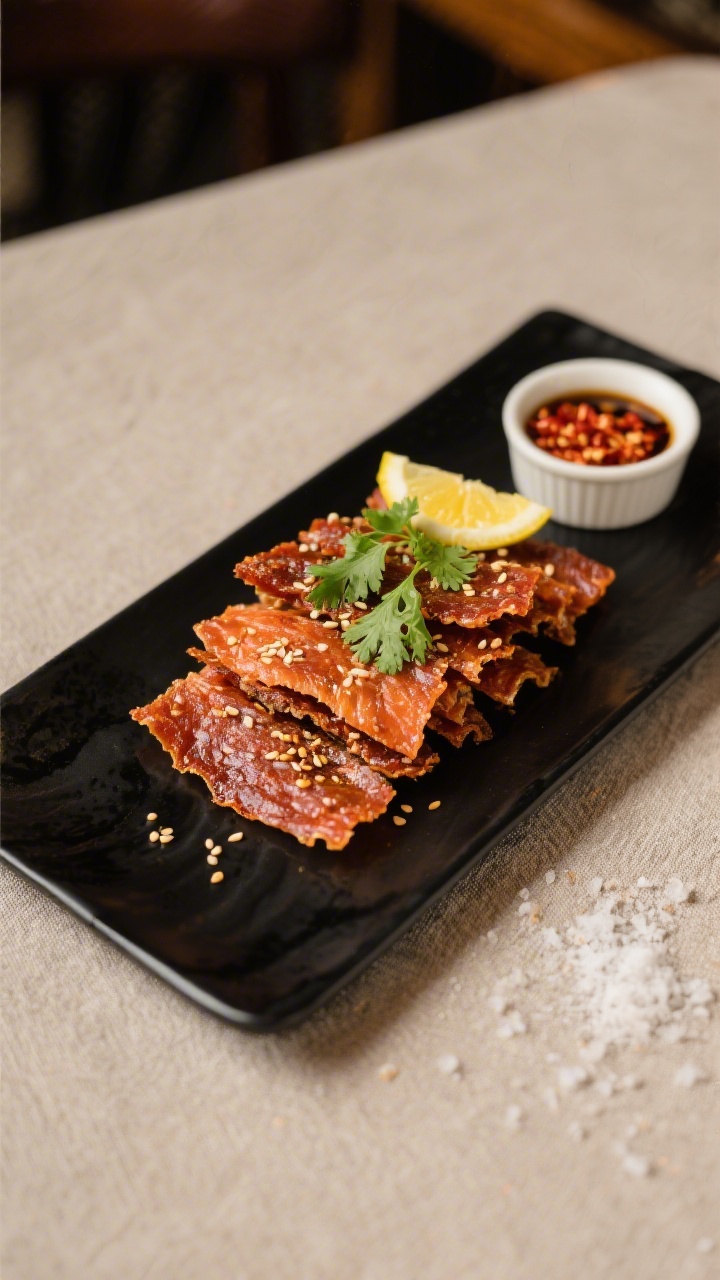
- Cool completely: Transfer to a rack and let cool. The jerky firms up as it cools, improving the chew.
- Taste and adjust: If you want more salt or heat, sprinkle a tiny pinch of flaky salt or chili while warm.
How to Store
- Short-term: Store cooled jerky in an airtight container at room temperature for up to 24 hours.
- Refrigeration: Keep in a sealed container or zip-top bag in the fridge for 5–7 days. Add a small food-safe desiccant pack if you have one.
- Freezer: For longer storage, freeze for up to 2 months.
Thaw in the fridge and re-crisp in the air fryer at 200°F for 3–5 minutes if needed.
- Moisture control: Include a paper towel in the container to absorb condensation. Replace if it becomes damp.
Health Benefits
- High-quality protein: Salmon delivers complete protein to support muscle repair and steady energy.
- Omega-3 fats: Rich in EPA and DHA, which support heart and brain health and help manage inflammation.
- Lower in sugar and additives: Homemade jerky skips preservatives and uses minimal sweetener.
- Portable nutrition: A compact, satiating snack that won’t spike blood sugar.
What Not to Do
- Don’t skip cooling: Packaging warm jerky traps steam and softens the texture.
- Don’t overcrowd the basket: Overlapping pieces steam instead of dry, leading to soggy jerky.
- Don’t use high heat the whole time: Too hot, too fast makes the outside tough while the inside stays moist.
- Don’t use thick pieces: Anything thicker than 1/4 inch takes too long to dry and can overcook at the edges.
- Don’t rely on time alone: Check texture. It should be dry to the touch, bend slightly, and show minimal moisture on the surface.
Alternatives
- Flavor swaps: Use coconut aminos for soy-free, add ginger and lime zest for a bright Asian twist, or try chili-lime, teriyaki, or black pepper–brown sugar.
- Different fish: Trout or steelhead can work.
Choose firm, fatty cuts and slice thinly.
- Dry rub only: Skip liquid marinade and use a mix of salt, paprika, pepper, garlic, and a touch of brown sugar for a drier, classic jerky style.
- No sesame oil: Swap in neutral oil and a pinch of white pepper to keep it light.
- Lower sodium: Use low-sodium soy sauce, reduce added salt, and season lightly after cooking if needed.
FAQ
How do I know when the salmon jerky is done?
It should feel dry on the surface and bend with a slight give, not snap. Tear a piece; the interior should look firm and not glossy. If it feels damp, give it another 5–10 minutes and check again.
Can I use frozen salmon?
Yes.
Thaw fully in the refrigerator, pat very dry, and proceed. Excess moisture makes drying slower, so blot well before marinating.
Is the skin okay to leave on?
You can, but it affects texture. Most people prefer skinless for cleaner bites.
If using skin-on, slice the flesh away from the skin and save the skin for air fryer crisps.
What temperature works if my air fryer won’t go below 250°F?
Cook at 250°F, reduce time, and check often. Start with 25–30 minutes, flip, then continue until dry. Lower time and frequent checks help prevent overcooking.
Can I make it sweeter or spicier?
Absolutely.
Add another teaspoon of maple or honey for sweetness. For heat, bump up red pepper flakes, add a dash of hot sauce, or use gochugaru for a warm, rounded spice.
How do I avoid sticking?
Use a perforated parchment liner or lightly spray the basket. Let the salmon sit for 2–3 minutes after cooking before lifting; it releases more easily as it cools.
Is this safe at room temperature?
For a day, yes, if fully dried and stored airtight.
For longer storage, refrigerate. This is a quick-dried snack, not shelf-stable like commercial jerky.
Can I double the batch?
Yes, but cook in batches. Keep slices in a single layer so air can circulate.
You can rotate trays if your air fryer has multiple levels.
Wrapping Up
Air fryer salmon jerky is simple, fast, and loaded with flavor. With thin slicing, a balanced marinade, and gentle heat, you get a chewy, satisfying snack in about an hour. Make a batch on Sunday and you’ll have protein-packed bites ready all week.
It’s a smart, tasty way to enjoy salmon—no dehydrator required.
Air Fryer Salmon Jerky – Crispy, Savory, and Ready Fast
Ingredients
- Salmon: 1 to 1.5 pounds skinless salmon fillet, pin bones removed (sockeye or coho are great; farmed Atlantic also works).
- Soy sauce or tamari: 3 tablespoons (tamari for gluten-free).
- Maple syrup or honey: 1.5 tablespoons.
- Rice vinegar or apple cider vinegar: 1 tablespoon.
- Sesame oil: 1 teaspoon.
- Garlic powder: 1 teaspoon.
- Onion powder: 1 teaspoon.
- Smoked paprika: 1 teaspoon (or regular paprika plus a pinch of liquid smoke, optional).
- Black pepper: 1/2 teaspoon.
- Red pepper flakes: 1/4 to 1/2 teaspoon (optional heat).
- Salt: 1/4 teaspoon (adjust to taste based on soy sauce saltiness).
- Lemon zest: 1 teaspoon (brightens the flavor).
- Sesame seeds: 1 tablespoon (optional for texture).
- Nonstick spray or parchment liners: For the air fryer basket.
Instructions
- Chill the salmon for clean slicing: Place the fillet in the freezer for 15–20 minutes. This firms it up so you can cut thin, even strips.
- Make the marinade: In a bowl, whisk soy sauce, maple syrup, vinegar, sesame oil, garlic powder, onion powder, smoked paprika, black pepper, red pepper flakes, salt, and lemon zest.
- Slice the salmon: Using a sharp knife, cut the salmon into 1/4-inch thick strips, about 1 inch wide.Try to keep them uniform for even drying.
- Marinate: Add the strips to the marinade and toss to coat. Cover and refrigerate for 30–60 minutes. For bolder flavor, go up to 2 hours.
- Preheat the air fryer: Set to 200–210°F (95–100°C).Low heat helps dehydrate without overcooking.
- Prepare the basket: Lightly spray with oil or use perforated parchment. Avoid solid parchment sheets; air needs to circulate.
- Arrange the strips: Shake off excess marinade and lay salmon strips in a single layer with slight gaps. Sprinkle sesame seeds if using.
- Cook low and slow first: Air fry at 200–210°F for 45–60 minutes, flipping halfway.Check at 35 minutes; edges should be drier and darker.
- Finish to desired texture: Increase to 225–250°F for 5–10 minutes to crisp the edges, watching closely to avoid scorching.
- Cool completely: Transfer to a rack and let cool. The jerky firms up as it cools, improving the chew.
- Taste and adjust: If you want more salt or heat, sprinkle a tiny pinch of flaky salt or chili while warm.
Printable Recipe Card
Want just the essential recipe details without scrolling through the article? Get our printable recipe card with just the ingredients and instructions.