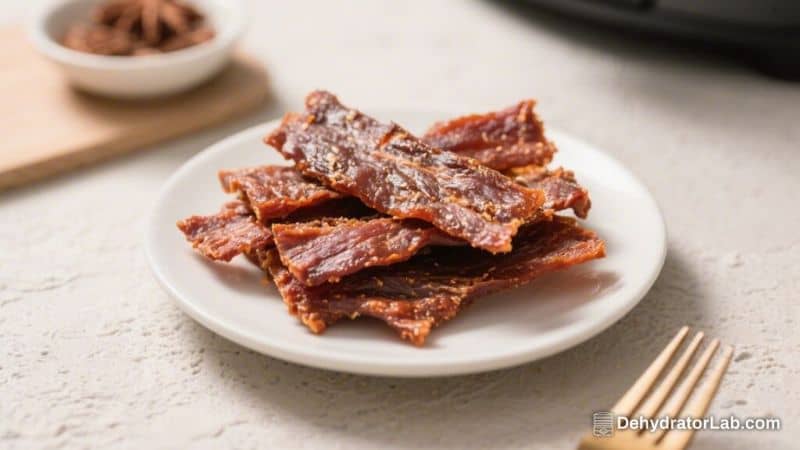
If you love jerky but don’t want to babysit an oven for hours, this air fryer pork jerky hits the sweet spot. It’s savory, slightly sweet, and just the right amount of chewy. Best of all, it cooks in a fraction of the time conventional methods require.
The marinade is simple, the texture is satisfying, and you can tweak the flavors to match your taste. Make a batch on Sunday and you’ll have a protein-packed snack all week.
In this article:
What Makes This Recipe So Good
- Quick and convenient: Traditional jerky can take 4–8 hours. The air fryer cuts that down to about 60–90 minutes.
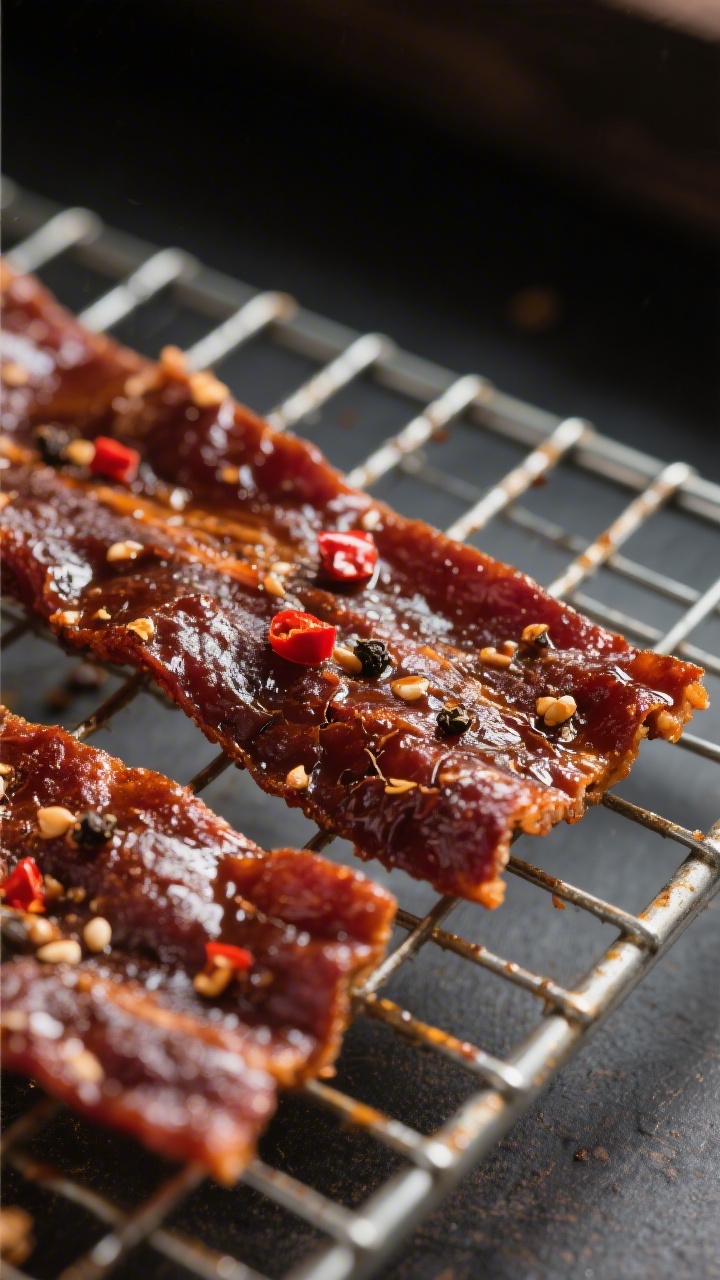
- Great texture: Thinly sliced pork dries evenly in the air fryer, giving you a chewy, tender bite instead of a tooth-cracking strip.
- Customizable flavor: Go classic, spicy, smoky, or sweet.
The base marinade is flexible and forgiving.
- Budget-friendly: Pork shoulder or loin is usually cheaper than beef, and a little marinade goes a long way.
- Perfect for meal prep: Keeps well and travels easily for hikes, road trips, or quick desk snacks.
Ingredients
- 1.5 pounds pork loin or pork shoulder, trimmed of excess fat
- 1/4 cup low-sodium soy sauce (or tamari for gluten-free)
- 2 tablespoons fish sauce (optional but adds depth)
- 2 tablespoons brown sugar or honey
- 1 tablespoon rice vinegar or apple cider vinegar
- 1 tablespoon Worcestershire sauce
- 2 teaspoons smoked paprika
- 1.5 teaspoons garlic powder
- 1 teaspoon onion powder
- 1 teaspoon ground black pepper
- 1/2–1 teaspoon red pepper flakes or cayenne (optional for heat)
- 1 teaspoon sesame oil (optional for a toasty note)
Instructions
- Partially freeze the pork: Place the trimmed pork in the freezer for 45–60 minutes. You want it firm, not rock solid. This makes thin slicing easier and more even.
- Slice thinly: Using a sharp knife, slice the pork against the grain into 1/8-inch to 1/4-inch slices.
Thinner slices dry faster and more evenly. Aim for uniform thickness.
- Mix the marinade: In a bowl, combine soy sauce, fish sauce, brown sugar, vinegar, Worcestershire, smoked paprika, garlic powder, onion powder, black pepper, red pepper flakes, and sesame oil. Stir until the sugar dissolves.
- Marinate: Add pork slices to the marinade and toss to coat.
Cover and refrigerate for at least 4 hours, ideally overnight. Longer marinating means deeper flavor.
- Drain and pat dry: Remove pork from the marinade and shake off excess liquid. Pat the slices dry with paper towels. Dry surfaces dehydrate faster and reduce burning.
- Preheat the air fryer: Set to 180–200°F (80–93°C) if your model allows.
If the lowest setting is 200°F or higher, use that and monitor closely.
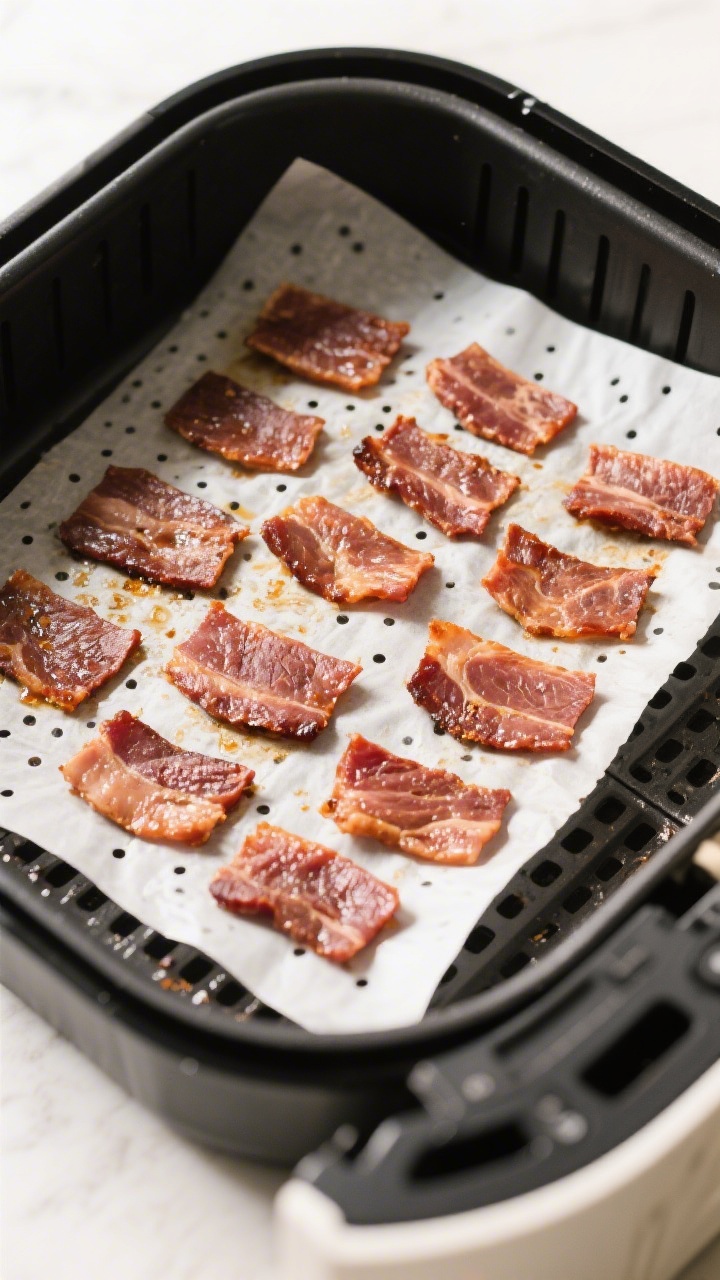
- Arrange the slices: Lay pork in a single layer in the basket or on air fryer racks. Do not overlap. Work in batches if needed.
For basket models, use a perforated parchment liner to prevent sticking, leaving plenty of holes for airflow.
- Air fry low and slow: Cook at 180–200°F for 45 minutes. Flip or rotate racks, then continue 20–45 more minutes. Total time varies by thickness, air fryer model, and humidity.
- Check for doneness: Jerky is ready when it’s firm, dry to the touch, and bends slightly before cracking but doesn’t snap. No visible moisture should squeeze out when pressed.
- Optional finish: If you prefer a touch more caramelization, increase the heat to 230°F for 3–5 minutes at the very end.
Watch closely to avoid burning.
- Cool completely: Transfer to a wire rack and let cool to room temperature. Cooling allows residual steam to escape, preventing sogginess in storage.
- Condition the jerky (recommended): Place cooled jerky loosely in a large jar or container for 24 hours, shaking once or twice. If condensation forms, return jerky to the air fryer at 180°F for 10–15 minutes to dry further.
Storage Instructions
- Short-term: Store in an airtight container at room temperature for up to 3 days if it’s very dry.
- Refrigerated: Keep in a sealed bag or jar for 1–2 weeks. Add a small food-safe desiccant pack if you have one.
- Freezer: For longer storage, freeze up to 3 months.
Wrap tightly and remove as much air as possible. Thaw at room temperature.
- Avoid moisture: If you see condensation or feel tackiness, re-dry briefly in the air fryer before storing.
Health Benefits
- High in protein: Jerky delivers a steady, satiating source of protein that can help curb snack cravings and support muscle health.
- Lower in fat (with pork loin): Choosing lean cuts like pork loin keeps fat content in check while still providing flavor.
- No mystery additives: Homemade jerky skips the excess preservatives, artificial flavors, and added oils you often find in store-bought options.
- Custom sodium control: Using low-sodium soy sauce or balancing the marinade lets you manage salt intake.
- Iron and B vitamins: Pork supplies B12, niacin, and iron, which support energy metabolism and overall wellness.
Pitfalls to Watch Out For
- Too much moisture: Overcrowding and skipping the pat-dry step can lead to steaming instead of drying. Keep slices in a single layer.
- Heat too high: Cranking the temperature up can cook the pork rather than dehydrate it, leading to tough, brittle pieces with a raw center.
Stay low and be patient.
- Inconsistent slicing: Thick pieces take much longer and dry unevenly. Aim for uniform 1/8–1/4 inch.
- Not marinating long enough: Under-marinating gives you bland jerky. Give it at least 4 hours; overnight is best.
- Improper storage: Warm or damp containers can cause spoilage.
Cool completely and use airtight containers.
Alternatives
- Different cuts: Pork tenderloin for ultra-lean jerky, or shoulder for richer flavor. Trim visible fat to improve shelf life.
- Flavor swaps:
- Sweet and spicy: Add 1 tablespoon sriracha and 1 extra tablespoon honey.
- Teriyaki: Use mirin instead of vinegar, add 1 teaspoon grated ginger, and 1 tablespoon more brown sugar.
- BBQ-smoky: Add 1 teaspoon liquid smoke and 1 teaspoon chili powder.
- Herb-garlic: Add 1 teaspoon Italian seasoning and extra garlic.
- Gluten-free: Use tamari or coconut aminos and a gluten-free Worcestershire sauce.
- Sugar-free/low carb: Swap brown sugar for a granulated sugar substitute that caramelizes well, or reduce sweeteners entirely and increase spices.
- No fish sauce: Replace with extra soy sauce plus a pinch of anchovy paste or a little miso if you like umami.
FAQ
Do I need curing salt to make pork jerky?
Curing salt isn’t required for small batches eaten within a week or two and stored properly in the fridge. It does improve color, flavor, and shelf life, but most home cooks skip it.
If you plan to store jerky at room temperature for longer, consider using a curing salt and follow precise guidelines.
How thin should I slice the pork?
Aim for 1/8–1/4 inch. Thinner slices dry faster and more evenly. Use the partial-freeze trick and a very sharp knife to keep thickness consistent.
What temperature is safest for pork jerky?
The USDA recommends heating meat to 160°F to kill pathogens before dehydrating.
To be extra cautious, you can briefly preheat the marinated slices in a 275°F oven for 10 minutes until they reach 160°F, then transfer to the air fryer to dehydrate at low temperature.
My jerky turned out too hard. What happened?
It likely dried at too high a temperature or for too long, or the slices were very thin. Next time, lower the temp, check earlier, and consider a slightly thicker cut.
How do I know when jerky is done?
It should be dry to the touch, darker in color, and bend without snapping.
If a piece cracks and breaks cleanly, it’s likely over-dried. If it’s spongy or wet inside, keep drying.
Can I double the recipe?
Yes, but dry in batches. Overcrowding traps moisture and leads to uneven results.
Store the marinated pork in the fridge and rotate batches through your air fryer.
Will it make my air fryer smell?
There may be a savory aroma. Wipe the basket and interior once cooled, then run the air fryer at 350°F for 5 minutes to burn off residual smells. A slice of lemon air-fried for a few minutes also helps.
Final Thoughts
Air fryer pork jerky is a smart, low-effort way to keep a wholesome, high-protein snack on hand.
You control the flavors, the sweetness, and the salt, and you can have a batch ready in about an hour. Once you nail your preferred thickness and spice level, it becomes a reliable go-to for road trips, lunch boxes, or post-workout bites. Keep it simple, keep it dry, and enjoy every chewy, savory strip.
Air Fryer Pork Jerky – Easy, Flavorful, and Fast
Ingredients
- 1.5 pounds pork loin or pork shoulder, trimmed of excess fat
- 1/4 cup low-sodium soy sauce (or tamari for gluten-free)
- 2 tablespoons fish sauce (optional but adds depth)
- 2 tablespoons brown sugar or honey
- 1 tablespoon rice vinegar or apple cider vinegar
- 1 tablespoon Worcestershire sauce
- 2 teaspoons smoked paprika
- 1.5 teaspoons garlic powder
- 1 teaspoon onion powder
- 1 teaspoon ground black pepper
- 1/2–1 teaspoon red pepper flakes or cayenne (optional for heat)
- 1 teaspoon sesame oil (optional for a toasty note)
Instructions
- Partially freeze the pork: Place the trimmed pork in the freezer for 45–60 minutes. You want it firm, not rock solid. This makes thin slicing easier and more even.
- Slice thinly: Using a sharp knife, slice the pork against the grain into 1/8-inch to 1/4-inch slices.Thinner slices dry faster and more evenly. Aim for uniform thickness.
- Mix the marinade: In a bowl, combine soy sauce, fish sauce, brown sugar, vinegar, Worcestershire, smoked paprika, garlic powder, onion powder, black pepper, red pepper flakes, and sesame oil. Stir until the sugar dissolves.
- Marinate: Add pork slices to the marinade and toss to coat.Cover and refrigerate for at least 4 hours, ideally overnight. Longer marinating means deeper flavor.
- Drain and pat dry: Remove pork from the marinade and shake off excess liquid. Pat the slices dry with paper towels. Dry surfaces dehydrate faster and reduce burning.
- Preheat the air fryer: Set to 180–200°F (80–93°C) if your model allows.If the lowest setting is 200°F or higher, use that and monitor closely.
- Arrange the slices: Lay pork in a single layer in the basket or on air fryer racks. Do not overlap. Work in batches if needed.For basket models, use a perforated parchment liner to prevent sticking, leaving plenty of holes for airflow.
- Air fry low and slow: Cook at 180–200°F for 45 minutes. Flip or rotate racks, then continue 20–45 more minutes. Total time varies by thickness, air fryer model, and humidity.
- Check for doneness: Jerky is ready when it’s firm, dry to the touch, and bends slightly before cracking but doesn’t snap. No visible moisture should squeeze out when pressed.
- Optional finish: If you prefer a touch more caramelization, increase the heat to 230°F for 3–5 minutes at the very end.Watch closely to avoid burning.
- Cool completely: Transfer to a wire rack and let cool to room temperature. Cooling allows residual steam to escape, preventing sogginess in storage.
- Condition the jerky (recommended): Place cooled jerky loosely in a large jar or container for 24 hours, shaking once or twice. If condensation forms, return jerky to the air fryer at 180°F for 10–15 minutes to dry further.
Printable Recipe Card
Want just the essential recipe details without scrolling through the article? Get our printable recipe card with just the ingredients and instructions.