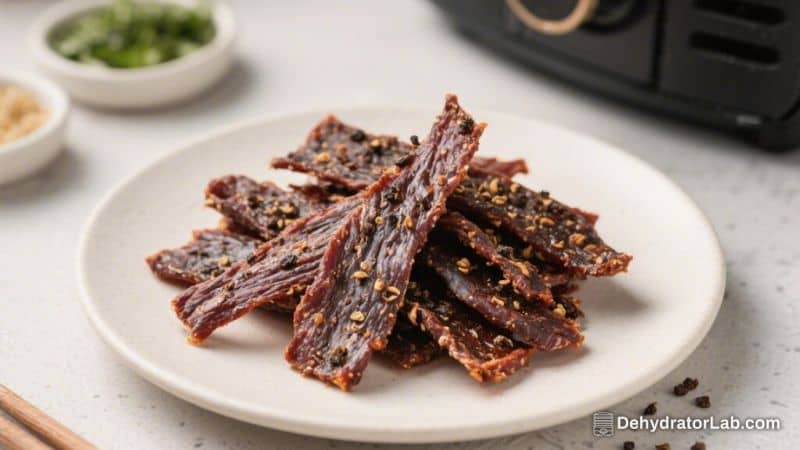
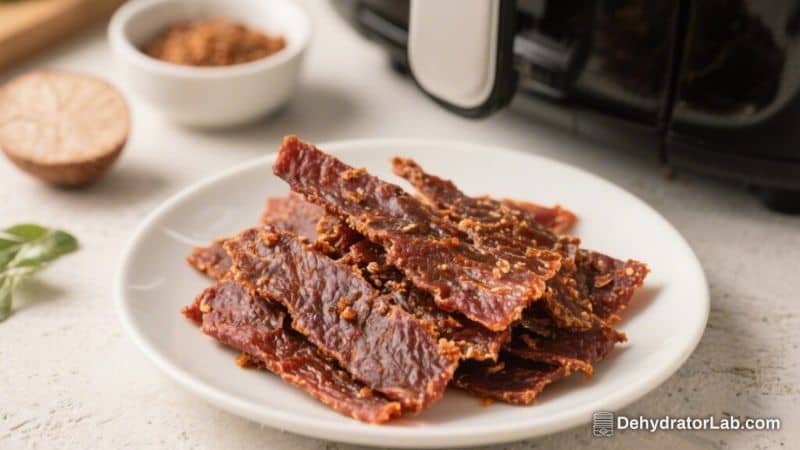
Homemade jerky doesn’t have to be complicated or require a dehydrator. With an air fryer and a few pantry staples, you can make a batch that’s tender, savory, and fully Paleo-friendly. This version skips added sugar and soy, relying on clean ingredients and bold spices.
It’s perfect for meal prep, road trips, and quick protein between meals. If you want a snack that actually satisfies, this is it.
In this article:
What Makes This Recipe So Good
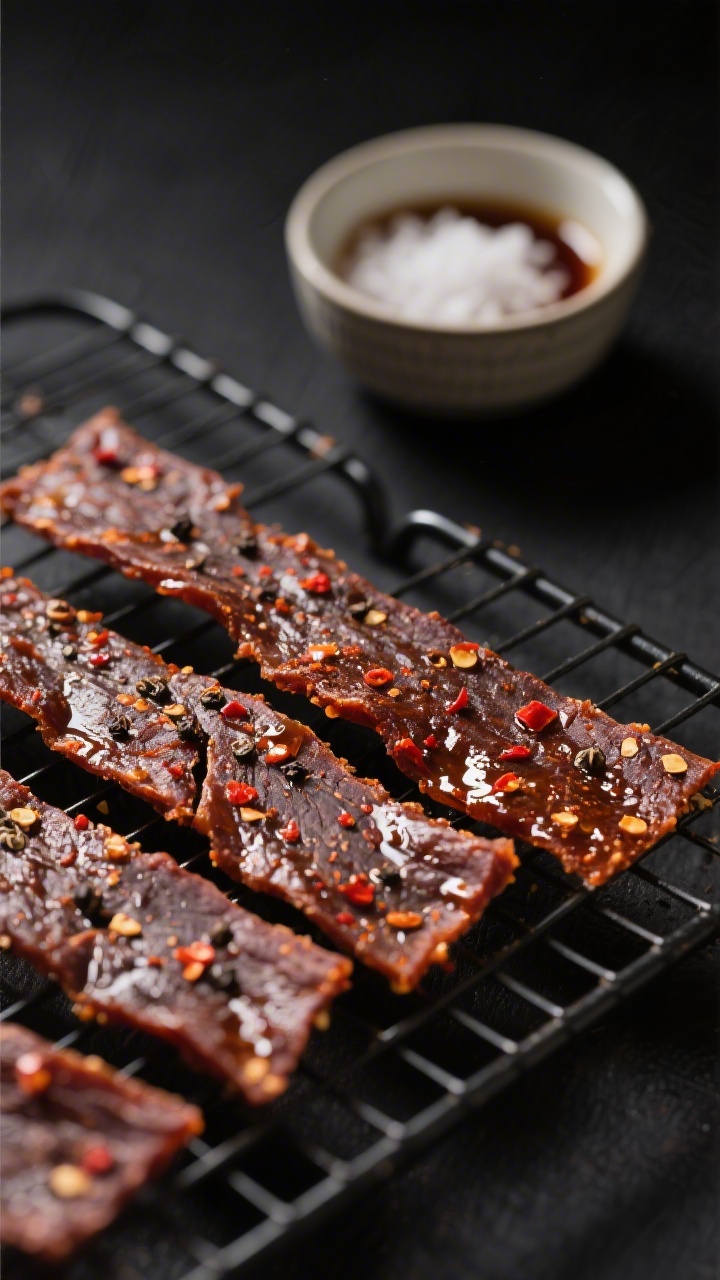
- Fast and convenient: You’ll get jerky in a fraction of the time it takes in the oven or a dehydrator.
- Fully Paleo: No soy sauce, refined sugar, or preservatives. Just real ingredients and clean flavor.
- High protein, low mess: A simple marinade and your air fryer do the heavy lifting.
Minimal cleanup.
- Customizable: Adjust spice, heat, and aromatics to match your taste without losing the classic jerky vibe.
- Budget-friendly: Making your own saves money and lets you choose better-quality meat.
What You’ll Need
- 2 pounds lean beef (eye of round, top round, or sirloin tip), trimmed well
- 1/4 cup coconut aminos (Paleo-friendly alternative to soy sauce)
- 2 tablespoons apple cider vinegar
- 1 tablespoon avocado oil (optional, helps with moisture)
- 2 teaspoons sea salt
- 1 1/2 teaspoons cracked black pepper
- 2 teaspoons onion powder
- 2 teaspoons garlic powder
- 1 teaspoon smoked paprika (or regular paprika if preferred)
- 1/2 to 1 teaspoon crushed red pepper flakes (optional, for heat)
- 1 teaspoon ground coriander (optional, adds a citrusy note)
- 1 teaspoon liquid smoke (optional, for a classic smoky finish)
How to Make It
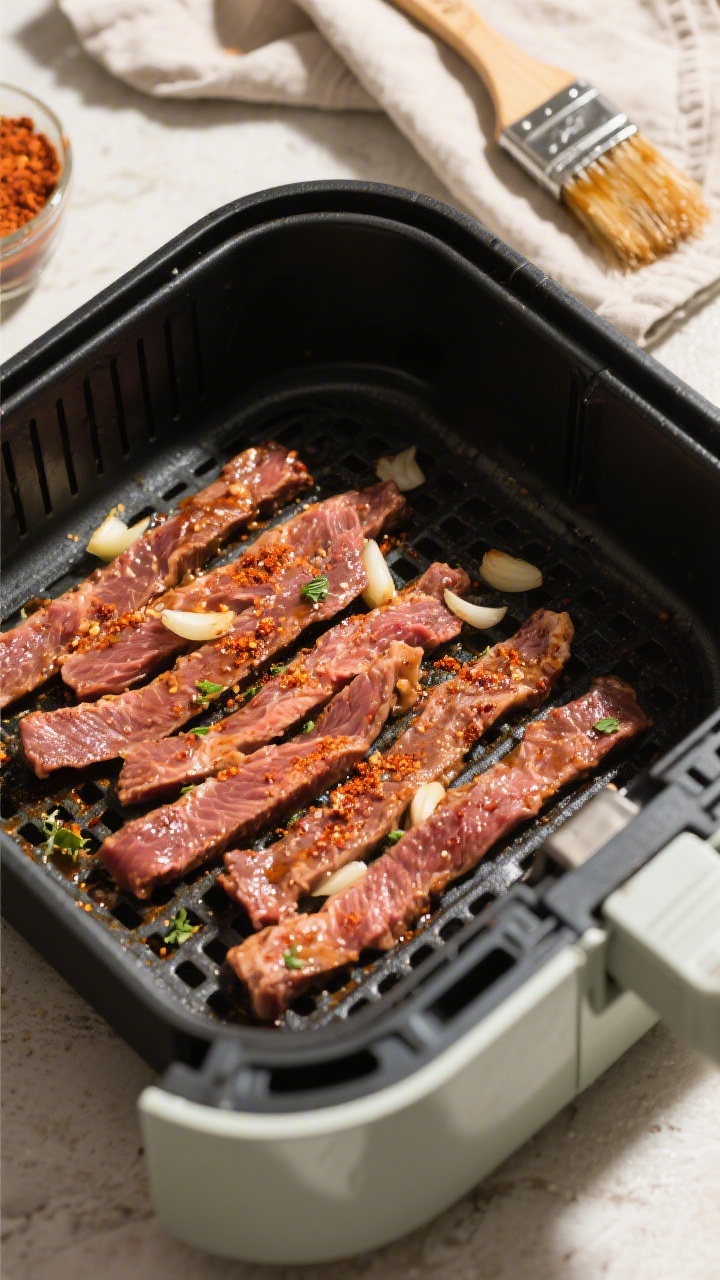
- Partially freeze the beef: Place the beef in the freezer for 45–60 minutes until firm but not rock hard. This makes slicing thin, even strips much easier.
- Slice thinly against the grain: Cut the beef into 1/8- to 1/4-inch-thick slices. Thinner slices dry faster and more evenly.
Trim any remaining visible fat.
- Mix the marinade: In a large bowl, whisk coconut aminos, apple cider vinegar, avocado oil, salt, pepper, onion powder, garlic powder, smoked paprika, red pepper flakes, coriander, and liquid smoke (if using).
- Marinate the beef: Add the slices to the marinade and toss to coat. Cover and refrigerate at least 4 hours, preferably overnight for deeper flavor.
- Prep the air fryer: Lightly oil the air fryer basket or racks to prevent sticking. Preheat to 175–180°F (80–82°C) if your model allows.
If not, use the lowest possible temperature and plan for shorter checks.
- Lay out the strips: Pat the beef dry with paper towels. Arrange slices in a single layer with slight space between pieces. Don’t overlap.
- Air fry low and slow: Cook at 175–180°F for 2 to 3 hours, flipping halfway.
If your air fryer only goes down to 200°F, start checking at 60–75 minutes, then every 15 minutes. Rotate racks if needed for even drying.
- Check for doneness: Jerky should be dry to the touch, darkened, and flexible. Bend a strip; it should crack along the surface but not snap.
If it feels moist or spongy, keep going in 10–15 minute intervals.
- Cool and condition: Let jerky cool completely on a rack. Then place loosely in a paper bag or a jar with the lid ajar for 24 hours. Shake once or twice.
This helps equalize moisture so it stores better.
- Store properly: Move to an airtight container or vacuum-seal. See storage notes below for timing and options.
Storage Instructions
- Room temperature: If fully dried and conditioned, keep in an airtight container up to 1 week in a cool, dark place.
- Refrigerator: Up to 2–3 weeks in a sealed container or bag. Add a small desiccant packet if you have one.
- Freezer: Up to 3 months.
Vacuum-sealing is ideal to prevent freezer burn and preserve texture.
- Tip: Store in smaller, single-serve bags so you only expose what you’ll eat within a few days.
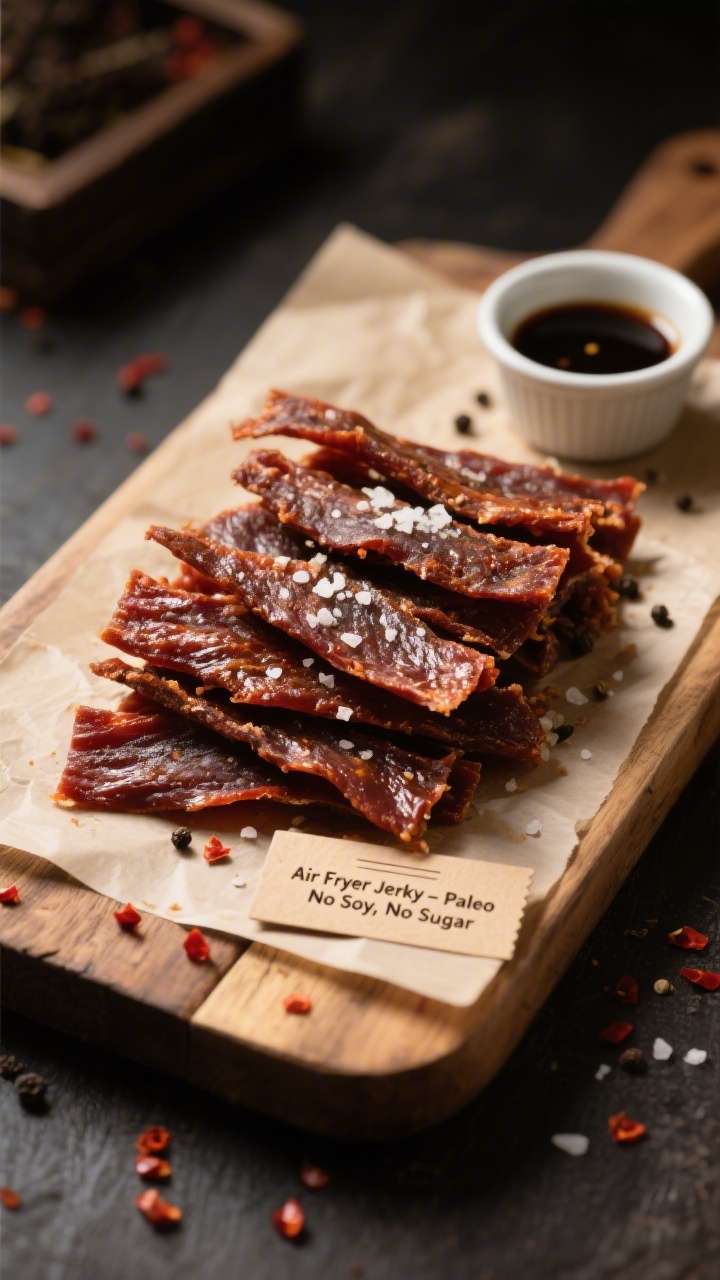
Benefits of This Recipe
- Protein-packed: A clean, portable source of protein without added sugar or fillers.
- Better ingredients: You control the cut of meat, the salt level, and every spice.
- Paleo-compliant: Uses coconut aminos, apple cider vinegar, and whole spices—no soy or processed sweeteners.
- Quick batch prep: Marinate overnight, air fry the next day, and you’re set for the week.
- Custom flavor profiles: Go smoky, spicy, tangy, or mild by adjusting the blend.
What Not to Do
- Don’t slice with the grain if you want tender jerky. Against the grain gives a better chew.
- Don’t overlap pieces in the air fryer. Crowding traps moisture and leads to uneven drying.
- Don’t skip patting dry. Excess marinade slows drying and can make jerky tacky.
- Don’t rush the process. High heat cooks instead of dehydrates, which toughens the meat and risks scorching.
- Don’t store while warm. Steam in the container invites condensation and spoilage.
Alternatives
- Protein swaps: Try bison, venison, or turkey breast.
Choose lean cuts and slice the same way.
- No coconut aminos? Use a mix of balsamic vinegar and extra salt to mimic depth, or a Paleo fish sauce (sparingly) for umami.
- Sweetness without sugar: Add 1–2 tablespoons of date paste to the marinade for a lightly sweet edge.
- Smoky variations: Swap smoked paprika for chipotle powder, or add a touch more liquid smoke.
- Herb-forward: Add dried thyme, oregano, or rosemary for a savory, Mediterranean feel.
- Nightshade-free: Skip paprika and red pepper. Boost flavor with extra garlic, coriander, and black pepper.
FAQ
What’s the best cut of meat for air fryer jerky?
Choose lean cuts like eye of round, top round, bottom round, or sirloin tip. Less fat means better drying and longer storage.
Trim any visible fat for the cleanest result.
How thin should I slice the beef?
Aim for 1/8 to 1/4 inch thick. Thinner slices dry quicker and more evenly. Consistent thickness matters more than the exact measurement.
Can I make jerky without marinating overnight?
Yes, but the flavor won’t be as deep.
Try at least 4 hours if you’re short on time. Longer marinating helps the salt and spices penetrate.
My air fryer doesn’t go below 200°F. Can I still make this?
You can.
Start checking at around 60–75 minutes, flip, and continue in shorter intervals. Keep a close eye to avoid overcooking, and consider cracking the lid briefly between intervals to release steam.
How do I know when the jerky is done?
It should be dry and leathery, with a bend-and-crack texture. It shouldn’t snap like a cracker or feel damp.
If it’s still pliable and a bit sticky, give it more time.
Is this recipe Whole30 compatible?
Yes, as long as your coconut aminos and spices have no added sugars or non-compliant additives. Skip any sweeteners or sweet alternatives.
Can I use ground meat?
Ground meat jerky requires a jerky gun and a different method. For air fryers, solid sliced cuts work best and dry more predictably.
Do I need curing salt?
Not for a small home batch stored in the fridge or freezer.
Curing salts are more common for long-term room-temperature storage and traditional methods.
Why “condition” the jerky after drying?
Conditioning lets moisture equalize across pieces, reducing the risk of mold. It improves shelf life and consistency, especially if some pieces dried faster than others.
Can I double the recipe?
Yes, but dry in batches. Overloading the air fryer leads to uneven results.
Keep slices in a single layer and rotate racks if your model allows.
In Conclusion
Air Fryer Paleo Jerky is simple to make, easy to customize, and loaded with clean, satisfying flavor. With the right cut of meat, a balanced marinade, and a low-and-slow approach, you’ll get tender, chewy jerky without special equipment. Make a batch on the weekend, stash it for busy days, and enjoy a snack that actually keeps you going.
Air Fryer Paleo Jerky – A Simple, Savory Snack
Ingredients
- 2 pounds lean beef (eye of round, top round, or sirloin tip), trimmed well
- 1/4 cup coconut aminos (Paleo-friendly alternative to soy sauce)
- 2 tablespoons apple cider vinegar
- 1 tablespoon avocado oil (optional, helps with moisture)
- 2 teaspoons sea salt
- 1 1/2 teaspoons cracked black pepper
- 2 teaspoons onion powder
- 2 teaspoons garlic powder
- 1 teaspoon smoked paprika (or regular paprika if preferred)
- 1/2 to 1 teaspoon crushed red pepper flakes (optional, for heat)
- 1 teaspoon ground coriander (optional, adds a citrusy note)
- 1 teaspoon liquid smoke (optional, for a classic smoky finish)
Instructions
- Partially freeze the beef: Place the beef in the freezer for 45–60 minutes until firm but not rock hard. This makes slicing thin, even strips much easier.
- Slice thinly against the grain: Cut the beef into 1/8- to 1/4-inch-thick slices. Thinner slices dry faster and more evenly.Trim any remaining visible fat.
- Mix the marinade: In a large bowl, whisk coconut aminos, apple cider vinegar, avocado oil, salt, pepper, onion powder, garlic powder, smoked paprika, red pepper flakes, coriander, and liquid smoke (if using).
- Marinate the beef: Add the slices to the marinade and toss to coat. Cover and refrigerate at least 4 hours, preferably overnight for deeper flavor.
- Prep the air fryer: Lightly oil the air fryer basket or racks to prevent sticking. Preheat to 175–180°F (80–82°C) if your model allows.If not, use the lowest possible temperature and plan for shorter checks.
- Lay out the strips: Pat the beef dry with paper towels. Arrange slices in a single layer with slight space between pieces. Don’t overlap.
- Air fry low and slow: Cook at 175–180°F for 2 to 3 hours, flipping halfway.If your air fryer only goes down to 200°F, start checking at 60–75 minutes, then every 15 minutes. Rotate racks if needed for even drying.
- Check for doneness: Jerky should be dry to the touch, darkened, and flexible. Bend a strip; it should crack along the surface but not snap.If it feels moist or spongy, keep going in 10–15 minute intervals.
- Cool and condition: Let jerky cool completely on a rack. Then place loosely in a paper bag or a jar with the lid ajar for 24 hours. Shake once or twice.This helps equalize moisture so it stores better.
- Store properly: Move to an airtight container or vacuum-seal. See storage notes below for timing and options.
Printable Recipe Card
Want just the essential recipe details without scrolling through the article? Get our printable recipe card with just the ingredients and instructions.