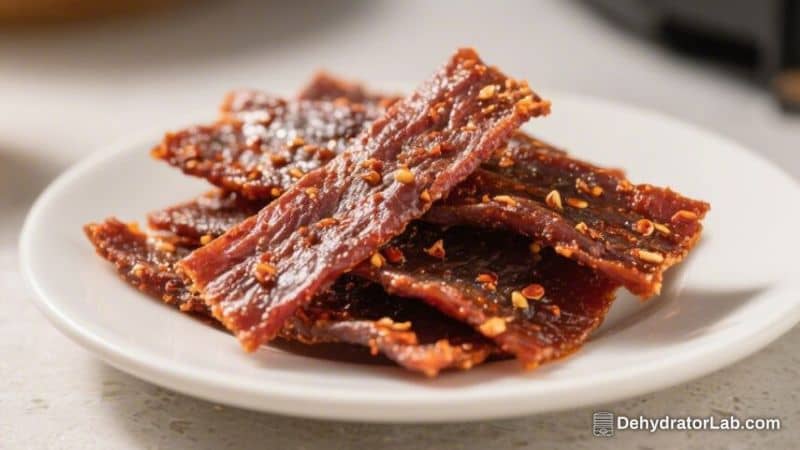
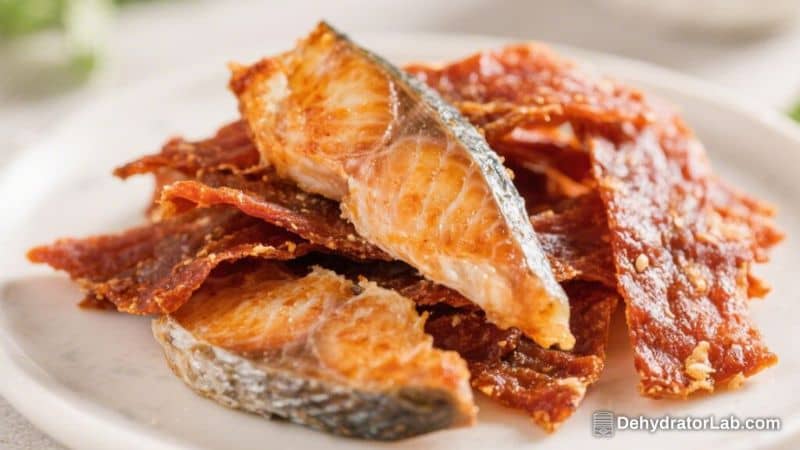
This air fryer mahi mahi jerky is a smart, tasty way to turn a lean fish into a grab-and-go snack. It’s savory, slightly sweet, and just the right amount of chewy—no dehydrator required. If you’re into high-protein snacks or want something different from beef jerky, this one hits the spot.
The air fryer keeps the process simple and fast, and the marinade does the heavy lifting. Make a batch on Sunday, and you’ve got snacks for the week.
In this article:
What Makes This Recipe So Good
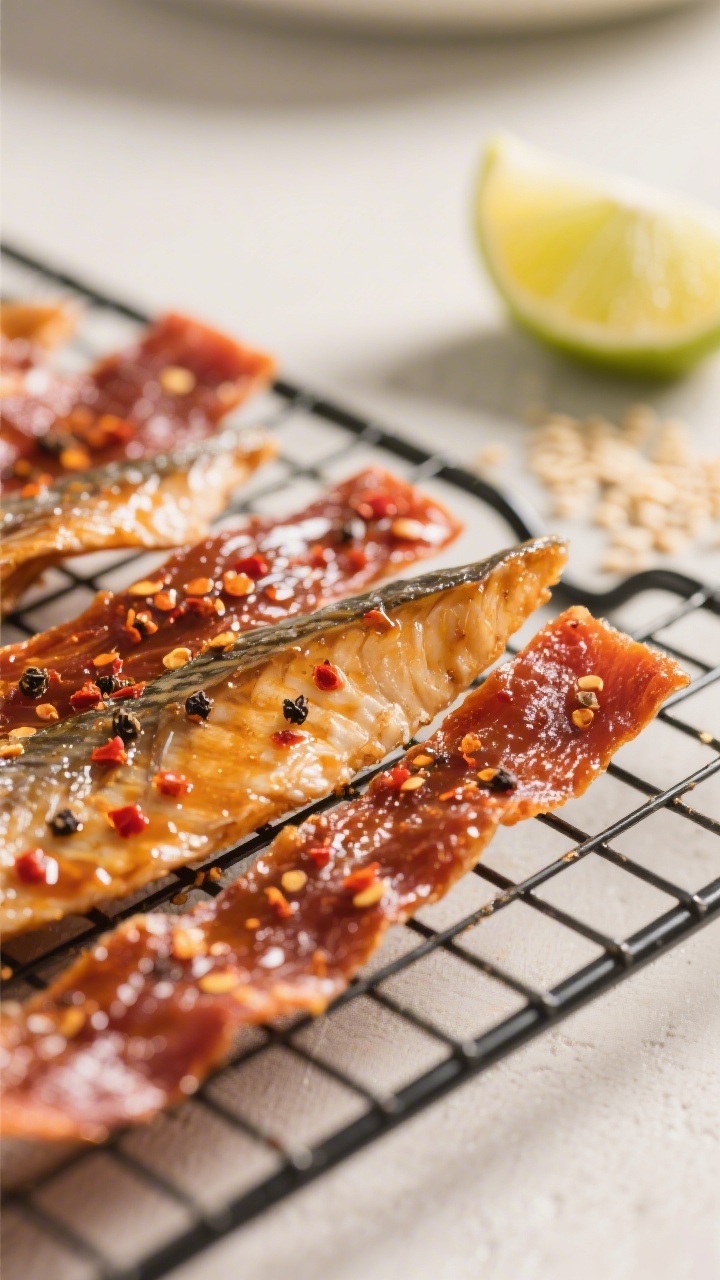
- Quick and convenient: No dehydrator or special gear—just your air fryer.
- High protein, low fat: Mahi mahi is lean, so you get a clean, satisfying snack.
- Great texture: The air fryer creates a tender-chewy bite similar to traditional jerky.
- Balanced flavor: A simple marinade brings salty, sweet, garlicky notes with a hint of heat.
- Customizable: Easily adapt the seasoning to your taste—smoky, spicy, or citrusy.
Shopping List
- Mahi mahi fillets (about 1 to 1.5 pounds, skin removed)
- Soy sauce or coconut aminos
- Honey or brown sugar
- Rice vinegar or apple cider vinegar
- Worcestershire sauce (optional, for depth)
- Garlic powder
- Onion powder
- Smoked paprika (or regular paprika + a pinch of liquid smoke)
- Black pepper
- Red pepper flakes or cayenne (optional, for heat)
- Fresh lime (zest and juice, optional but great)
- Sesame oil (just a little for richness)
- Neutral oil spray (to lightly mist the air fryer basket)
- Paper towels (for patting the fish dry)
Instructions
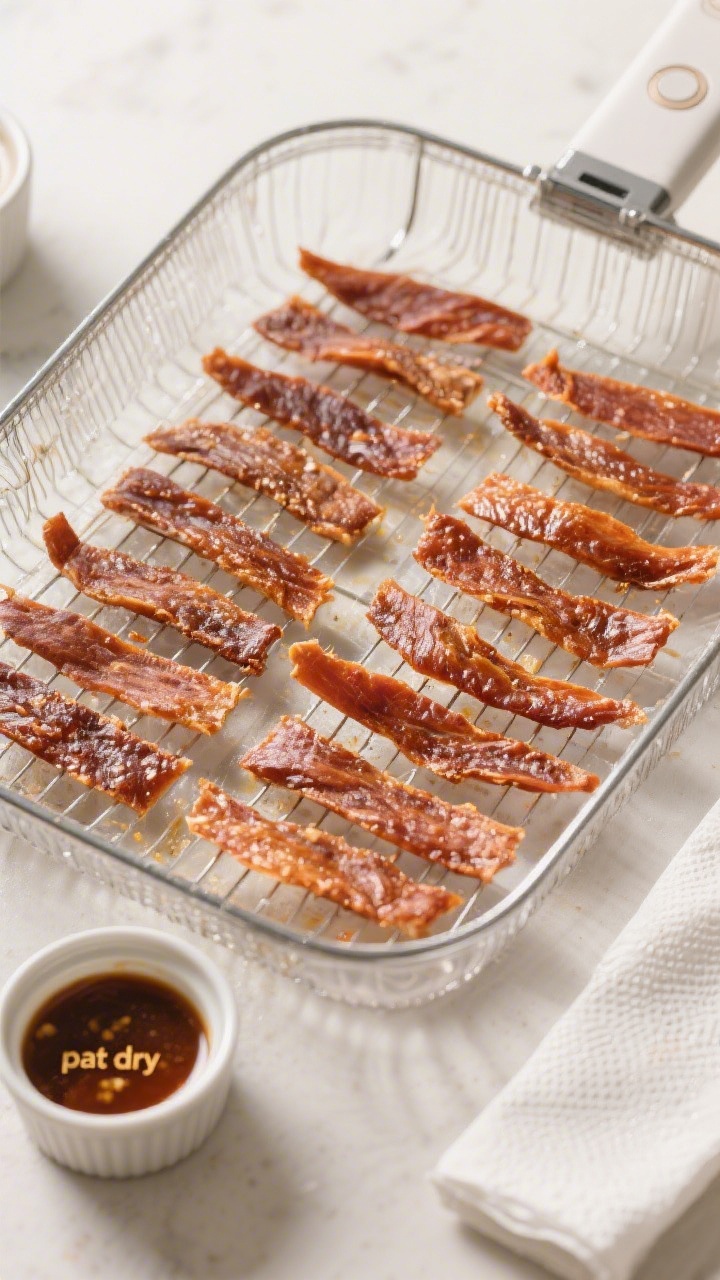
- Prep the fish: Pat the mahi mahi dry with paper towels. Trim off any dark bloodline sections for a cleaner flavor.
Slice into thin strips, about 1/4 inch thick and 1 inch wide. Thinner strips dry faster and give a better jerky texture.
- Make the marinade: In a bowl, whisk 1/3 cup soy sauce, 1 tablespoon honey, 1 tablespoon rice vinegar, 1 teaspoon Worcestershire sauce, 1 teaspoon garlic powder, 1 teaspoon onion powder, 1 teaspoon smoked paprika, 1/2 teaspoon black pepper, a pinch of red pepper flakes, 1 teaspoon lime zest, 1 teaspoon lime juice, and 1/2 teaspoon sesame oil.
- Marinate: Add the fish strips to the marinade, toss to coat, and refrigerate for 30–90 minutes. Longer can make the fish too salty, so keep it under 2 hours.
- Dry the surface: Remove fish from the marinade and place on a rack or plate lined with paper towels.
Blot gently. Excess moisture leads to steaming instead of drying.
- Preheat the air fryer: Set to 160–170°F (70–75°C), or the lowest setting your model allows. If your unit doesn’t go that low, use 180°F and reduce time slightly while watching closely.
- Arrange the strips: Lightly spray the basket or tray. Lay fish strips in a single layer with space between them. Do not overlap.
- Air fry (first stage): Cook for 45–60 minutes at 160–170°F, flipping halfway.
If using 180°F, start checking at 35 minutes.
- Check texture: Jerky should feel dry to the touch but bend without snapping. If it’s still soft or wet, continue in 10-minute intervals. Total time usually runs 60–90 minutes, depending on thickness and air fryer model.
- Optional finish: For slightly firmer edges, bump to 180°F for the final 5–10 minutes.
Watch closely to prevent hardening.
- Cool and condition: Let the jerky cool completely on a rack. Then place it loosely in a clean jar or container for 24 hours at room temp, shaking once or twice. This “conditioning” step evens out moisture and prevents soggy spots.
How to Store
- Short-term: Keep in an airtight container at room temperature for up to 24–48 hours after conditioning.
- Refrigerate: Store in a sealed bag or jar for up to 1 week. Add a small paper towel to absorb moisture.
- Freeze: For longer storage, freeze up to 2 months.
Thaw in the fridge before eating.
- Watch for moisture: If condensation appears, re-air fry at 160–170°F for 10–15 minutes to dry it back out.
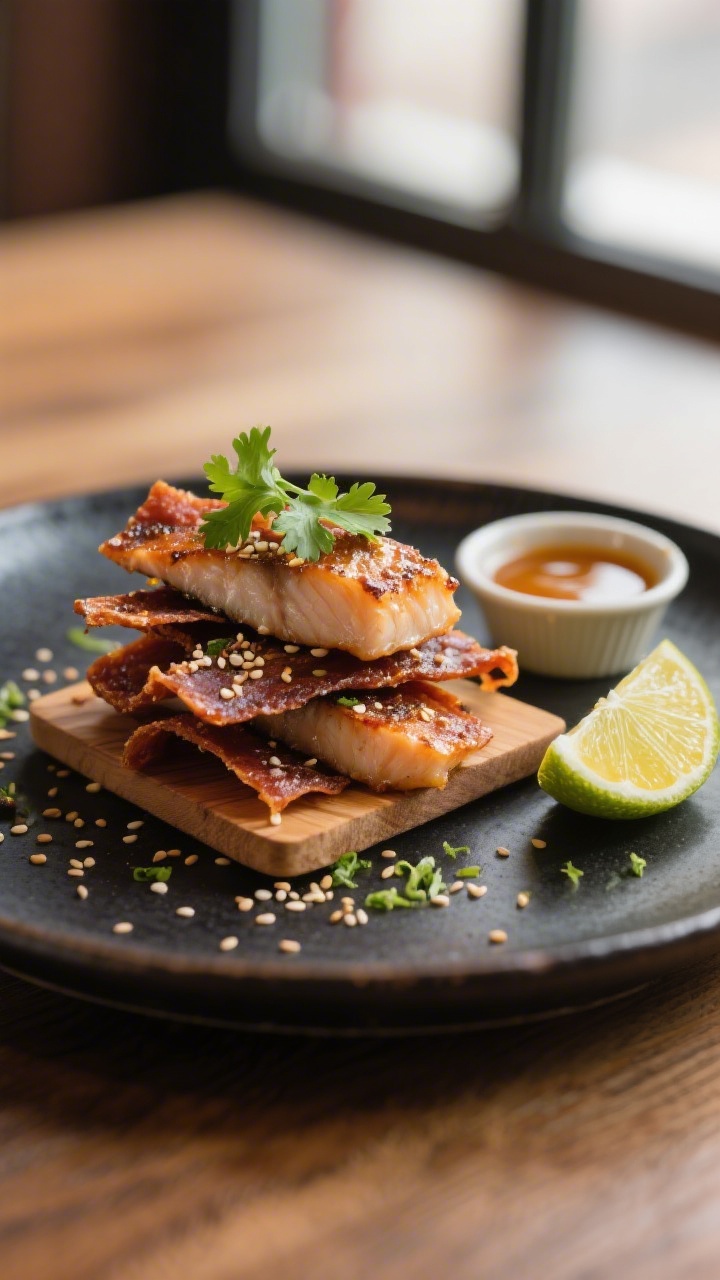
Benefits of This Recipe
- Protein-packed: Mahi mahi delivers lean protein without heavy fat.
- Lower sodium option: You can control the salt level compared to store-bought jerky.
- Budget-friendly: Uses a modest amount of fish to yield several servings.
- Fast cleanup: No dehydrator racks or elaborate equipment.
- Flexible flavor: Adjust spices, sweeteners, and heat to match your preferences.
Common Mistakes to Avoid
- Skipping the pat-dry step: Wet fish steams and turns mushy. Always blot before air frying.
- Too thick cuts: Anything thicker than 1/4 inch takes too long and dries unevenly.
- Overcrowding: Crowded baskets trap moisture. Give each strip breathing room.
- Marinating too long: Fish absorbs salt quickly.
Keep it under 2 hours.
- High heat the whole time: You’re drying, not cooking. Stay low and slow for the best texture.
Recipe Variations
- Teriyaki-Sesame: Swap honey for brown sugar, add 1 tablespoon teriyaki sauce, and sprinkle toasted sesame seeds after drying.
- Citrus-Garlic: Use extra lime zest and juice, plus fresh grated garlic. Finish with a pinch of lemon pepper.
- Spicy Gochujang: Whisk 1 teaspoon gochujang into the marinade and add extra red pepper flakes.
- Smoky Maple: Replace honey with maple syrup and add a few drops of liquid smoke.
- Lemon-Pepper Herb: Add dried dill or thyme, extra black pepper, and lemon zest for a bright, clean profile.
FAQ
Can I use frozen mahi mahi?
Yes—just thaw it fully in the refrigerator and pat it very dry before slicing.
Excess water leads to steaming and a weak texture.
What if my air fryer doesn’t go below 180°F?
Use 180°F and check earlier. Start assessing at 35 minutes, then continue in 10-minute increments until it’s dry yet flexible.
How do I know when the jerky is done?
It should feel dry on the surface and bend without breaking. If it tears or feels wet in the center, give it more time.
Can I use another fish?
Yes.
Tuna, swordfish, and halibut work well because they’re firm. Avoid very oily fish like mackerel unless you prefer a richer, stronger flavor.
Is sugar necessary?
A little sweetener helps balance salt and aids browning. You can reduce it or use a sugar-free sweetener, but expect a slightly different texture and taste.
Do I need curing salt?
Not for this quick, refrigerated snack version.
If you want long-term shelf-stable jerky, follow a tested food safety protocol that includes proper curing and dehydration steps.
Why condition the jerky after drying?
Conditioning equalizes moisture between pieces and prevents some strips from getting soggy while others are brittle. It also lets you spot condensation early.
How thin should I slice the fish?
Aim for about 1/4 inch. Thinner slices dry faster and more evenly.
Thicker cuts risk a wet center.
Can I double the recipe?
Yes, but work in batches. Overloading the air fryer creates steam and slows drying, hurting the final texture.
How can I make it extra smoky?
Use smoked paprika plus a few drops of liquid smoke in the marinade. You can also finish with a brief 180°F stint for edges that feel slightly roasted.
Final Thoughts
Air fryer mahi mahi jerky is a practical, flavorful twist on a classic snack.
It’s simple to prep, easy to customize, and yields a clean, protein-rich bite without special equipment. Once you dial in your favorite marinade and thickness, it becomes a reliable staple for meal prep, road trips, or post-workout snacks. Keep the heat low, the slices thin, and the basket roomy—that’s the winning combo for great jerky every time.
Air Fryer Mahi Mahi Jerky – Lean, Flavorful, and Surprisingly Easy
Ingredients
- Mahi mahi fillets (about 1 to 1.5 pounds, skin removed)
- Soy sauce or coconut aminos
- Honey or brown sugar
- Rice vinegar or apple cider vinegar
- Worcestershire sauce (optional, for depth)
- Garlic powder
- Onion powder
- Smoked paprika (or regular paprika + a pinch of liquid smoke)
- Black pepper
- Red pepper flakes or cayenne (optional, for heat)
- Fresh lime (zest and juice, optional but great)
- Sesame oil (just a little for richness)
- Neutral oil spray (to lightly mist the air fryer basket)
- Paper towels (for patting the fish dry)
Instructions
- Prep the fish: Pat the mahi mahi dry with paper towels. Trim off any dark bloodline sections for a cleaner flavor.Slice into thin strips, about 1/4 inch thick and 1 inch wide. Thinner strips dry faster and give a better jerky texture.
- Make the marinade: In a bowl, whisk 1/3 cup soy sauce, 1 tablespoon honey, 1 tablespoon rice vinegar, 1 teaspoon Worcestershire sauce, 1 teaspoon garlic powder, 1 teaspoon onion powder, 1 teaspoon smoked paprika, 1/2 teaspoon black pepper, a pinch of red pepper flakes, 1 teaspoon lime zest, 1 teaspoon lime juice, and 1/2 teaspoon sesame oil.
- Marinate: Add the fish strips to the marinade, toss to coat, and refrigerate for 30–90 minutes. Longer can make the fish too salty, so keep it under 2 hours.
- Dry the surface: Remove fish from the marinade and place on a rack or plate lined with paper towels.Blot gently. Excess moisture leads to steaming instead of drying.
- Preheat the air fryer: Set to 160–170°F (70–75°C), or the lowest setting your model allows. If your unit doesn’t go that low, use 180°F and reduce time slightly while watching closely.
- Arrange the strips: Lightly spray the basket or tray. Lay fish strips in a single layer with space between them. Do not overlap.
- Air fry (first stage): Cook for 45–60 minutes at 160–170°F, flipping halfway.If using 180°F, start checking at 35 minutes.
- Check texture: Jerky should feel dry to the touch but bend without snapping. If it’s still soft or wet, continue in 10-minute intervals. Total time usually runs 60–90 minutes, depending on thickness and air fryer model.
- Optional finish: For slightly firmer edges, bump to 180°F for the final 5–10 minutes.Watch closely to prevent hardening.
- Cool and condition: Let the jerky cool completely on a rack. Then place it loosely in a clean jar or container for 24 hours at room temp, shaking once or twice. This “conditioning” step evens out moisture and prevents soggy spots.
Printable Recipe Card
Want just the essential recipe details without scrolling through the article? Get our printable recipe card with just the ingredients and instructions.