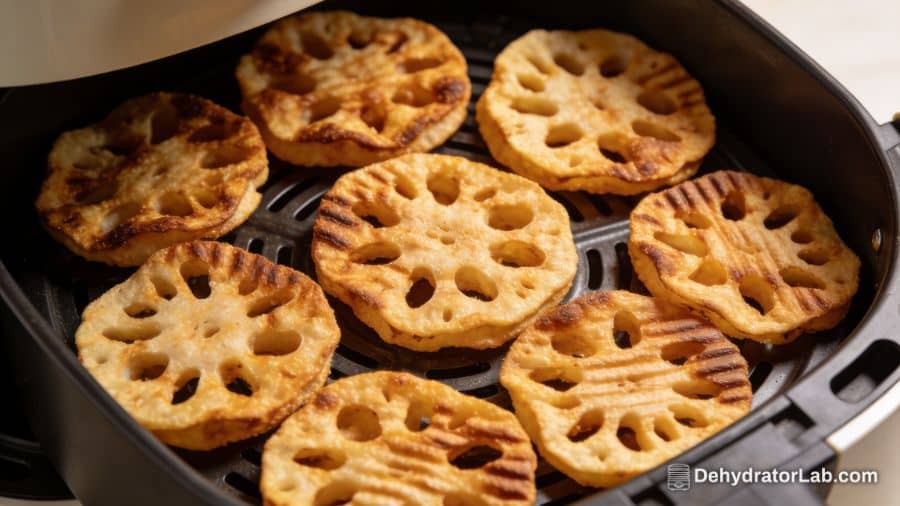
These air fryer lotus root chips are crispy, light, and surprisingly addictive. If you’ve seen lotus root at the market and weren’t sure what to do with it, this is the easiest, tastiest place to start. The chips have a beautiful, lacy look and a satisfying crunch that rivals any potato chip.
Plus, they cook fast and use very little oil. Whether you’re making a simple snack or a party appetizer, this recipe delivers big flavor with minimal fuss.
In this article:
TL;DR (Too Long; Didn’t Read): Key Takeaways
- 🪷 Slice 1/16–1/8 inch thin — the lacy holes are part of the look, not a problem to avoid.
- 🍋 Soak in water with vinegar or lemon juice 10–15 minutes to keep the color bright and boost crisp.
- 💧 Pat bone dry before oiling — this is non-negotiable for crunch.
- 🔥 Air fry at 350°F (175°C) for 8–12 minutes, checking at 7.
- 📦 Best within 2 days airtight; skip the fridge, it softens them.
What Makes This Special
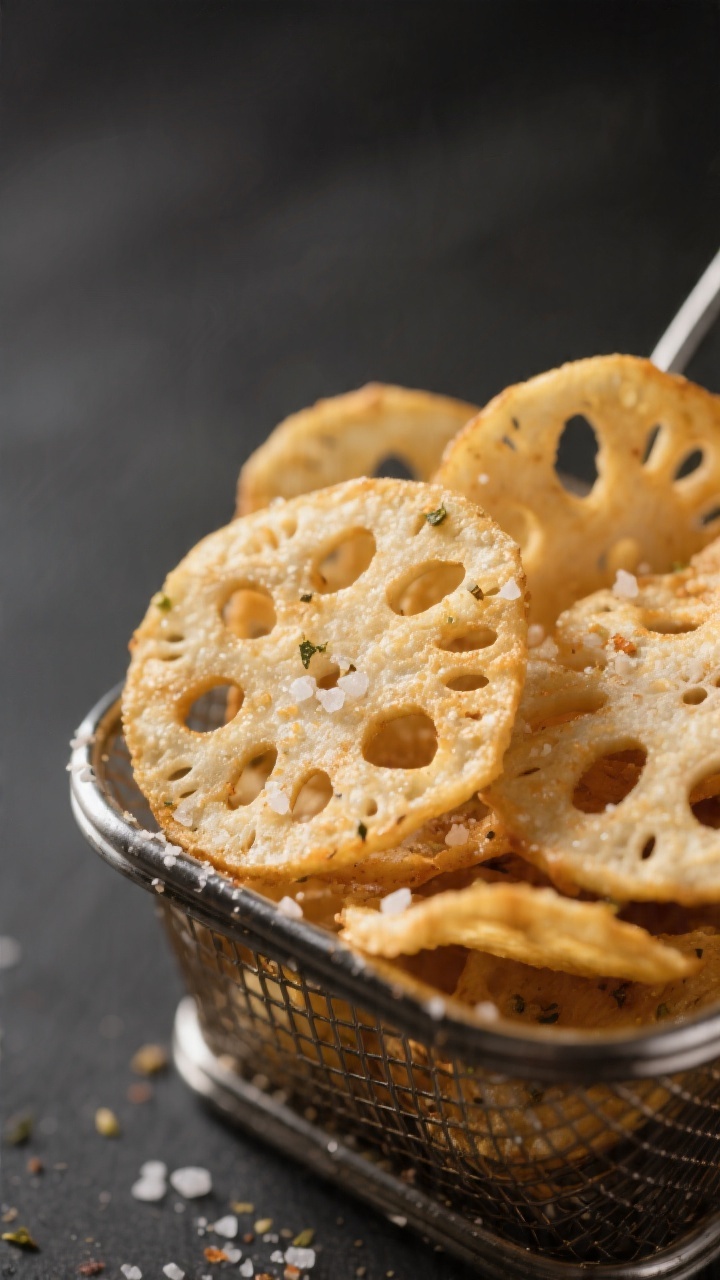
Lotus root has a mellow, slightly sweet flavor and a unique, hole-punched look that turns every chip into a conversation piece. In the air fryer, it crisps up quickly without the oily heaviness of deep-frying.
You can season these chips endlessly—keep it classic with salt and pepper or go bold with spices like chili, furikake, or za’atar. They’re a great alternative to regular chips when you want something lighter but still crunchy. And because you’re air frying, cleanup is easy and the cooking time is short.
Ingredients
- 1 medium lotus root (about 8–10 inches long; fresh or vacuum-packed)
- 1 tablespoon neutral oil (avocado, canola, or grapeseed)
- 1/2 teaspoon kosher salt, plus more to taste
- 1/4 teaspoon black pepper
- Optional seasonings (choose 1–2):
- 1/2 teaspoon garlic powder
- 1/2 teaspoon smoked paprika
- 1/2 teaspoon chili powder or gochugaru
- 1 teaspoon furikake or togarashi
- 1/2 teaspoon curry powder
- Lemon zest or a squeeze of lime after cooking
- 1 tablespoon rice vinegar or lemon juice (for soaking water)
- Cold water (for rinsing and soaking)
Step-by-Step Instructions
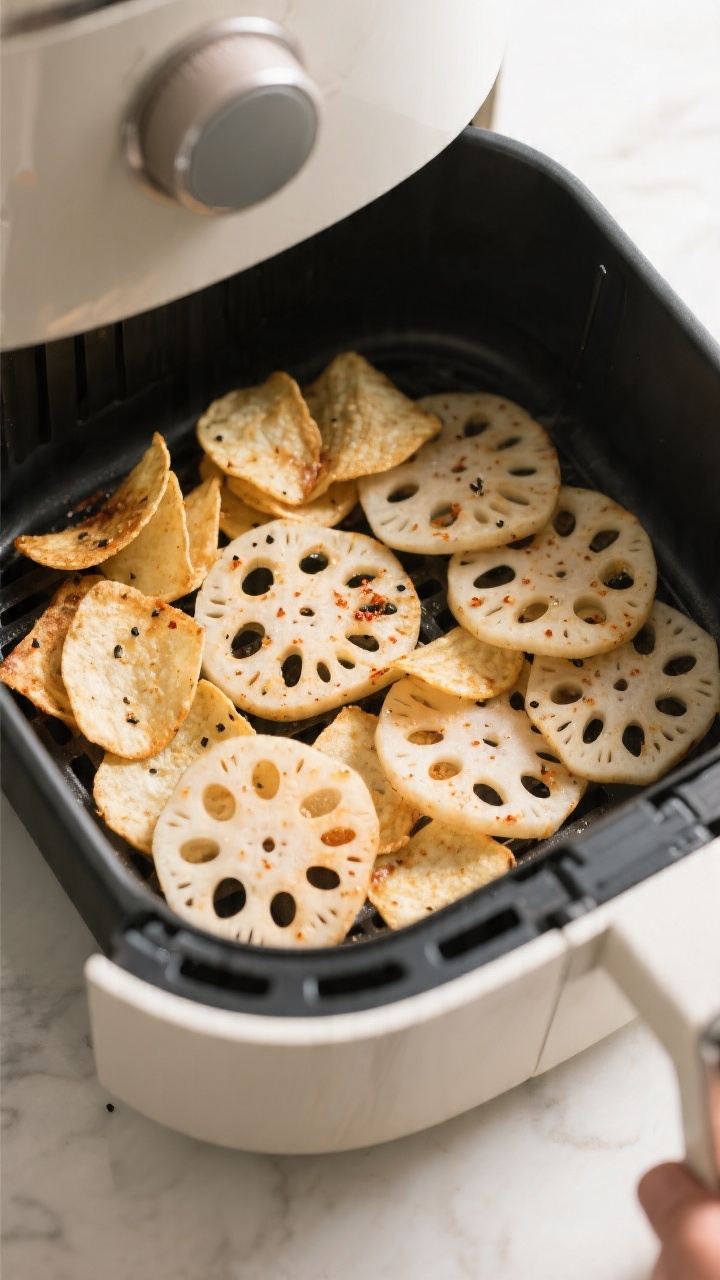
- Prep the lotus root. If using fresh lotus root, scrub and peel it with a vegetable peeler.
Trim the ends. If using vacuum-packed, drain and rinse well to remove the brine.
- Slice thinly. Use a sharp knife or mandoline to slice the lotus root into thin rounds, about 1/16–1/8 inch thick. Thinner slices crisp better, but avoid paper-thin slices that break apart.
- Rinse and soak. Place slices in a bowl of cold water with rice vinegar or lemon juice.
Soak for 10–15 minutes to remove excess starch and keep the color bright. This step helps with extra crispness.
- Dry thoroughly. Drain and pat the slices very dry with clean towels or paper towels. The drier they are, the crispier they’ll get.
- Season. In a large bowl, toss the slices with oil, salt, pepper, and any optional seasonings.
Aim for a light, even coating—too much oil can lead to soggy chips.
- Preheat the air fryer. Set it to 350°F (175°C) for 3 minutes. Preheating helps the chips start crisping right away.
- Arrange in a single layer. Add the seasoned slices to the air fryer basket in a single, slightly overlapping layer. Work in batches if needed. Do not overcrowd or they won’t crisp evenly.
- Air fry. Cook at 350°F (175°C) for 8–12 minutes.
Shake the basket or flip the slices halfway through. Start checking at the 7-minute mark—chips should be lightly golden at the edges and feel firm.
- Finish and season. Transfer hot chips to a cooling rack or paper towel. Sprinkle with a pinch of salt while warm.
If using delicate toppings like furikake or citrus zest, add them now.
- Cool for extra crunch. Let chips cool for 5 minutes. They crisp further as they cool. Repeat with remaining slices.
How to Store
- Short-term: Once completely cool, store chips in an airtight container at room temperature for up to 2 days.
Slip in a small piece of paper towel to absorb moisture.
- Re-crisp: If they soften, air fry at 325°F (165°C) for 2–3 minutes. Cool again to set the crunch.
- Avoid the fridge: Refrigeration introduces moisture and makes chips limp.
Health Benefits
Lotus root is more than a pretty face. It’s a good source of dietary fiber, which supports digestion and helps you feel full.
It also offers vitamin C for immune support and collagen formation, plus minerals like potassium for healthy blood pressure. Because you’re air frying with minimal oil, these chips are lighter than deep-fried versions. You still get the crunchy satisfaction, with fewer calories and less fat.
Common Mistakes to Avoid
- Skipping the soak: Soaking helps remove starch and boosts crispness.
Don’t rush it.
- Not drying the slices: Water is the enemy of crispy chips. Pat them very dry before seasoning.
- Overcrowding the basket: Too many slices at once steam instead of crisp. Cook in batches.
- Using too much oil: A tablespoon is plenty.
Excess oil makes chips greasy and soft.
- Cooking at too high a heat: High temps can brown the edges before the centers dry out. 350°F is a sweet spot.
- Not checking early: Every air fryer runs a little differently. Start peeking at 7 minutes to avoid over-browning.
Recipe Variations
- Sea Salt and Vinegar: Add 1 teaspoon vinegar powder to the seasoning, or mist finished chips with a light spray of malt vinegar just before serving.
- Spicy Sesame: Toss with chili powder or gochugaru and a drizzle of toasted sesame oil after cooking. Finish with sesame seeds.
- Furikake Crunch: Keep the base simple (salt and oil), then sprinkle furikake on the hot chips.
- Smoky BBQ: Use smoked paprika, a pinch of brown sugar, garlic powder, and onion powder.
- Lemon Pepper: Add fresh lemon zest and cracked black pepper after air frying for a bright finish.
- Curry Spice: Dust with curry powder and a touch of cayenne for warmth and color.
FAQ
What does lotus root taste like?
It’s mild, slightly sweet, and a bit nutty—somewhere between a potato and a water chestnut.
The texture is crisp when raw and becomes tender-crunchy when cooked. As chips, it’s light and snappy.
Where can I buy lotus root?
Check Asian grocery stores, well-stocked produce markets, or international sections in larger supermarkets. You’ll find it fresh (muddy-looking, long tubers) or vacuum-packed, sometimes pre-sliced.
Do I have to peel lotus root?
Peeling is recommended for a cleaner look and texture, especially if the skin is tough or blemished.
If the skin looks smooth and you like a rustic look, you can scrub well and leave it on.
How thin should I slice the lotus root?
Aim for 1/16–1/8 inch thick. Thinner slices crisp faster, but ultra-thin slices can burn easily. A mandoline makes consistent slices simple and safe.
Why did my chips turn soggy?
They were likely too wet, too thick, or crowded in the basket.
Make sure to soak, dry thoroughly, slice evenly, and cook in single layers. Letting them cool fully also helps set the crunch.
Can I bake these instead of air frying?
Yes. Arrange slices on parchment-lined sheets, brush lightly with oil, and bake at 375°F (190°C) for 12–18 minutes, flipping once.
Watch closely near the end to prevent over-browning.
Are these gluten-free?
Yes, the base recipe is naturally gluten-free. Just check your seasoning blends to ensure they don’t contain gluten-based additives.
What dips go well with lotus root chips?
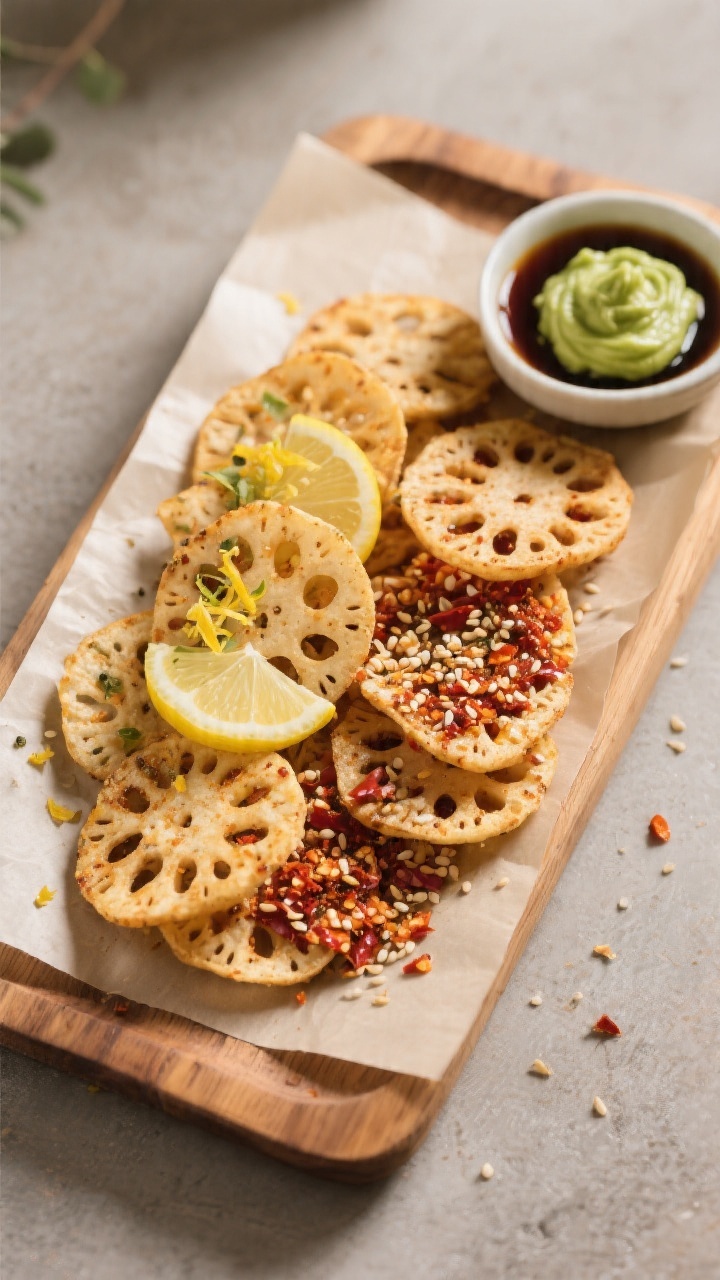
Try a wasabi mayo, spicy yogurt dip, sweet chili sauce, or a simple soy-lime dip. Even guacamole or hummus works—these chips are versatile.
Can I make them ahead?
They’re best the day they’re made, but you can prepare the slices in advance.
Store sliced, soaked lotus root in water with a splash of vinegar in the fridge for up to 24 hours. Dry and air fry when ready.
How do I keep the holes from trapping oil or seasoning?
Use a light hand with oil and dust seasonings evenly. Add delicate toppings after cooking so they cling to the warm chips without clumping in the holes.
Personal Tips You Can Steal
I always add the vinegar to the soaking water now — skip it once and the chips come out noticeably duller looking. I slide a chopstick through the center hole before slicing to steady the root on the cutting board, which keeps my cuts even. I save furikake and citrus zest for the very last step, right on the hot chips, so the flavor doesn’t wash off in the soak. I always cool a full 5 minutes before the first taste test — that’s when the real crunch shows up.
In Conclusion
Air fryer lotus root chips are quick to make, eye-catching, and satisfyingly crunchy.
With a handful of pantry spices and a few simple steps, you can whip up a batch that beats store-bought snacks. Keep the seasoning simple or have fun with global flavors—either way, you’ll end up with a light, crispy snack that disappears fast. Once you try them, lotus root might become a regular on your shopping list. For more global veggie snacks, try our Air Fryer Taro Chips or Air Fryer Cassava Chips, and our Air Fryer Plantain Chips are another tasty pick.
P.S. Look for vacuum-packed lotus root at Asian grocers if fresh is hard to find near you — it works just as well and skips the peeling step. 🙂

Air Fryer Lotus Root Chips – Crispy, Light, and Flavorful
Ingredients
- 1 medium lotus root (about 8–10 inches long; fresh or vacuum-packed)
- 1 tablespoon neutral oil (avocado, canola, or grapeseed)
- 1/2 teaspoon kosher salt, plus more to taste
- 1/4 teaspoon black pepper
- Optional seasonings (choose 1–2):
- 1/2 teaspoon garlic powder
- 1/2 teaspoon smoked paprika
- 1/2 teaspoon chili powder or gochugaru
- 1 teaspoon furikake or togarashi
- 1/2 teaspoon curry powder
- Lemon zest or a squeeze of lime after cooking
- 1 tablespoon rice vinegar or lemon juice (for soaking water)
- Cold water (for rinsing and soaking)
Instructions
- Prep the lotus root. If using fresh lotus root, scrub and peel it with a vegetable peeler.Trim the ends. If using vacuum-packed, drain and rinse well to remove the brine.
- Slice thinly. Use a sharp knife or mandoline to slice the lotus root into thin rounds, about 1/16–1/8 inch thick. Thinner slices crisp better, but avoid paper-thin slices that break apart.
- Rinse and soak. Place slices in a bowl of cold water with rice vinegar or lemon juice.Soak for 10–15 minutes to remove excess starch and keep the color bright. This step helps with extra crispness.
- Dry thoroughly. Drain and pat the slices very dry with clean towels or paper towels. The drier they are, the crispier they’ll get.
- Season. In a large bowl, toss the slices with oil, salt, pepper, and any optional seasonings.Aim for a light, even coating—too much oil can lead to soggy chips.
- Preheat the air fryer. Set it to 350°F (175°C) for 3 minutes. Preheating helps the chips start crisping right away.
- Arrange in a single layer. Add the seasoned slices to the air fryer basket in a single, slightly overlapping layer. Work in batches if needed. Do not overcrowd or they won’t crisp evenly.
- Air fry. Cook at 350°F (175°C) for 8–12 minutes.Shake the basket or flip the slices halfway through. Start checking at the 7-minute mark—chips should be lightly golden at the edges and feel firm.
- Finish and season. Transfer hot chips to a cooling rack or paper towel. Sprinkle with a pinch of salt while warm.If using delicate toppings like furikake or citrus zest, add them now.
- Cool for extra crunch. Let chips cool for 5 minutes. They crisp further as they cool. Repeat with remaining slices.
Printable Recipe Card
Want just the essential recipe details without scrolling through the article? Get our printable recipe card with just the ingredients and instructions.