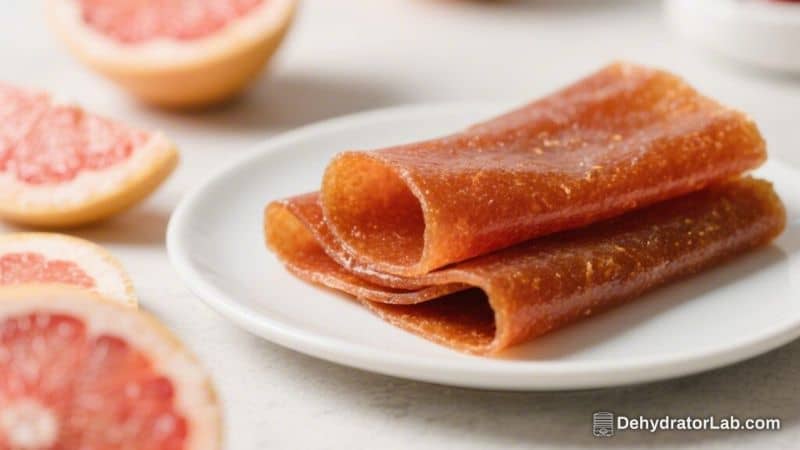
Fruit leather is one of those nostalgic snacks that still hits the spot. It’s sweet, chewy, and feels like a treat without being complicated. The best part?
You don’t need a dehydrator to make it. With an air fryer, you can turn fresh or frozen fruit into a batch of delicious fruit leather in under an hour. It’s budget-friendly, great for lunchboxes, and surprisingly easy to customize.
In this article:
What Makes This Recipe So Good
- Quick and accessible: No dehydrator required.
The air fryer does the job fast and reliably.
- Kid-approved: Naturally sweet and fun to eat, with no mystery ingredients.
- Customizable: Use whatever fruit you have, adjust sweetness, and add extras like citrus or spices.
- Budget-friendly: A smart way to use up ripe fruit or freezer odds and ends.
- Portable snack: Rolls up easily and stores well for on-the-go munching.
Ingredients
- 3 cups chopped fruit (fresh or thawed frozen; berries, mango, peaches, applesauce, or a mix)
- 1–3 tablespoons honey, maple syrup, or sugar (optional, to taste)
- 1–2 teaspoons lemon juice (brightens flavor and helps preserve color)
- Optional add-ins: 1 teaspoon vanilla extract, a pinch of cinnamon, or 1 tablespoon chia seeds for texture
- Nonstick spray or a little neutral oil (for greasing the liner)
Step-by-Step Instructions
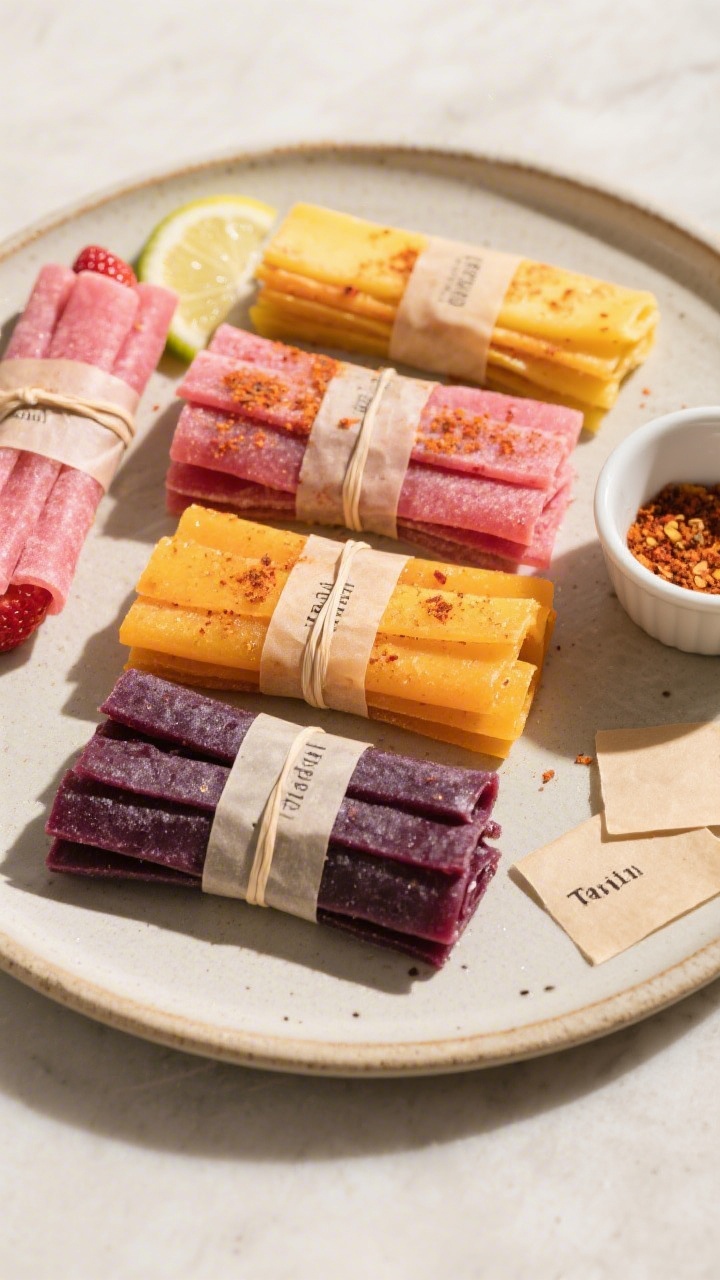
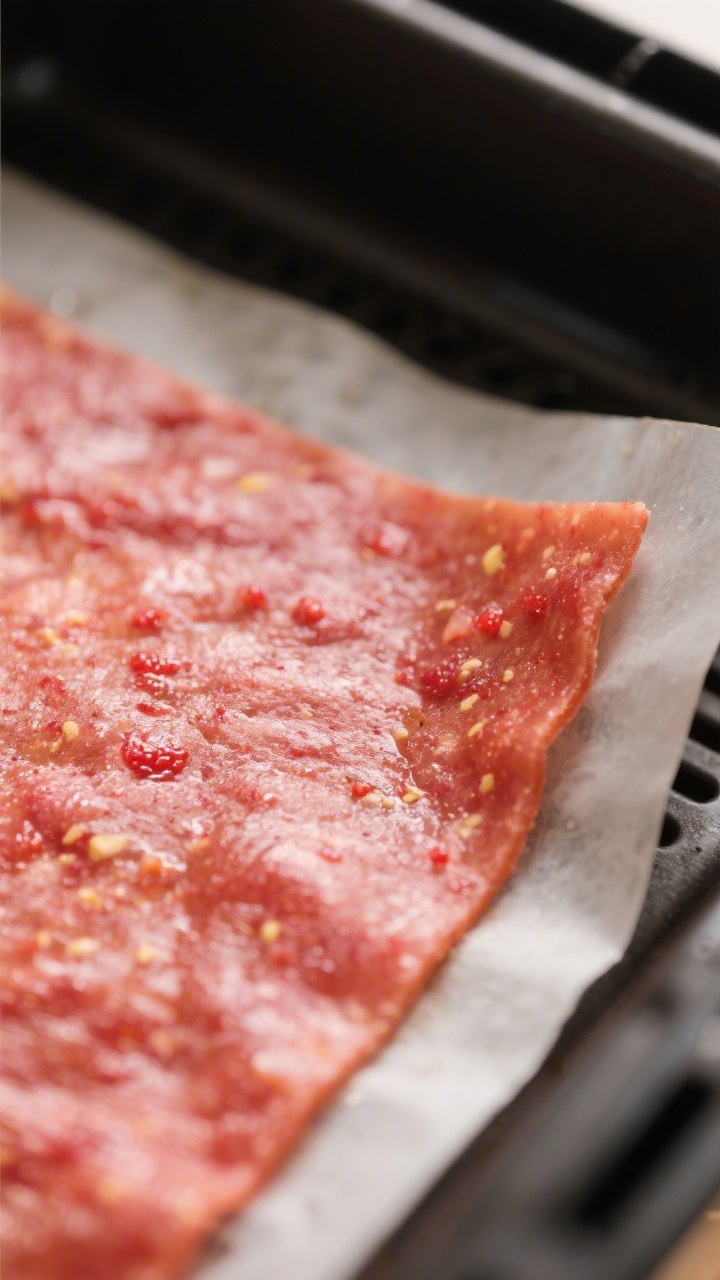
- Prep the air fryer tray: Line the air fryer basket or tray with parchment paper or a silicone liner. Lightly grease so the leather releases cleanly. Make sure the liner has no gaps or holes where puree could leak.
- Blend the fruit: Add fruit, lemon juice, and sweetener (if using) to a blender.
Blend until completely smooth. Taste and adjust sweetness. If using chia seeds, stir them in after blending.
- Strain if needed: For berry-heavy blends with lots of seeds, strain through a fine-mesh sieve for a smoother leather.
This step is optional but makes a more uniform texture.
- Spread it thin: Pour the puree onto the lined tray. Spread into an even layer about 1/16–1/8 inch thick. Even thickness matters—thick spots will stay sticky while thin edges can over-dry.
- Set the temperature: Air fry at 160–170°F (70–75°C) if your model allows, or use the lowest possible setting (often 175–180°F / 80–82°C). Lower heat dries more evenly.
- Dry the leather: Cook for 30–60 minutes, depending on thickness and temperature.
Check every 10–15 minutes after the 30-minute mark. Rotate the tray if your air fryer has hot spots.
- Check for doneness: The surface should be matte and dry to the touch, not wet. It should peel up in one piece and feel slightly tacky but not wet.
If edges are crisping, it’s slightly overdone—still edible, just chewier.
- Cool completely: Let it cool on the liner for 10–15 minutes. This helps it set and release without tearing.
- Cut and roll: Transfer to a cutting board. Use kitchen scissors or a knife to cut into strips or squares.
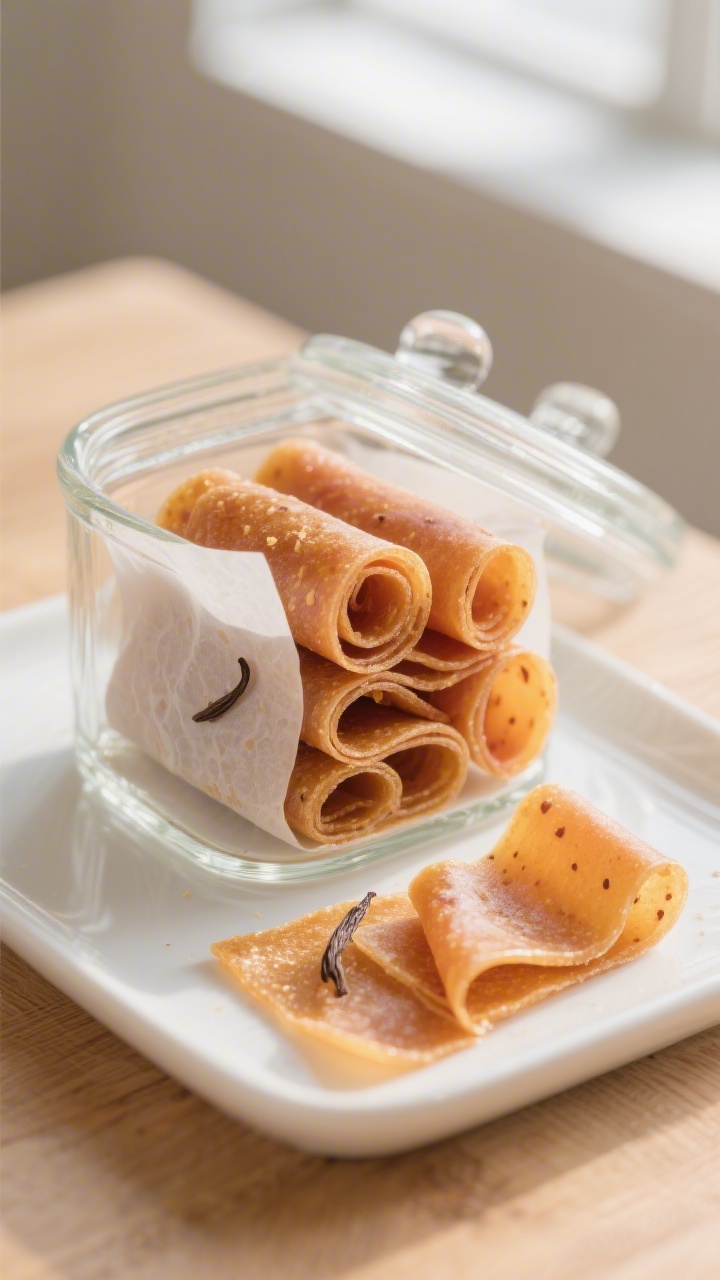
For classic roll-ups, place strips on parchment and roll tightly. Store with parchment so pieces don’t stick together.
Storage Instructions
- Room temperature: Store rolled fruit leather in an airtight container for up to 1 week, separating layers with parchment.
- Refrigerator: Keeps well for 2–3 weeks. This is best if your kitchen runs warm or humid.
- Freezer: Freeze for up to 3 months. Thaw at room temperature for 10–15 minutes before eating.
Keep rolls wrapped to prevent sticking.
Why This is Good for You
- Whole fruit benefits: You get fiber, vitamins, and antioxidants in a snackable form. It’s more wholesome than most store-bought versions with added syrups.
- Better control: You decide the sweetness level and ingredients—great for reducing added sugar.
- Portion-friendly: Easy to cut into small pieces for lunchboxes or pre/post-workout snacks.
- No artificial extras: No dyes, high-fructose corn syrup, or preservatives.
Pitfalls to Watch Out For
- Too thick a layer: Thick puree will stay gummy in the center and over-dry at the edges. Aim for even, thin coverage.
- Heat too high: High temperatures cook rather than dehydrate, leading to browning or crispy edges.
Use the lowest setting your air fryer offers.
- Leaky liner: If parchment doesn’t cover every corner, puree may drip and burn. Use a fitted silicone liner or press parchment up the sides.
- Under-sweetening tart fruit: Some fruits (like raspberries or cranberries) can taste flat when dried. A small amount of sweetener and lemon juice balances flavor.
- Removing too soon: If it’s still glossy or wet, it will tear.
Keep drying in short intervals until the surface is matte.
Recipe Variations
- Strawberry Lemonade: Strawberries + lemon juice + a touch of honey. Bright and classic.
- Mango Chili Lime: Mango puree with lime juice and a pinch of chili powder or Tajín for a sweet-spicy kick.
- Peach Vanilla: Ripe peaches with vanilla extract and a tiny pinch of salt to round out the sweetness.
- Apple Cinnamon: Unsweetened applesauce with cinnamon and a touch of maple syrup. Super easy and smooth.
- Berry Blend: Mixed berries with lemon juice.
Strain for a seedless version or keep seeds for extra texture.
- Tropical Greens: Mango + pineapple + a handful of spinach. Mild flavor, bright color, kid-friendly.
- Chia Boost: Stir in 1 tablespoon chia seeds after blending for extra fiber and a slight jammy bite.
FAQ
Can I make fruit leather without added sugar?
Yes. If your fruit is very ripe, you may not need any sweetener.
Taste the puree after blending and add only if needed. A bit of lemon juice still helps keep flavors lively.
What if my air fryer doesn’t go below 180°F (82°C)?
Use the lowest setting and check often. Prop the lid or drawer open slightly with a heat-safe spoon handle to improve airflow and lower the effective temperature.
Drying time may be shorter; watch closely.
How do I keep it from sticking to the parchment?
Lightly grease the parchment or silicone liner, and make sure the leather is fully dry and cooled before peeling. If it still sticks, chill it in the fridge for 10 minutes, then try again.
Can I use canned fruit?
Yes, but drain syrup-packed fruit well and reduce or skip any added sweetener. Canned peaches, pears, and pineapple work nicely when blended smooth.
Why is my fruit leather cracking?
It likely dried too long or too hot.
Next time, spread slightly thicker, lower the temp if possible, and check earlier. You can still eat cracked pieces—just cut into squares instead of rolls.
How thick should I spread the puree?
Aim for about 1/16–1/8 inch. If you can’t see the liner through the puree but it’s not mounded, you’re in the right zone.
Consistent thickness is more important than the exact measurement.
Can I double the recipe?
You can, but dry in separate batches unless your air fryer has multiple racks and good airflow. Overcrowding traps moisture and leads to uneven results.
Is silicone better than parchment?
A silicone liner fits snugly and resists curling, which helps with even spreading and easy release. Parchment works fine too—just grease it lightly and press it flat up the sides.
Final Thoughts
Air fryer fruit leather is a low-effort, high-reward snack that’s easy to tailor to your taste.
With a handful of fruit and a little patience, you get a chewy, fruity treat that stores well and packs easily. Keep the heat low, spread it evenly, and check for that matte finish. Once you’ve nailed the basics, try new blends and flavors—you’ll have a go-to snack that’s both fun and wholesome.
Air Fryer Fruit Leather – A Simple, Fun Snack You Can Make at Home
Ingredients
- 3 cups chopped fruit (fresh or thawed frozen; berries, mango, peaches, applesauce, or a mix)
- 1–3 tablespoons honey, maple syrup, or sugar (optional, to taste)
- 1–2 teaspoons lemon juice (brightens flavor and helps preserve color)
- Optional add-ins: 1 teaspoon vanilla extract, a pinch of cinnamon, or 1 tablespoon chia seeds for texture
- Nonstick spray or a little neutral oil (for greasing the liner)
Instructions
- Prep the air fryer tray: Line the air fryer basket or tray with parchment paper or a silicone liner. Lightly grease so the leather releases cleanly. Make sure the liner has no gaps or holes where puree could leak.
- Blend the fruit: Add fruit, lemon juice, and sweetener (if using) to a blender.Blend until completely smooth. Taste and adjust sweetness. If using chia seeds, stir them in after blending.
- Strain if needed: For berry-heavy blends with lots of seeds, strain through a fine-mesh sieve for a smoother leather.This step is optional but makes a more uniform texture.
- Spread it thin: Pour the puree onto the lined tray. Spread into an even layer about 1/16–1/8 inch thick. Even thickness matters—thick spots will stay sticky while thin edges can over-dry.
- Set the temperature: Air fry at 160–170°F (70–75°C) if your model allows, or use the lowest possible setting (often 175–180°F / 80–82°C). Lower heat dries more evenly.
- Dry the leather: Cook for 30–60 minutes, depending on thickness and temperature.Check every 10–15 minutes after the 30-minute mark. Rotate the tray if your air fryer has hot spots.
- Check for doneness: The surface should be matte and dry to the touch, not wet. It should peel up in one piece and feel slightly tacky but not wet.If edges are crisping, it’s slightly overdone—still edible, just chewier.
- Cool completely: Let it cool on the liner for 10–15 minutes. This helps it set and release without tearing.
- Cut and roll: Transfer to a cutting board. Use kitchen scissors or a knife to cut into strips or squares.For classic roll-ups, place strips on parchment and roll tightly. Store with parchment so pieces don’t stick together.
Printable Recipe Card
Want just the essential recipe details without scrolling through the article? Get our printable recipe card with just the ingredients and instructions.