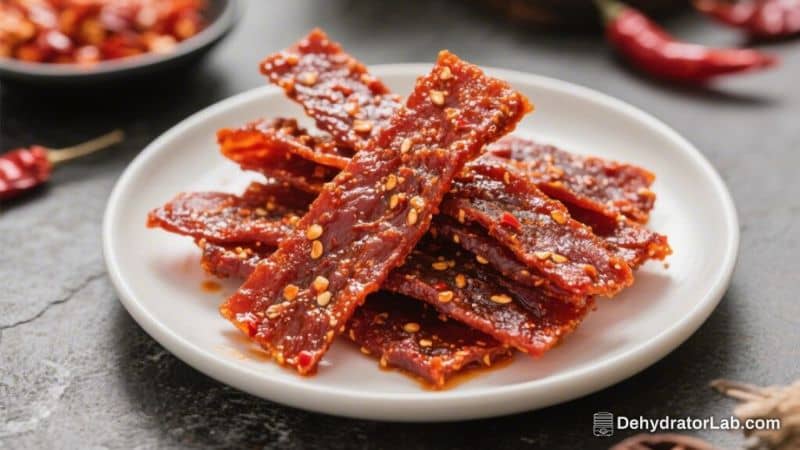
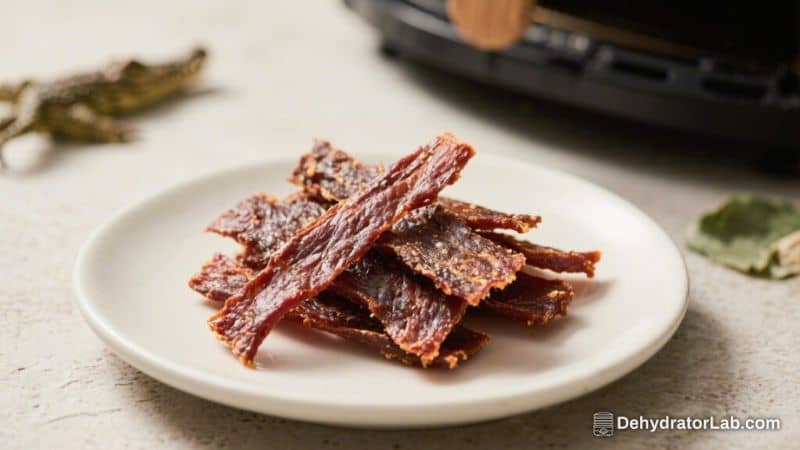
If you’re curious about wild game and love savory snacks, alligator jerky is a fun place to start. It’s lean, slightly sweet, and holds up beautifully to bold marinades. The air fryer makes the process faster and less fussy than a dehydrator, while still giving you that classic chewy bite.
You don’t need special equipment or experience—just a good marinade, patience, and low heat. This is a great weekend project that turns into a high-protein snack for the whole week.
In this article:
What Makes This Special
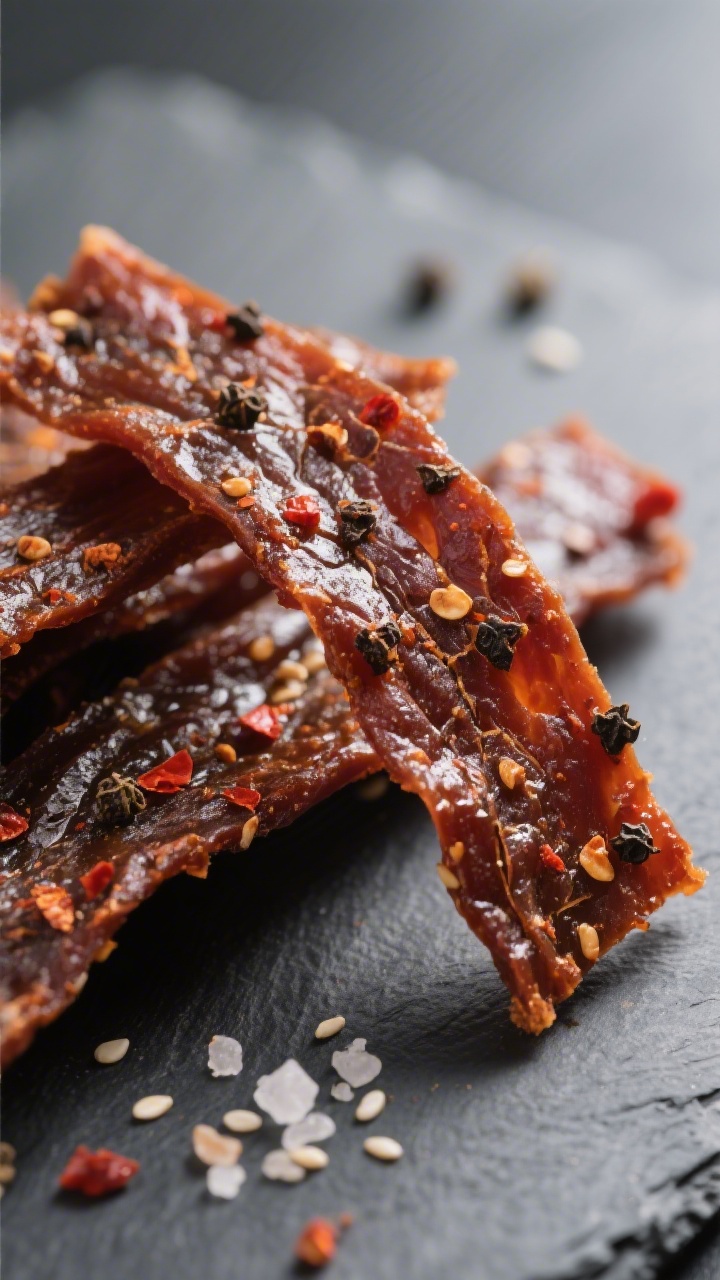
Alligator meat is naturally lean and high in protein, so you get a flavorful jerky without excess fat. Using the air fryer keeps the texture consistent and the process simple, with no need to babysit an oven for hours.
The marinade here balances salty, sweet, and spicy notes, which complements alligator’s mild flavor. Plus, you can customize it easily—go smoky, garlicky, or hot, depending on your taste.
Ingredients
- 1.5 to 2 pounds alligator tail meat, trimmed of fat and connective tissue
- 1/3 cup low-sodium soy sauce or coconut aminos
- 2 tablespoons Worcestershire sauce
- 1 tablespoon brown sugar or honey
- 1 teaspoon kosher salt (reduce if using regular soy sauce)
- 1 teaspoon black pepper, freshly ground
- 1 teaspoon smoked paprika
- 1 teaspoon garlic powder
- 1/2 teaspoon onion powder
- 1/2 to 1 teaspoon crushed red pepper flakes (adjust for heat)
- 1 tablespoon apple cider vinegar or rice vinegar
- Optional: 1 teaspoon liquid smoke for extra smokiness
- Optional: 1 tablespoon hot sauce
How to Make It
- Partially freeze the meat: Place the alligator meat in the freezer for 45–60 minutes. This firms it up and makes clean, even slicing easier.
- Slice into strips: Using a sharp knife, slice the meat into 1/4-inch thick strips.
For chewier jerky, slice with the grain; for more tender jerky, slice against the grain. Keep thickness consistent so it dries evenly.
- Mix the marinade: In a bowl, combine soy sauce, Worcestershire, brown sugar, salt, pepper, smoked paprika, garlic powder, onion powder, red pepper flakes, vinegar, and optional liquid smoke or hot sauce. Stir until the sugar dissolves.
- Marinate: Add the sliced alligator to a zipper bag or shallow dish.
Pour in the marinade, press out air, and coat well. Refrigerate at least 6 hours, ideally overnight (12–18 hours) for deeper flavor.
- Pat dry: Remove the strips from the marinade and lay them on paper towels. Pat thoroughly dry.
This step helps the jerky dry quicker and prevents steaming in the air fryer.
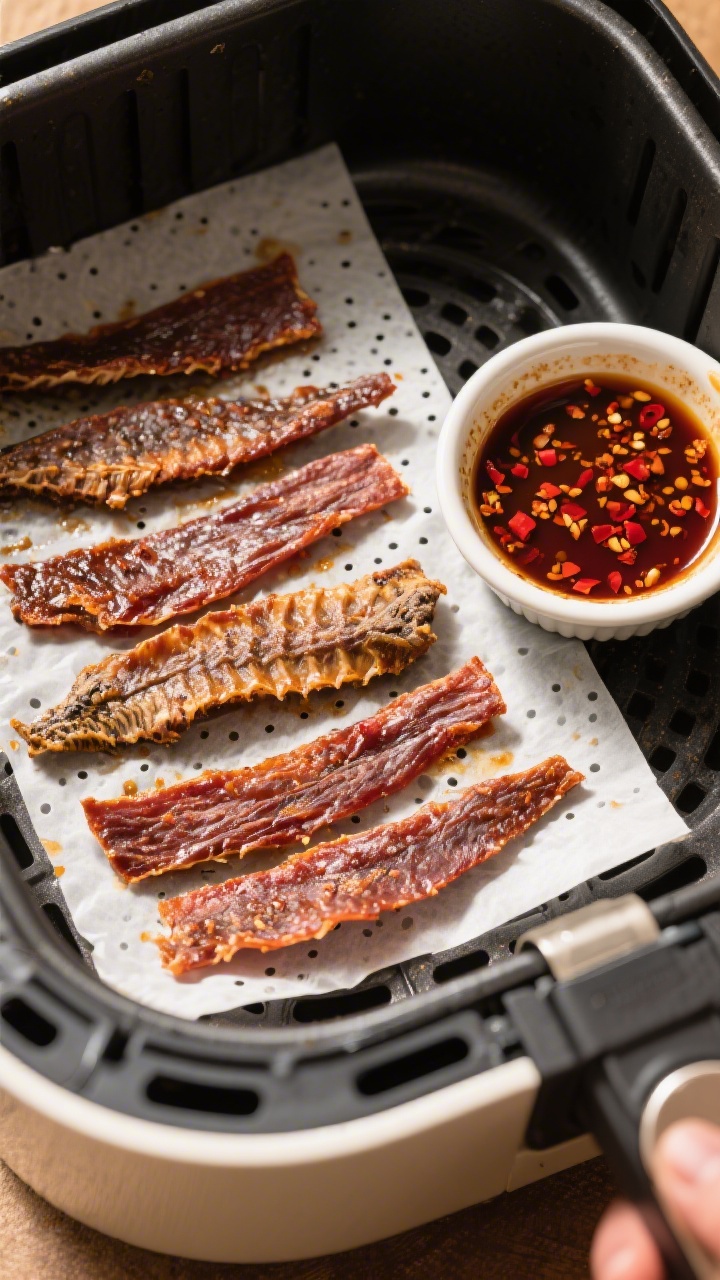
- Preheat and prep the basket: Preheat the air fryer to 160–170°F (71–77°C) if your model allows; otherwise use the lowest setting (often 175–180°F/79–82°C). Lightly oil or line the basket with a perforated parchment sheet to minimize sticking and allow airflow.
- Arrange the strips: Lay the strips in a single layer without overlap. Leave a little space between pieces so air can circulate.
- Dehydrate: Air fry for 2.5 to 4 hours, flipping every 45–60 minutes.
Time varies by thickness and air fryer model. You’re looking for dry, slightly flexible strips that don’t snap immediately when bent.
- Test for doneness: Bend a piece; it should crack along the surface but not break cleanly. The interior should look uniformly dry with no visible moisture.
If it feels soft or wet, keep going in 20–30 minute intervals.
- Cool and condition: Let jerky cool fully on a wire rack. Then place it in a loosely covered container or paper bag for 24 hours, shaking once or twice. This “conditioning” step evens out moisture and reduces the risk of mold.
How to Store
- Short term: Store in an airtight container at room temperature for up to 1 week in a cool, dry place.
- Refrigerator: Up to 3–4 weeks.
Use a zip-top bag with most air pressed out or a vacuum-sealed pouch.
- Freezer: Up to 3–6 months. Freeze in small portions so you only thaw what you need.
- Watch for moisture: If you see condensation inside the container, re-dry the jerky in the air fryer at the lowest temp for 15–20 minutes, then cool and repackage.
Health Benefits
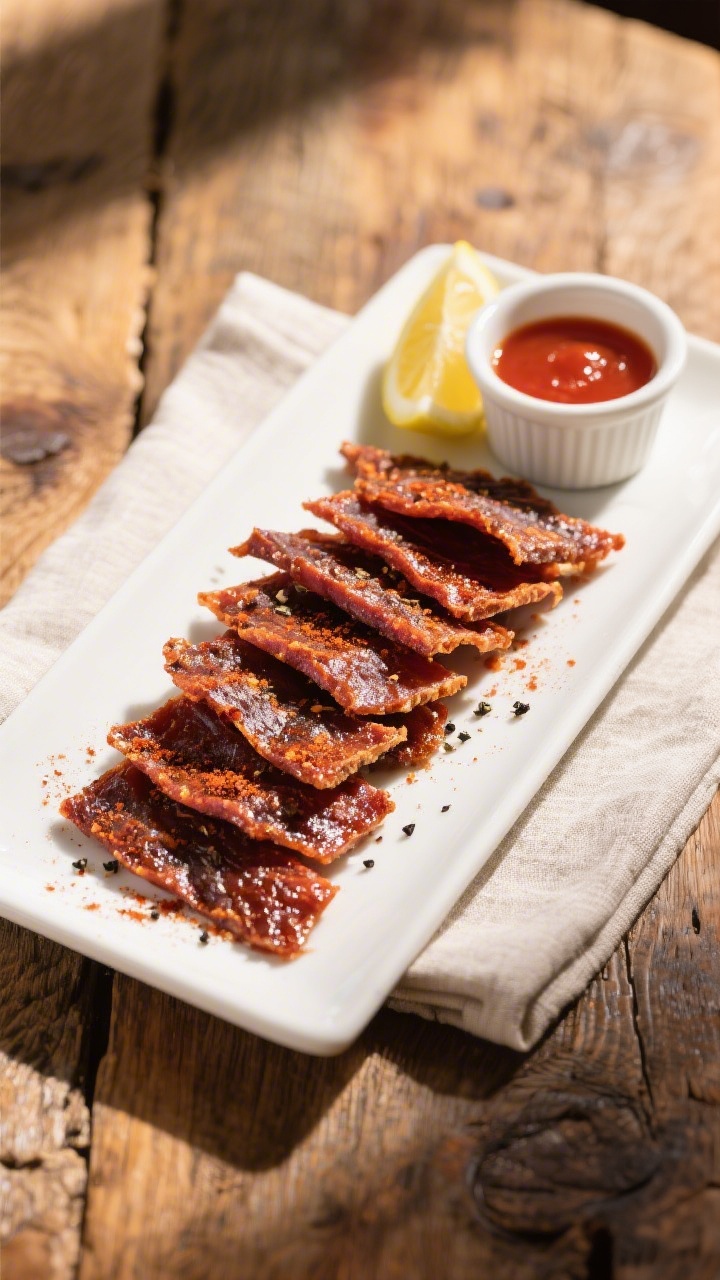
- High protein, low fat: Alligator is lean and packs a strong protein-to-calorie ratio, great for satiety and muscle upkeep.
- Lower in saturated fat: Compared to many red meats, it’s typically lower in saturated fat, which can support heart health when part of a balanced diet.
- Customizable sodium: Making jerky at home lets you control salt and sugar levels to fit your needs.
- No additives needed: You can skip preservatives and artificial flavors entirely.
Common Mistakes to Avoid
- Skipping the pat-dry step: Excess marinade on the surface slows drying and can make the texture tough on the outside and soft inside.
- Overcrowding the basket: Airflow is everything. Overlapping strips trap moisture and lead to uneven drying.
- Too high heat: Cranking up the temperature cooks the meat instead of dehydrating it, causing a brittle exterior and moist interior.
- Uneven slicing: Thick pieces take much longer and may not dry safely.
Aim for even 1/4-inch strips.
- Skipping conditioning: Bagging jerky right after drying can trap residual moisture and cause mold. Let it breathe first.
Recipe Variations
- Cajun Kick: Add 1–2 teaspoons Cajun seasoning and a pinch of cayenne. Finish with a squeeze of lemon over the dried jerky for brightness.
- Sweet Heat: Swap brown sugar for maple syrup and add 1 teaspoon chili powder.
Great for a sticky-sweet edge.
- Garlic Black Pepper: Increase garlic powder to 2 teaspoons and black pepper to 2 teaspoons. Skip smoked paprika for a cleaner, classic profile.
- Ginger Teriyaki: Add 1 tablespoon grated fresh ginger, 1 tablespoon mirin, and a dash of sesame oil. Sprinkle sesame seeds on the warm jerky after drying.
- Smoky Bourbon: Add 1 tablespoon bourbon and 1/2 teaspoon extra liquid smoke.
Slightly sweeter, with a campfire vibe.
FAQ
Where can I buy alligator meat?
Look for alligator tail meat from reputable online wild game vendors or specialty butchers. Some seafood markets carry it as well. Choose meat that’s pale and firm, with no off odors.
Do I need curing salts?
Not strictly, since you’re making a small batch and storing it properly.
However, Prague Powder #1 can add a safety margin and classic jerky taste. If using, follow the manufacturer’s exact dosage and never exceed it.
What if my air fryer doesn’t go below 180°F (82°C)?
Use the lowest setting and check frequently. Prop the lid or basket slightly open with a heat-safe spoon handle to enhance airflow, if your model allows.
Drying time may shorten, so watch closely to prevent cooking.
How do I know it’s safe to eat?
The jerky should be uniformly dry and flexible with no visible moisture. For extra assurance, you can preheat slices in a 275°F (135°C) oven for 10 minutes before dehydrating, then proceed with low-temp drying. Always store in clean, dry containers and discard if you see mold.
Can I use other cuts besides tail meat?
Yes.
Tenderloin or fillet portions work well. Avoid fatty or heavily grained sections, as they dry unevenly and can develop off flavors over time.
How spicy is the base recipe?
Mild to medium. Reduce or omit the red pepper flakes for a gentle heat, or add hot sauce and extra flakes for a bolder kick.
Can I make it sugar-free?
Yes.
Remove the brown sugar and add a touch more Worcestershire for balance. Note that a small amount of sugar helps browning and flavor, but it’s not required.
Why is my jerky brittle?
It likely dried at too high a temperature or for too long. Next time, lower the heat and start checking earlier.
Slight flexibility is the goal, not snap-crisp.
Why did condensation appear in my storage container?
The jerky wasn’t fully cooled or conditioned. Spread it out and re-dry at the lowest air fryer temperature for 15–20 minutes, cool completely, then store again.
Wrapping Up
Air Fryer Alligator Jerky is a straightforward project with impressive payoff. With a good marinade, low heat, and patience, you’ll get chewy, flavorful strips that beat store-bought every time.
Once you lock in your preferred seasoning, make a double batch and keep some in the freezer for road trips, hikes, or desk snacks. It’s lean, bold, and easier than you might think—exactly what a great jerky should be.
Air Fryer Alligator Jerky – Lean, Bold, and Surprisingly Easy
Ingredients
- 1.5 to 2 pounds alligator tail meat, trimmed of fat and connective tissue
- 1/3 cup low-sodium soy sauce or coconut aminos
- 2 tablespoons Worcestershire sauce
- 1 tablespoon brown sugar or honey
- 1 teaspoon kosher salt (reduce if using regular soy sauce)
- 1 teaspoon black pepper, freshly ground
- 1 teaspoon smoked paprika
- 1 teaspoon garlic powder
- 1/2 teaspoon onion powder
- 1/2 to 1 teaspoon crushed red pepper flakes (adjust for heat)
- 1 tablespoon apple cider vinegar or rice vinegar
- Optional: 1 teaspoon liquid smoke for extra smokiness
- Optional: 1 tablespoon hot sauce
Instructions
- Partially freeze the meat: Place the alligator meat in the freezer for 45–60 minutes. This firms it up and makes clean, even slicing easier.
- Slice into strips: Using a sharp knife, slice the meat into 1/4-inch thick strips.For chewier jerky, slice with the grain; for more tender jerky, slice against the grain. Keep thickness consistent so it dries evenly.
- Mix the marinade: In a bowl, combine soy sauce, Worcestershire, brown sugar, salt, pepper, smoked paprika, garlic powder, onion powder, red pepper flakes, vinegar, and optional liquid smoke or hot sauce. Stir until the sugar dissolves.
- Marinate: Add the sliced alligator to a zipper bag or shallow dish.Pour in the marinade, press out air, and coat well. Refrigerate at least 6 hours, ideally overnight (12–18 hours) for deeper flavor.
- Pat dry: Remove the strips from the marinade and lay them on paper towels. Pat thoroughly dry.This step helps the jerky dry quicker and prevents steaming in the air fryer.
- Preheat and prep the basket: Preheat the air fryer to 160–170°F (71–77°C) if your model allows; otherwise use the lowest setting (often 175–180°F/79–82°C). Lightly oil or line the basket with a perforated parchment sheet to minimize sticking and allow airflow.
- Arrange the strips: Lay the strips in a single layer without overlap. Leave a little space between pieces so air can circulate.
- Dehydrate: Air fry for 2.5 to 4 hours, flipping every 45–60 minutes.Time varies by thickness and air fryer model. You’re looking for dry, slightly flexible strips that don’t snap immediately when bent.
- Test for doneness: Bend a piece; it should crack along the surface but not break cleanly. The interior should look uniformly dry with no visible moisture.If it feels soft or wet, keep going in 20–30 minute intervals.
- Cool and condition: Let jerky cool fully on a wire rack. Then place it in a loosely covered container or paper bag for 24 hours, shaking once or twice. This “conditioning” step evens out moisture and reduces the risk of mold.
Printable Recipe Card
Want just the essential recipe details without scrolling through the article? Get our printable recipe card with just the ingredients and instructions.