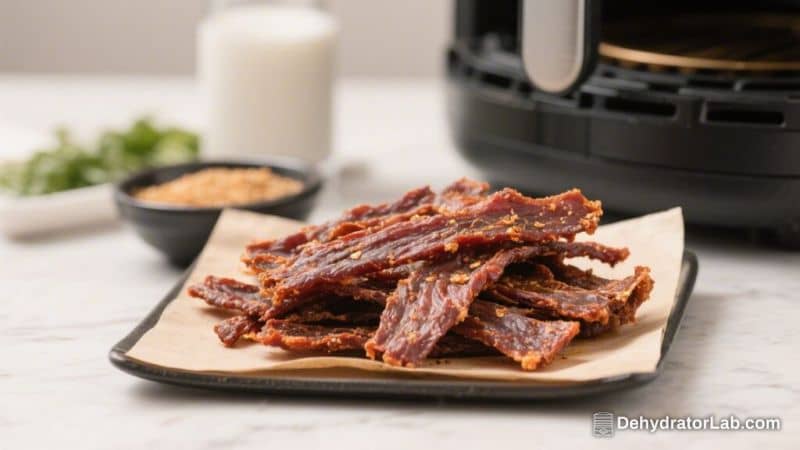
If you love jerky but don’t love babysitting an oven for hours, this method is for you. Air Fryer Overnight Jerky gives you deep, savory flavor with simple prep and minimal fuss. You’ll marinate the meat before bed, then dry it low and slow at 160–175°F (70–80°C) to a perfect chew.
It’s budget-friendly, great for meal prep, and surprisingly quick compared to traditional dehydrating. The result? Meaty, smoky, and just the right amount of salty-sweet.
In this article:
Key Points on Air Fryer Overnight Jerky (TL;DR)
- 🥩 Marinate lean beef strips overnight (8-12 hours) for deep flavor with minimal effort
- 🌡️ Air fry at 160–175°F (70–80°C) for 2.5-4 hours
- 🧻 Pat the meat dry before drying — wet surfaces steam instead of dehydrate
- 🫙 Cool completely and condition for 24 hours before sealing up for storage
Why This Recipe Works
- Overnight marinating lets the flavors soak in, so you get bold taste without complicated steps.
- Air fryer circulation dries the meat evenly and faster than an oven, with less energy and less heat in your kitchen.
- Lean cuts only reduce greasiness and help the jerky keep longer.
- Low and slow heat preserves texture, giving you that classic chew instead of brittle, dry strips.
- Simple pantry marinade balances salty, sweet, and umami for a classic jerky profile you can tweak to your taste.
Ingredients
- 2 pounds lean beef (top round, eye of round, sirloin tip, or flank), trimmed of visible fat
- 1/3 cup low-sodium soy sauce
- 2 tablespoons Worcestershire sauce
- 1 tablespoon brown sugar (or honey)
- 1 teaspoon kosher salt
- 1 teaspoon black pepper, freshly ground
- 1 teaspoon garlic powder
- 1 teaspoon onion powder
- 1/2 teaspoon smoked paprika (for subtle smokiness)
- 1/4 teaspoon red pepper flakes (optional, for heat)
- 1 tablespoon apple cider vinegar (brightens the flavor)
- 2 tablespoons water (to loosen the marinade slightly)
- Nonstick spray or a little oil for the air fryer basket
- Optional: 1 teaspoon liquid smoke for a stronger smoky flavor
How to Make It
- Slice the beef thin. Partially freeze the meat for 45–60 minutes to firm it up.
Slice against the grain into 1/8–1/4-inch thick strips for a tender chew. Thicker strips take longer to dry.
- Mix the marinade. In a bowl, combine soy sauce, Worcestershire, brown sugar, salt, pepper, garlic powder, onion powder, smoked paprika, red pepper flakes, vinegar, water, and liquid smoke if using.
- Marinate overnight. Add the beef to a large zip-top bag or container, pour in the marinade, and massage to coat. Refrigerate 8–12 hours.
Turn once or twice if you can.
- Drain and pat dry. Remove the strips and discard the marinade. Pat each piece very dry with paper towels. Dry surfaces = better texture and faster drying.
- Preheat the air fryer. Set it to 160–175°F (70–80°C). Don’t just pick the lowest setting: on air fryers with a Dehydrate mode that can be 85–100°F (29–38°C), which is too low for meat. Our air fryer with dehydrator guide lists each model’s real range. If your model starts at 180–200°F, use that and watch closely.
- Prep the basket. Lightly spray or oil the basket and any racks.
Arrange beef in a single layer with space between pieces so air can circulate. Use a rack or do batches if needed.
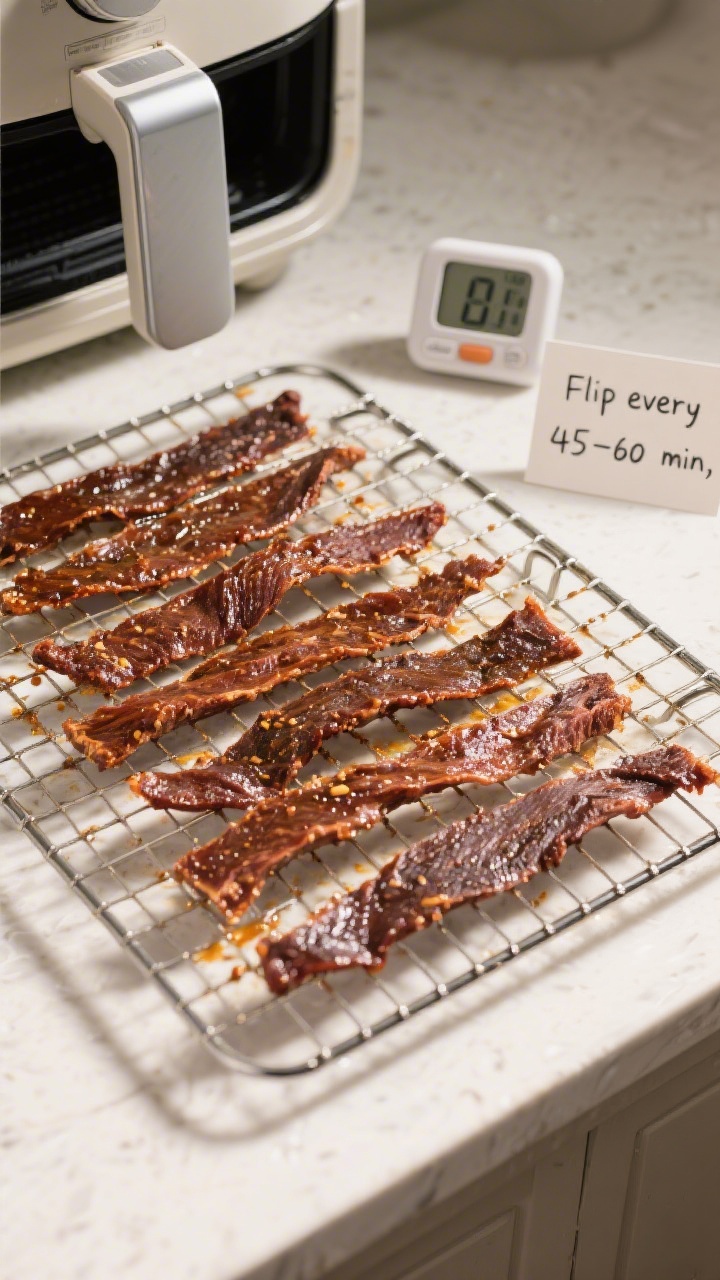
- Dry the jerky. Air fry 2.5–4 hours, flipping every 45–60 minutes. If your fryer runs hot (190–200°F), check at 90 minutes and then every 20–30 minutes.
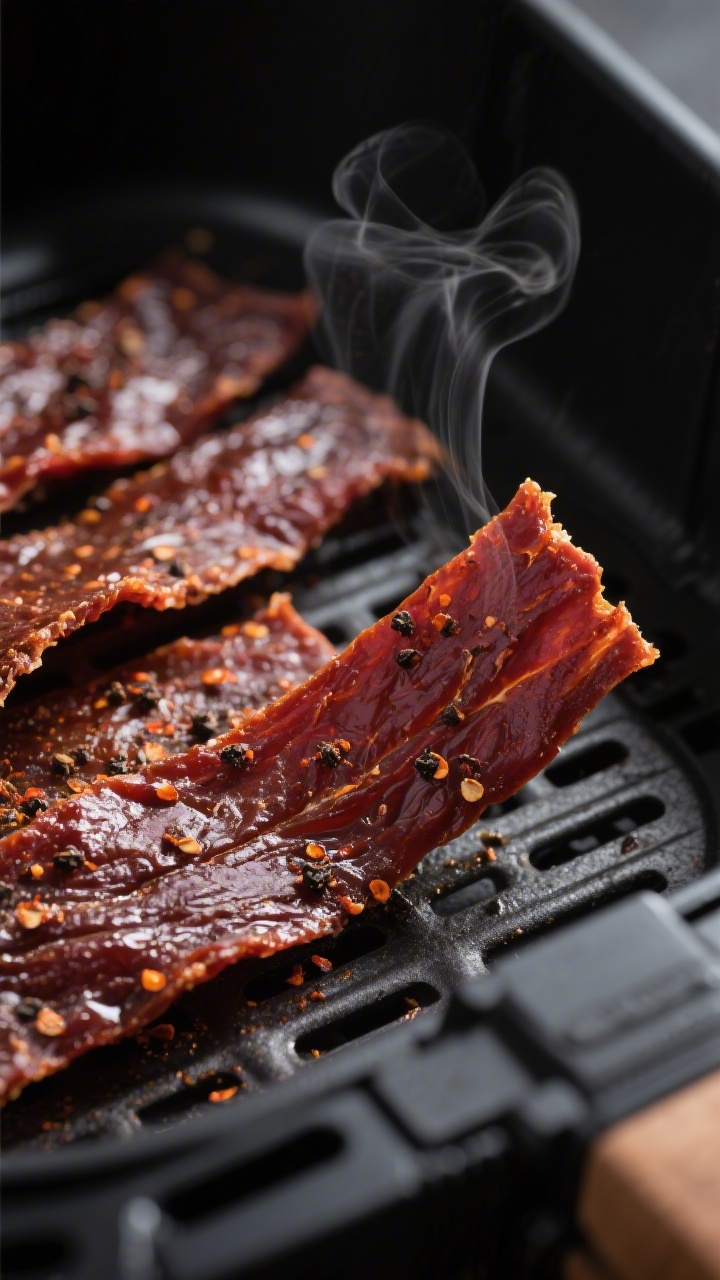
- Test for doneness. Jerky should be dry on the surface, darkened, and bendy with a few small cracks when bent, not brittle.
If it snaps, it’s overdone; if it feels moist or squishy, keep going.
- Cool completely. Let jerky cool on a rack for 30–60 minutes. This helps it set and prevents condensation in storage.
- Optional heat kill step. If your air fryer can’t maintain 160°F consistently, you can briefly place finished jerky in a 275°F oven for 10 minutes to ensure food safety. Then cool again fully.
Storage Instructions
- Short-term: Store cooled jerky in an airtight container or zip-top bag at room temperature for up to 3–4 days.
- Refrigerate: Keeps well for 2–3 weeks in a sealed container.
Add a small paper towel to absorb residual moisture.
- Freeze: For longer storage, freeze up to 3 months. Use freezer bags with most of the air pressed out.
- Check for moisture: If you see condensation or feel dampness, re-dry in the air fryer at the lowest setting for 15–30 minutes and cool again before storing.
Health Benefits
- High protein, low carb: Jerky is a convenient protein snack that helps keep you full between meals.
- Lean cuts, less fat: Choosing round or sirloin reduces saturated fat compared to fattier snacks.
- Custom sodium control: Using low-sodium soy sauce and measuring salt helps keep the sodium in check versus many store-bought options.
- No mystery additives: You control the ingredients—no artificial preservatives or added sugars unless you choose them.
Common Mistakes to Avoid
- Slicing with the grain: This makes jerky tough. Cut against the grain for a better bite.
- Skipping the pat-dry step: Too much surface moisture slows drying and can steam the meat instead of dehydrating.
- Overcrowding the basket: Air needs room to move.
Cook in batches if necessary.
- Too high heat: High temps cook rather than dehydrate, leading to hard edges and a raw center. Stick to 160–175°F (70–80°C) and be patient.
- Storing warm jerky: Traps steam and causes spoilage. Always cool fully first.
Variations You Can Try
- Sweet and Spicy: Add 1 tablespoon honey and 1/2 teaspoon cayenne or extra red pepper flakes.
- Teriyaki: Swap brown sugar for 2 tablespoons mirin, add 1 teaspoon grated ginger, and a touch of sesame oil.
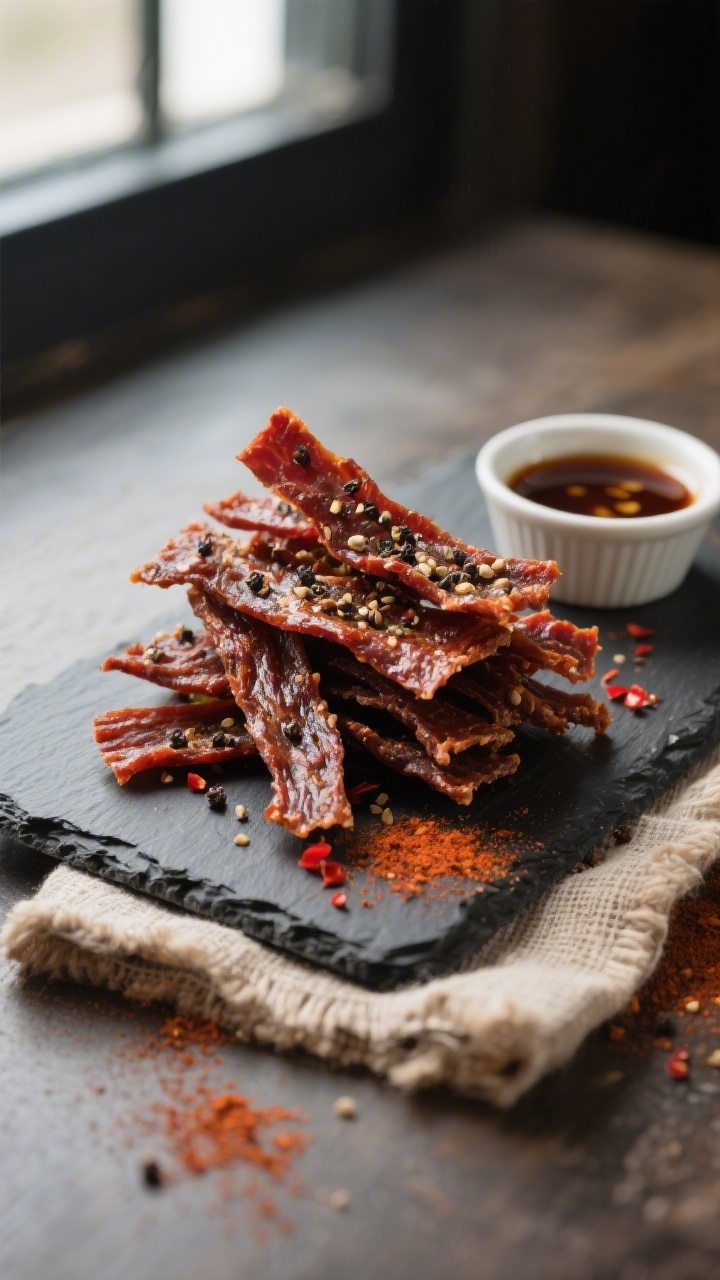
- Peppered Crust: Press coarsely ground black pepper onto the strips after patting dry for a bold peppery finish.
- Smoky Maple: Use maple syrup instead of brown sugar and a bit more smoked paprika or liquid smoke.
- Game Meats: Try venison, elk, or bison with the same method.
Keep strips extra lean and watch the drying time.
- Low-Sodium: Use coconut aminos instead of soy sauce and skip added salt. Season to taste after a test batch.
FAQ
Can I make this without marinating overnight?
Yes, but the flavor won’t be as deep. If you’re short on time, marinate at least 2–3 hours and increase the surface seasoning slightly.
Overnight gives the best balance and tenderness.
What if my air fryer doesn’t go below 180–200°F?
Use the lowest setting and check early and often. Crack the lid slightly between checks to release steam, and flip more frequently. Consider finishing with the optional oven step to ensure even drying.
How do I know when jerky is done?
It should feel dry to the touch and bend without snapping, showing small cracks in the surface.
If it’s soft or wet, keep drying; if it breaks cleanly, it’s gone too far.
Do I need curing salt?
Not for short-term storage. Curing salts extend shelf life and add a classic cured flavor, but they’re optional here since you’ll refrigerate or freeze. If you add them, follow package directions carefully.
Can I use chicken or turkey?
Yes, but use very thin strips and keep everything clean.
Poultry needs extra care: target an internal temperature of 165°F at some point in the process, then dehydrate until bend-dry.
Why did my jerky turn brittle?
The heat was likely too high or the strips were sliced too thin. Next time, lower the temperature, check sooner, and aim for 1/8–1/4-inch slices.
How spicy is the base recipe?
Mild. The red pepper flakes add a gentle warmth.
For more heat, add cayenne or increase the flakes; for less, omit them entirely.
Can I reduce the sugar?
Absolutely. Sugar helps with browning and flavor balance, but you can cut it in half or use a sugar-free sweetener. Keep an eye on drying time since sugar impacts texture slightly.
Do I need a special rack?
No, but a rack lets you fit more strips and improves airflow.
If you don’t have one, just cook in batches and avoid overlapping pieces.
How long does homemade jerky last?
At room temperature, plan for 3–4 days. Refrigerated, 2–3 weeks. Frozen, up to 3 months.
Always store it airtight and cool it fully first.
Personal Tips You Can Steal
- I marinate right before bed every time — the overnight window is what gives this jerky its depth, not a fancy ingredient.
- If my air fryer won’t dip below 190°F, I crack the basket open with a wooden spoon handle to vent steam and check every 20 minutes instead of 45.
- I always cool a full batch on a rack before bagging it — warm jerky sweats in a sealed bag and that moisture is what invites mold.
Final Thoughts
Air Fryer Overnight Jerky is simple, consistent, and loaded with flavor. With a quick marinade, low heat, and a little patience, you get tender, chewy strips that beat most store-bought options. Make a big batch, stash some in the fridge, and you’ll have a high-protein, grab-and-go snack ready whenever you are. If you want to branch out, try this Paleo Jerky or this Teriyaki Turkey Jerky next.
P.S. Want to switch things up? My Air Fryer Teriyaki Turkey Jerky is worth a batch too.
Air Fryer Overnight Jerky – Easy, Tender, and Packed With Flavor
Ingredients
- 2 pounds lean beef (top round, eye of round, sirloin tip, or flank), trimmed of visible fat
- 1/3 cup low-sodium soy sauce
- 2 tablespoons Worcestershire sauce
- 1 tablespoon brown sugar (or honey)
- 1 teaspoon kosher salt
- 1 teaspoon black pepper, freshly ground
- 1 teaspoon garlic powder
- 1 teaspoon onion powder
- 1/2 teaspoon smoked paprika (for subtle smokiness)
- 1/4 teaspoon red pepper flakes (optional, for heat)
- 1 tablespoon apple cider vinegar (brightens the flavor)
- 2 tablespoons water (to loosen the marinade slightly)
- Nonstick spray or a little oil for the air fryer basket
- Optional: 1 teaspoon liquid smoke for a stronger smoky flavor
Instructions
- Slice the beef thin. Partially freeze the meat for 45–60 minutes to firm it up.Slice against the grain into 1/8–1/4-inch thick strips for a tender chew. Thicker strips take longer to dry.
- Mix the marinade. In a bowl, combine soy sauce, Worcestershire, brown sugar, salt, pepper, garlic powder, onion powder, smoked paprika, red pepper flakes, vinegar, water, and liquid smoke if using.
- Marinate overnight. Add the beef to a large zip-top bag or container, pour in the marinade, and massage to coat. Refrigerate 8–12 hours.Turn once or twice if you can.
- Drain and pat dry. Remove the strips and discard the marinade. Pat each piece very dry with paper towels. Dry surfaces = better texture and faster drying.
- Preheat the air fryer. Set to the lowest heat your unit allows (typically 160–175°F / 70–80°C). If your model starts at 180–200°F, use that and watch closely.
- Prep the basket. Lightly spray or oil the basket and any racks.Arrange beef in a single layer with space between pieces so air can circulate. Use a rack or do batches if needed.
- Dry the jerky. Air fry 2.5–4 hours, flipping every 45–60 minutes. If your fryer runs hot (190–200°F), check at 90 minutes and then every 20–30 minutes.
- Test for doneness. Jerky should be dry on the surface, darkened, and bendy with a few small cracks when bent, not brittle.If it snaps, it’s overdone; if it feels moist or squishy, keep going.
- Cool completely. Let jerky cool on a rack for 30–60 minutes. This helps it set and prevents condensation in storage.
- Optional heat kill step. If your air fryer can’t maintain 160°F consistently, you can briefly place finished jerky in a 275°F oven for 10 minutes to ensure food safety. Then cool again fully.
Printable Recipe Card
Want just the essential recipe details without scrolling through the article? Get our printable recipe card with just the ingredients and instructions.