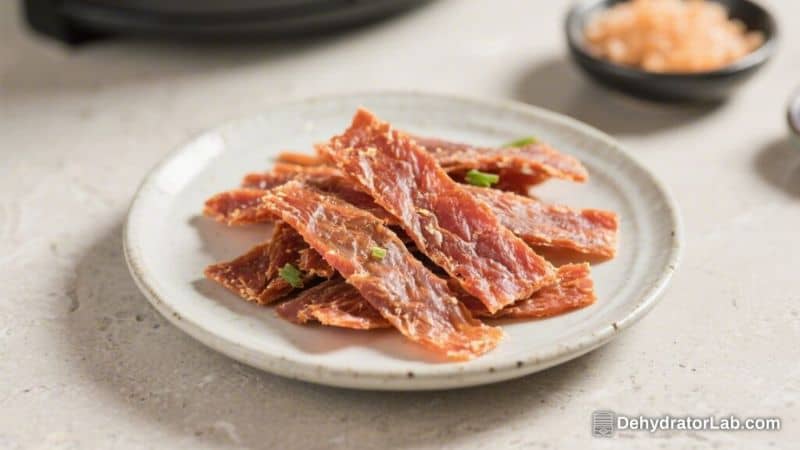
If you love jerky but don’t want to babysit a dehydrator all day, this air fryer tuna jerky is a game changer. It’s salty, smoky, and slightly sweet, with that satisfying chew you want in a high-protein snack. The process is simple: marinate thin slices of tuna, then let the air fryer do its thing at a low temperature.
You’ll get a batch of delicious jerky in a fraction of the time. It’s great for road trips, workouts, hikes, or just stashing in the fridge for quick snacking.
In this article:
TL;DR: Key Takeaways
- 🐟 Fresh tuna steaks only — canned tuna won’t hold together during drying
- 🌡️ Dry at 170-180°F (75-82°C) for 1.5-3 hours, flipping halfway through
- 🔥 Optional safety step: finish at 185°F (85°C) for 10 minutes to be sure it’s food-safe
- 📦 Condition a full day in a loosely closed container — this evens out any remaining moisture
What Makes This Recipe So Good
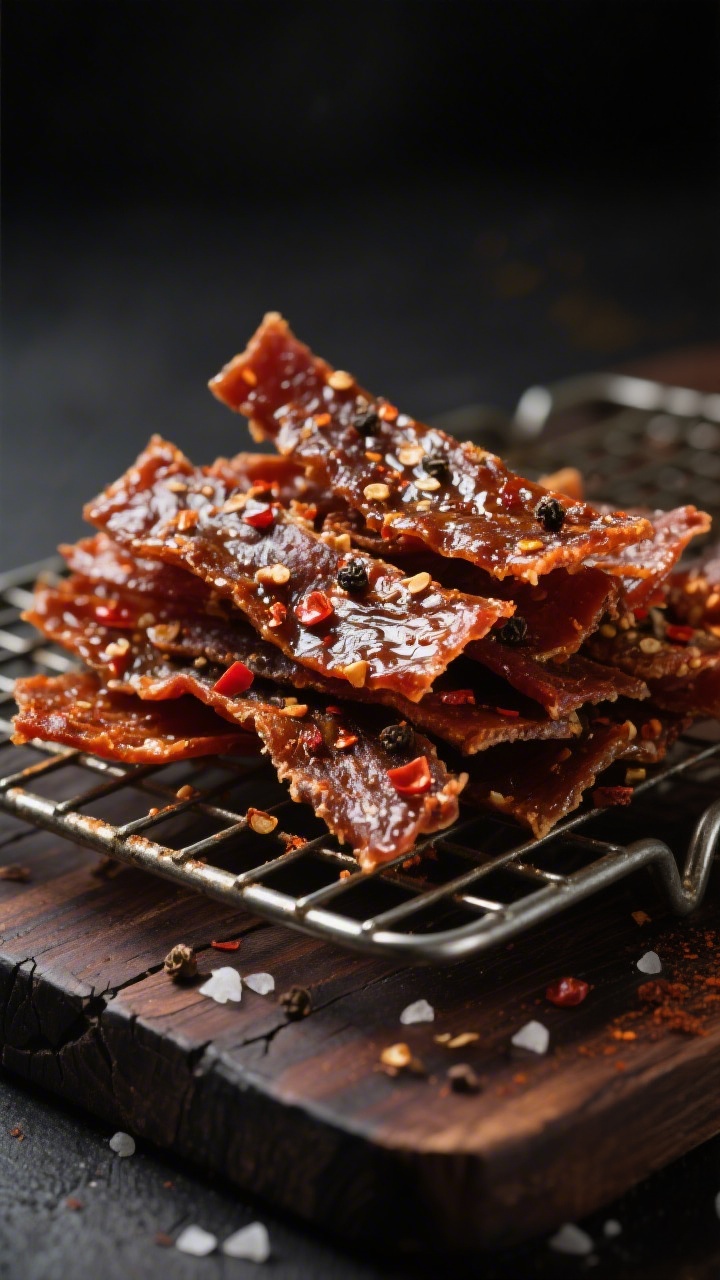
- Fast and convenient: Traditional jerky can take 6–12 hours. The air fryer trims that down significantly while still delivering great texture.
- High-protein, low-fat: Tuna is lean and packed with protein, so this snack keeps you full without weighing you down.
- Bold, customizable flavor: The marinade is flexible.
Go sweet, spicy, garlicky, or smoky—whatever you like.
- Great make-ahead snack: It stores well and travels easily, making it perfect for busy weeks.
- Budget-friendly: Using tuna instead of pricier cuts of beef keeps costs in check.
Ingredients
- 1.5 to 2 pounds fresh tuna steaks (ahi/yellowfin or albacore), about 1-inch thick
- 1/3 cup low-sodium soy sauce or tamari
- 2 tablespoons maple syrup or honey
- 1 tablespoon rice vinegar or apple cider vinegar
- 1 tablespoon Worcestershire sauce
- 1 teaspoon smoked paprika
- 1 teaspoon garlic powder
- 1 teaspoon onion powder
- 1/2 to 1 teaspoon crushed red pepper flakes (optional, for heat)
- 1 teaspoon freshly ground black pepper
- 1/2 teaspoon kosher salt (adjust if using regular soy sauce)
- 1 teaspoon sesame oil (optional, for richness)
- Nonstick spray or a little neutral oil for the air fryer basket
Instructions
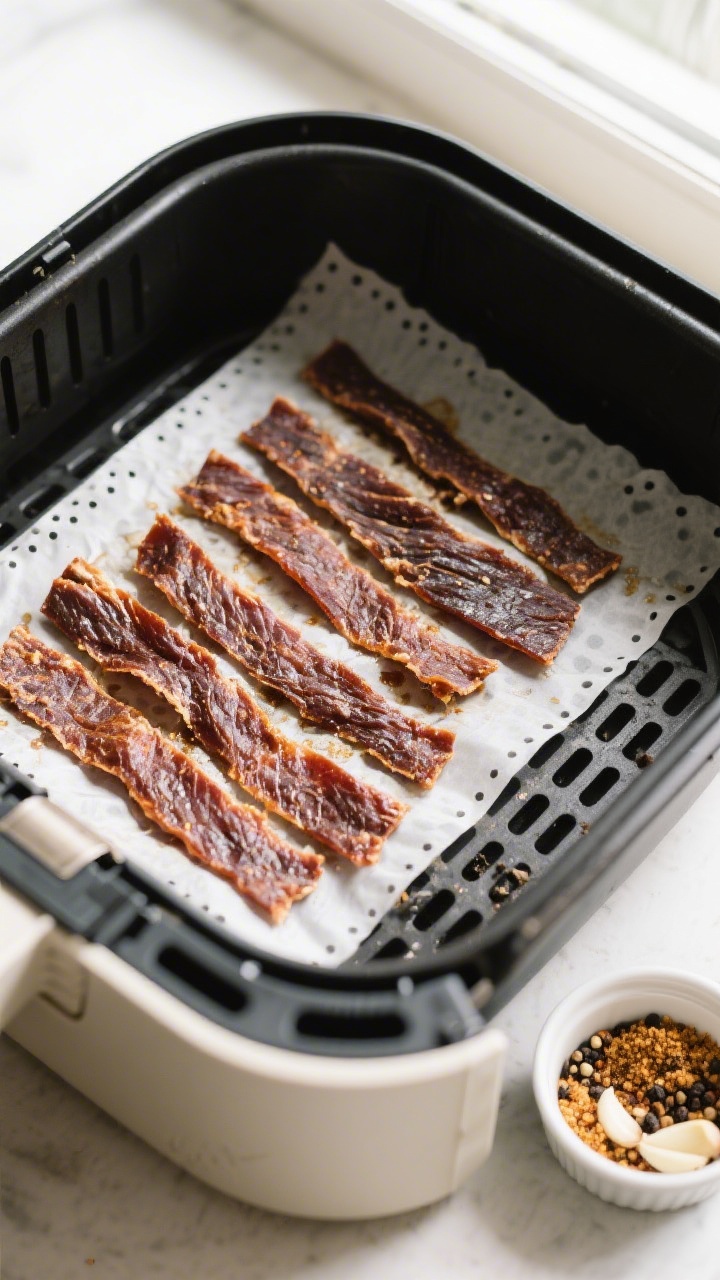
- Prep the tuna: Pat the tuna dry with paper towels. For the best chew, slice it across the grain into thin strips, about 1/8 to 1/4 inch thick. Thinner slices dry faster and get chewier; thicker slices stay a bit meatier.
- Make the marinade: In a bowl, whisk together soy sauce, maple syrup, vinegar, Worcestershire sauce, smoked paprika, garlic powder, onion powder, red pepper flakes, black pepper, salt, and sesame oil.
- Marinate: Add the tuna strips to a zip-top bag or shallow dish.
Pour in the marinade, toss to coat, and press out extra air if using a bag. Marinate in the refrigerator for at least 2 hours and up to 12 hours for deeper flavor.
- Drain and dry: Remove tuna from the marinade and lay strips on a wire rack or paper towels. Pat dry thoroughly. Drying is key—excess moisture will steam instead of dehydrate.
- Preheat the air fryer: Set to 170–180°F (75–82°C) or the lowest temperature your machine allows.
If your air fryer doesn’t go that low, use the lowest setting and shorten the cook time, checking often.
- Prepare the basket: Lightly spray or wipe the air fryer basket with oil to prevent sticking. If your basket has large holes, you can use a perforated parchment liner designed for air fryers.
- Arrange the strips: Lay tuna pieces in a single layer with a little space between them. Do not overlap.
Work in batches if needed.
- Air fry to dehydrate: Cook for 1.5 to 3 hours, flipping halfway. Start checking at the 60-minute mark. Jerky is done when it’s dry to the touch, darkened, and bends and cracks slightly but doesn’t snap.
- Cool and condition: Let jerky cool completely on a wire rack.
For best texture, place cooled jerky in a loosely closed container for a day, shaking once or twice. This “conditions” it by equalizing moisture.
- Taste and adjust: If you want more salt or heat, sprinkle a little flaky salt or chili powder while it’s still slightly warm. Store as directed below.
Storage Instructions
- Short-term: Keep in an airtight container at room temperature for 1–2 days if the jerky is very dry.
- Refrigeration: Store in a sealed bag or jar in the fridge for up to 2 weeks.
Add a small paper towel to absorb any residual moisture.
- Freezing: For longer storage, freeze in vacuum-sealed or well-wrapped portions for up to 3 months. Thaw in the fridge.
- Moisture check: If you see condensation or feel tackiness, return jerky to the air fryer at 170–180°F for 15–20 minutes to dry further.
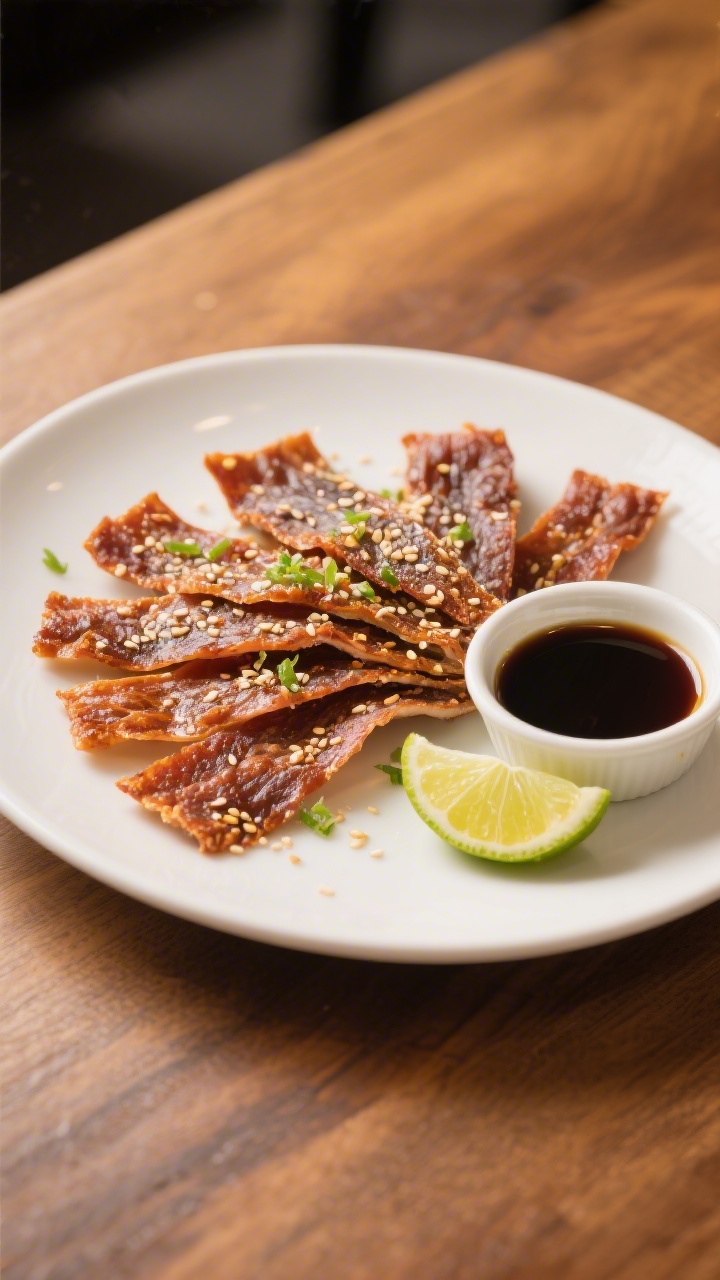
Benefits of This Recipe
- Nutrient-dense: Tuna provides lean protein, omega-3s, and essential minerals without added fillers.
- Lower sugar option: You can reduce the sweetener while keeping great flavor, unlike many store-bought jerkies.
- Portable fuel: Great for post-workout snacks, hiking, or busy afternoons when you need something substantial.
- Less equipment: No dehydrator required, and cleanup is easy.
- Custom spice control: Adjust sodium and heat to fit your taste and dietary needs.
Pitfalls to Watch Out For
- Slicing too thick: Thick pieces take much longer to dry and can turn tough on the outside while staying soft inside.
- Skipping the pat-dry step: Wet surfaces steam and lead to uneven texture.
- Overcrowding the basket: Air needs to circulate. Overlapping strips will dry unevenly.
- Temperature too high: Hotter settings cook instead of dehydrate, causing brittle edges and a chalky bite.
- Under-drying: Extra moisture shortens shelf life and can cause spoilage.
Always cool and check texture before storing.
Recipe Variations
- Teriyaki-Style: Add 1 tablespoon mirin, use brown sugar instead of maple, and sprinkle toasted sesame seeds after cooking.
- Spicy Chili-Lime: Add 1 teaspoon chili powder, 1/2 teaspoon cayenne, and the zest of 1 lime to the marinade. Finish with a squeeze of lime.
- Black Pepper and Garlic: Increase garlic powder to 2 teaspoons and add 2 teaspoons coarse cracked black pepper.
- Sweet-Smoke: Swap maple for honey and bump smoked paprika to 2 teaspoons. A dash of liquid smoke (1/4 teaspoon) deepens the flavor.
- Ginger-Soy: Add 1 tablespoon grated fresh ginger and 1 teaspoon sesame seeds.
Great with tamari for a gluten-free option.
FAQ
Can I use canned tuna?
Canned tuna won’t work for jerky. You need intact muscle fibers from fresh tuna steaks so the strips hold together during drying.
What if my air fryer doesn’t go below 200°F (93°C)?
Use the lowest setting and check sooner. Prop the lid or basket slightly ajar with a heat-safe spoon if your model allows, which improves airflow and helps dehydrate rather than cook.
Start checking at 45 minutes and flip often.
How do I know when the jerky is done?
It should feel dry and firm, with a deeper color. Bend a piece: it should bend and crack along the surface but not snap cleanly. If it’s wet or very pliable, keep going in 10–15 minute increments.
Is there a food safety step I should take?
For extra safety, you can briefly heat strips to an internal temperature of 145°F (63°C) before drying, or finish the jerky at 185°F (85°C) for 10 minutes at the end.
Always handle fish with clean tools and keep it chilled until marinating.
Can I use other fish?
Yes. Salmon, mahi-mahi, or swordfish can work. Choose firm, meaty fish and slice thinly.
Oily fish like salmon offer rich flavor but may need slightly longer drying and fridge storage.
How can I make it less salty?
Use low-sodium soy sauce, reduce added salt, and add a splash more vinegar or a little water to the marinade. A touch of sweetness balances flavor without upping the sodium.
Why is my jerky brittle?
It likely dried at too high a temperature or too long. Lower the heat next time, slice a bit thicker, and check earlier.
Conditioning the jerky after cooling also helps even out moisture.
Do I need a wire rack inside the air fryer?
Not required, but a rack or perforated liner improves air circulation and prevents sticking. If you don’t have one, be sure to oil the basket lightly.
Personal Tips You Can Steal
Because tuna dries faster than beef, I start checking mine at the 60-minute mark every single time — it’s easy to overshoot and end up with brittle strips if you walk away for the full window. I also slice a little thicker than I think I need, closer to 1/4 inch, since tuna shrinks less dramatically than red meat and thin slices go from chewy to crumbly fast.
Wrapping Up
Air fryer tuna jerky is a simple, satisfying way to make your own protein-packed snack at home. With a quick marinade and gentle heat, you get big flavor and a chewy, craveable texture—no dehydrator needed.
Keep a batch on hand for busy days, customize the seasonings to your taste, and enjoy a smarter alternative to store-bought jerky. Once you make it, you’ll want to keep the air fryer working on the next batch. If you like seafood jerky, also check out this Salmon Jerky or this Mahi Mahi Jerky.
P.S. Salmon and mahi-mahi both work with this exact marinade if you want to switch things up — just expect a slightly longer dry time with oilier fish like salmon. 🙂
Air Fryer Tuna Jerky – A Lean, Savory Snack With Big Flavor
Ingredients
- 1.5 to 2 pounds fresh tuna steaks (ahi/yellowfin or albacore), about 1-inch thick
- 1/3 cup low-sodium soy sauce or tamari
- 2 tablespoons maple syrup or honey
- 1 tablespoon rice vinegar or apple cider vinegar
- 1 tablespoon Worcestershire sauce
- 1 teaspoon smoked paprika
- 1 teaspoon garlic powder
- 1 teaspoon onion powder
- 1/2 to 1 teaspoon crushed red pepper flakes (optional, for heat)
- 1 teaspoon freshly ground black pepper
- 1/2 teaspoon kosher salt (adjust if using regular soy sauce)
- 1 teaspoon sesame oil (optional, for richness)
- Nonstick spray or a little neutral oil for the air fryer basket
Instructions
- Prep the tuna: Pat the tuna dry with paper towels. For the best chew, slice it across the grain into thin strips, about 1/8 to 1/4 inch thick. Thinner slices dry faster and get chewier; thicker slices stay a bit meatier.
- Make the marinade: In a bowl, whisk together soy sauce, maple syrup, vinegar, Worcestershire sauce, smoked paprika, garlic powder, onion powder, red pepper flakes, black pepper, salt, and sesame oil.
- Marinate: Add the tuna strips to a zip-top bag or shallow dish.Pour in the marinade, toss to coat, and press out extra air if using a bag. Marinate in the refrigerator for at least 2 hours and up to 12 hours for deeper flavor.
- Drain and dry: Remove tuna from the marinade and lay strips on a wire rack or paper towels. Pat dry thoroughly. Drying is key—excess moisture will steam instead of dehydrate.
- Preheat the air fryer: Set to 170–180°F (75–82°C) or the lowest temperature your machine allows.If your air fryer doesn’t go that low, use the lowest setting and shorten the cook time, checking often.
- Prepare the basket: Lightly spray or wipe the air fryer basket with oil to prevent sticking. If your basket has large holes, you can use a perforated parchment liner designed for air fryers.
- Arrange the strips: Lay tuna pieces in a single layer with a little space between them. Do not overlap.Work in batches if needed.
- Air fry to dehydrate: Cook for 1.5 to 3 hours, flipping halfway. Start checking at the 60-minute mark. Jerky is done when it’s dry to the touch, darkened, and bends and cracks slightly but doesn’t snap.
- Cool and condition: Let jerky cool completely on a wire rack.For best texture, place cooled jerky in a loosely closed container for a day, shaking once or twice. This “conditions” it by equalizing moisture.
- Taste and adjust: If you want more salt or heat, sprinkle a little flaky salt or chili powder while it’s still slightly warm. Store as directed below.
Printable Recipe Card
Want just the essential recipe details without scrolling through the article? Get our printable recipe card with just the ingredients and instructions.