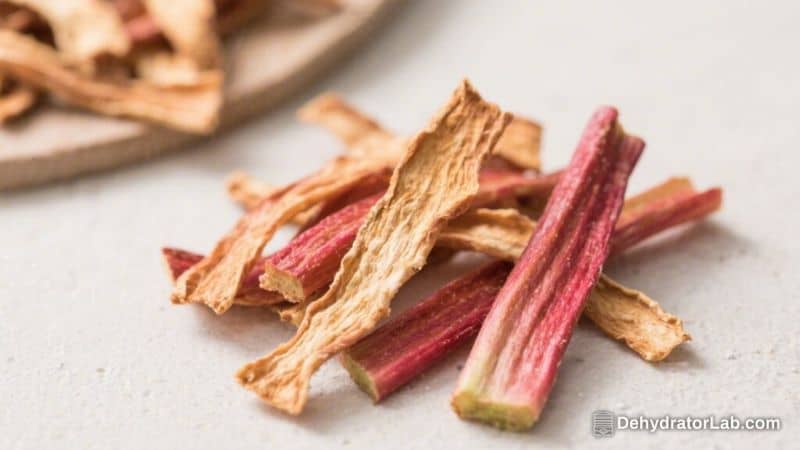
Rhubarb is famous for its tart kick, but it shines just as brightly in a simple, snackable form. Dehydrated rhubarb strips are chewy, tangy, and lightly sweet—like a homemade fruit leather with a bit more character. They’re easy to make, store well, and bring a bright pop of flavor to your snack stash.
You can keep them plain or add spices and citrus for a custom twist. If you love practical kitchen projects that taste amazing, this one’s worth your time.
In this article:
Key Points on Dehydrated Rhubarb Strips (TL;DR)
- 🌿 Slice 1/8-1/4 inch thick strips for even drying.
- 🍬 A short sugar toss balances the tartness before drying.
- 🌡️ Dry at 125-135°F for 5-8 hours until leathery, not tacky.
- 🫙 Condition for a few days in a jar before long-term storage.
Why This Recipe Works
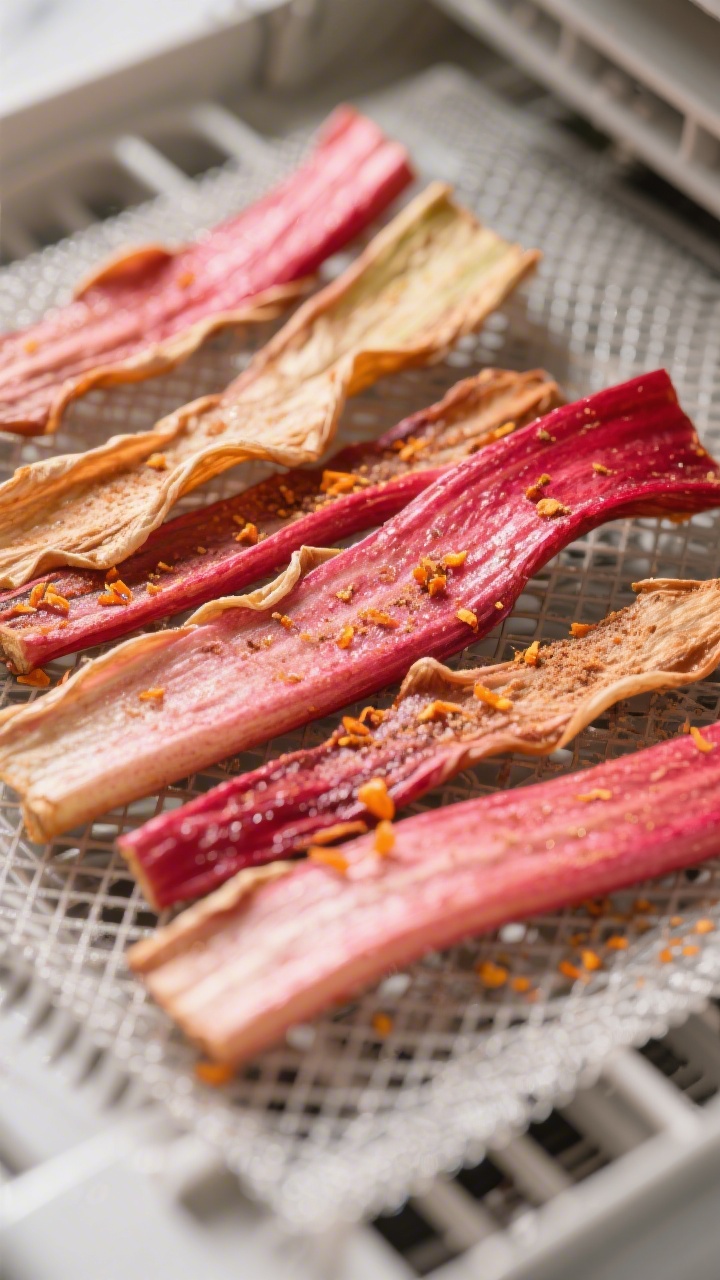
- Low moisture, high flavor: Dehydration concentrates rhubarb’s natural tartness and any added sweetness, resulting in a bold, satisfying bite.
- Flexible sweetness: You control the sugar level. Use just enough to balance the tartness, or keep it bold and puckery.
- Great texture: Thin strips dry into a pleasant chew—sturdy enough to hold, soft enough to enjoy without jaw fatigue.
- Easy technique: No special tricks needed.
A dehydrator works best, but the oven method is reliable too.
- Perfect for surplus rhubarb: This is an efficient way to preserve a seasonal haul without canning or freezing.
Ingredients
- 2 pounds fresh rhubarb stalks (firm, brightly colored, leaves removed)
- 1/3–1/2 cup granulated sugar (or coconut sugar; adjust to taste)
- 1 tablespoon lemon juice (optional, brightens flavor and color)
- 1 teaspoon vanilla extract (optional, softens the tartness)
- Pinch of salt (optional, balances sweetness)
- Optional flavor add-ins: 1/2 teaspoon ground cinnamon, ginger, or cardamom; or finely grated orange zest
Step-by-Step Instructions
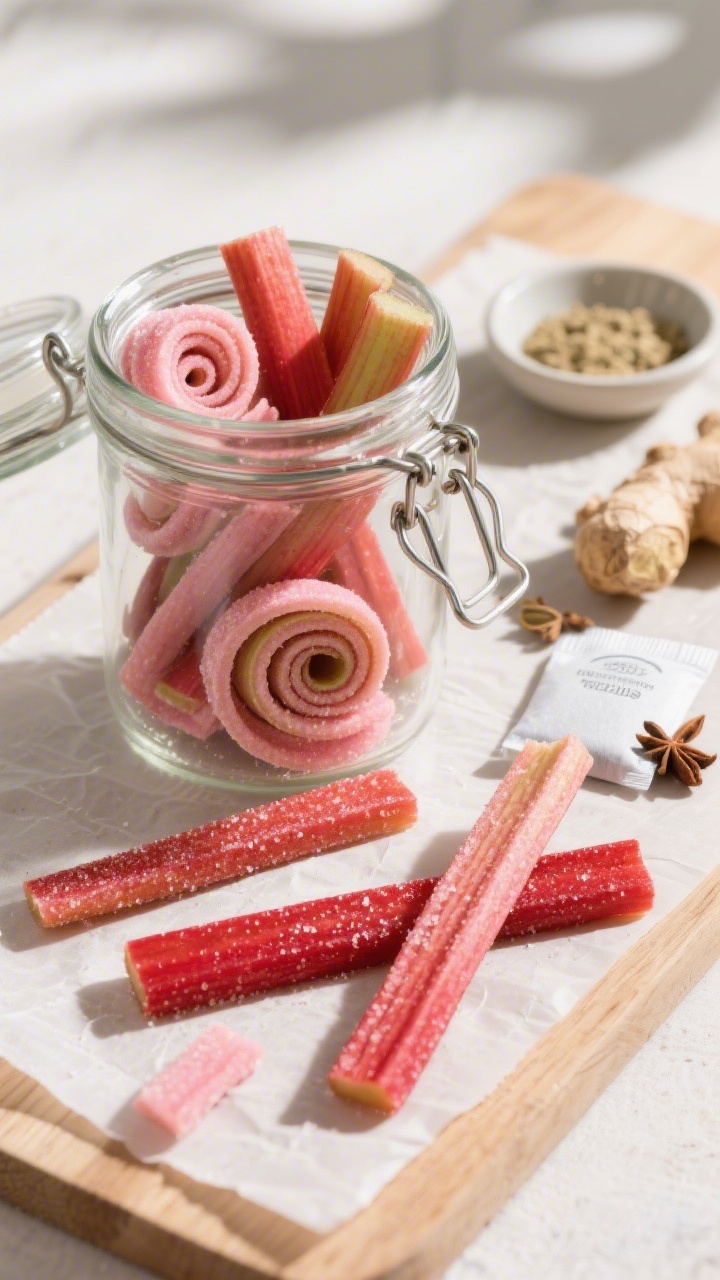
- Prep the rhubarb: Rinse stalks well and pat dry. Trim the ends. Use a sharp knife or mandoline to slice long, thin strips—about 1/8 to 1/4 inch thick and 6–10 inches long.
Aim for even thickness for consistent drying.
- Sweeten lightly: In a large bowl, toss the strips with sugar, lemon juice, vanilla (if using), and a pinch of salt. Let sit for 10–15 minutes. The sugar will draw out some moisture and help the strips relax.
- Optional pre-soften: If your rhubarb is very thick or fibrous, blanch strips in simmering water for 30–45 seconds, then transfer to an ice bath.
Pat very dry before proceeding. This step helps ensure even texture.
- Set up your dehydrator: Line trays with nonstick mesh or parchment. Arrange strips in a single layer without overlapping.
Sprinkle with a pinch of cinnamon, ginger, or zest if you like.
- Dehydrate: Dry at 125–135°F (52–57°C) for 5–8 hours. Flip halfway through if the strips curl. Time varies by thickness, humidity, and machine.
They’re done when pliable, leathery, and no longer tacky on the surface.
- Oven method (alternative): Heat oven to its lowest setting (usually 150–175°F / 65–80°C). Line baking sheets with parchment or silicone mats. Arrange strips in a single layer.
Prop the oven door slightly open with a wooden spoon for airflow. Dry 3–5 hours, rotating pans as needed, until leathery and evenly dry.
- Condition the strips: Let cool completely. Place dried strips in a large jar or container, loosely packed.
Store at room temperature for 3–5 days, shaking the jar daily. If condensation appears, return strips to the dehydrator or oven for another 30–60 minutes. This step evens out moisture to prevent mold.
- Cut or roll: Keep long strips as-is, or cut into shorter lengths.
You can also roll them into spirals for on-the-go snacking.
How to Store
- Short term: Store in an airtight jar or bag at room temperature for up to 2–3 months, away from sunlight and heat.
- Longer term: For up to 6–9 months, add a food-safe desiccant packet to the container and keep in a cool pantry.
- Freezer option: Seal in a freezer bag with most of the air removed. They keep well for up to a year. Thaw at room temp in the sealed bag to prevent moisture buildup.
- Portion control: Store in small packets so you don’t repeatedly expose the whole batch to air and humidity.
Benefits of This Recipe
- Simple ingredients: Just rhubarb and a touch of sugar, with optional flavor boosts.
- Customizable tart-sweet balance: Make them bold and tangy or gently sweet, depending on your taste.
- No waste: A smart way to use up a big rhubarb harvest.
- Snackable and packable: Great for lunchboxes, hikes, or travel.
No mess, no refrigeration needed.
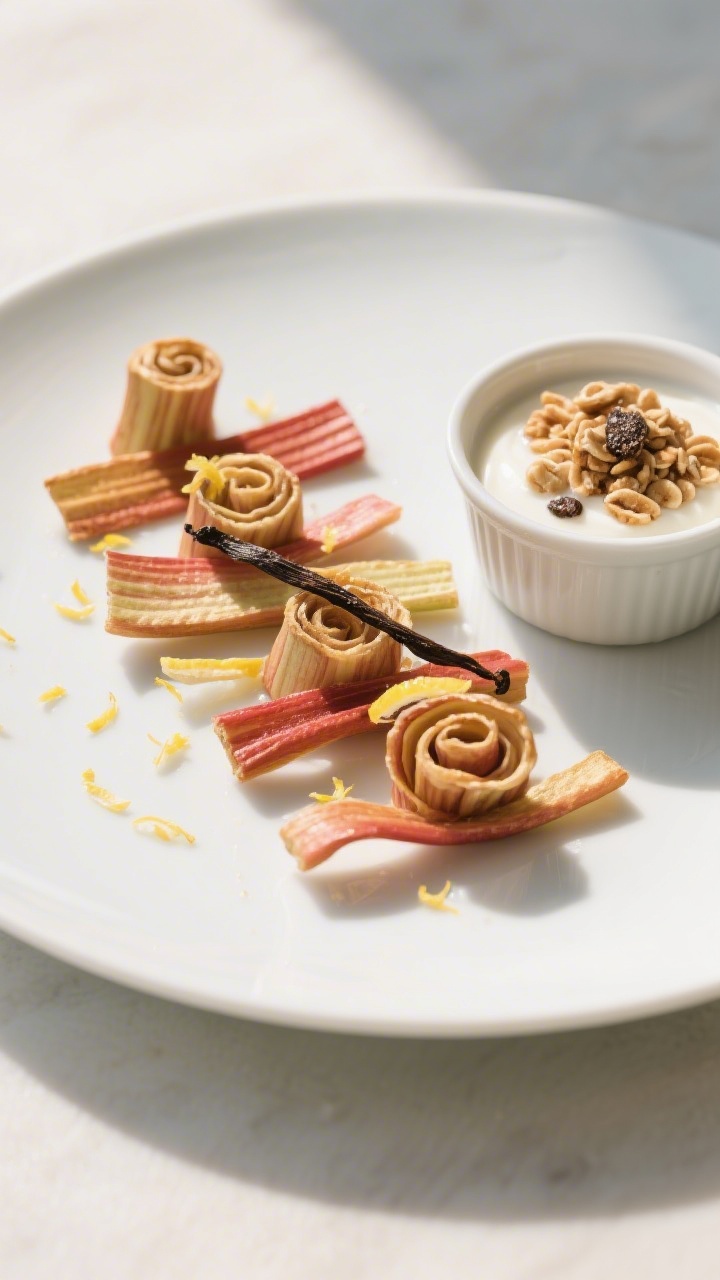
- Versatile: Add to yogurt, granola, or cheese boards; chop and mix into trail mix; use as a cocktail garnish.
Common Mistakes to Avoid
- Slicing too thick: Thick pieces dry unevenly and can turn tough. Stay near 1/8–1/4 inch.
- Overlapping on trays: Crowding traps moisture and extends drying time. Keep a little space between strips.
- Skipping conditioning: Uneven moisture can lead to mold in storage.
Always condition for a few days.
- Too much sugar: Excess sugar can make strips sticky and slow drying. Start with less and adjust next batch.
- High oven temps: Heat that’s too high cooks instead of dries, making strips brittle or browned. Use the lowest setting and keep airflow.
Alternatives
- Honey or maple: Swap part of the sugar for honey or maple syrup.
Use sparingly—liquid sweeteners slow drying.
- Spice blends: Try cinnamon-cardamom, ginger-orange zest, or a pinch of chili-lime for a sweet-heat profile.
- Rhubarb ribbons: Use a vegetable peeler for ultra-thin ribbons. They dry faster and are extra delicate.
- Fruit pairing: Toss rhubarb strips with thin apple or strawberry slices on the same tray for a mixed-fruit snack.
- Sugar-free: Skip sweeteners entirely if you love a sharp tang. Choose tender, young stalks for a less intense bite.
FAQ
Do I need to peel rhubarb?
Most of the time, no.
If the outer layer is very stringy or thick, you can gently pull away any obvious fibers from older stalks. Young stalks are usually fine as-is.
How do I know when the strips are fully dried?
They should feel leathery and pliable, not wet or sticky. Bend a piece; it should flex without snapping, and no beads of moisture should appear on the surface.
Can I use frozen rhubarb?
Yes, but thaw and drain well first, then pat very dry.
Frozen rhubarb is often cut into chunks, so you may need to slice thinner slabs instead of long strips.
Why are my strips brittle?
They likely overdried or the temperature was too high. You can lightly steam them for 10–15 seconds and then recondition in a jar to restore a bit of flexibility.
How sweet should I make them?
That’s personal. Start with 1/3 cup sugar for 2 pounds of rhubarb.
Taste a strip after the 10–15 minute maceration and adjust next time if you want sweeter.
Is a dehydrator necessary?
No. A low oven with the door cracked works well. A dehydrator does offer better airflow and consistent heat, which makes results more predictable.
Can I make them into fruit leather instead?
Yes.
Cook chopped rhubarb with a little water and sugar until soft, puree, spread thin on lined trays, and dry until just tacky. Cut into strips and roll.
Are the leaves safe to use?
No. Rhubarb leaves are poisonous and should be discarded.
Use only the stalks.
Personal Tips You Can Steal
- I always condition mine in a jar for a few days — it’s the step people skip, and it’s the one that prevents mold.
- A little orange zest in the mix turns plain rhubarb into something that tastes like a bakery treat.
- I slice with a mandoline when I have a big harvest — it keeps every strip the same thickness, which means even drying.
Final Thoughts
Dehydrated rhubarb strips are a simple win: bright flavor, satisfying chew, and easy storage. With a few basic tools and a bit of patience, you’ll have a stackable snack that feels special but not fussy. Keep a jar on the counter, pack a few in your bag, and play with flavors until you land on your favorite mix.
This is one of those recipes you’ll come back to every spring—and happily snack on all year.
P.S. Got a surplus of other spring produce? Our Dehydrated Banana Bread Chips are another easy pantry win.
Dehydrated Rhubarb Strips – Tangy, Chewy, and Naturally Sweet
Ingredients
- 2 pounds fresh rhubarb stalks (firm, brightly colored, leaves removed)
- 1/3–1/2 cup granulated sugar (or coconut sugar; adjust to taste)
- 1 tablespoon lemon juice (optional, brightens flavor and color)
- 1 teaspoon vanilla extract (optional, softens the tartness)
- Pinch of salt (optional, balances sweetness)
- Optional flavor add-ins: 1/2 teaspoon ground cinnamon, ginger, or cardamom; or finely grated orange zest
Instructions
- Prep the rhubarb: Rinse stalks well and pat dry. Trim the ends. Use a sharp knife or mandoline to slice long, thin strips—about 1/8 to 1/4 inch thick and 6–10 inches long.Aim for even thickness for consistent drying.
- Sweeten lightly: In a large bowl, toss the strips with sugar, lemon juice, vanilla (if using), and a pinch of salt. Let sit for 10–15 minutes. The sugar will draw out some moisture and help the strips relax.
- Optional pre-soften: If your rhubarb is very thick or fibrous, blanch strips in simmering water for 30–45 seconds, then transfer to an ice bath.Pat very dry before proceeding. This step helps ensure even texture.
- Set up your dehydrator: Line trays with nonstick mesh or parchment. Arrange strips in a single layer without overlapping.Sprinkle with a pinch of cinnamon, ginger, or zest if you like.
- Dehydrate: Dry at 125–135°F (52–57°C) for 5–8 hours. Flip halfway through if the strips curl. Time varies by thickness, humidity, and machine.They’re done when pliable, leathery, and no longer tacky on the surface.
- Oven method (alternative): Heat oven to its lowest setting (usually 150–175°F / 65–80°C). Line baking sheets with parchment or silicone mats. Arrange strips in a single layer.Prop the oven door slightly open with a wooden spoon for airflow. Dry 3–5 hours, rotating pans as needed, until leathery and evenly dry.
- Condition the strips: Let cool completely. Place dried strips in a large jar or container, loosely packed.Store at room temperature for 3–5 days, shaking the jar daily. If condensation appears, return strips to the dehydrator or oven for another 30–60 minutes. This step evens out moisture to prevent mold.
- Cut or roll: Keep long strips as-is, or cut into shorter lengths.You can also roll them into spirals for on-the-go snacking.
Related reading: dehydrated chili backpacking meal, dehydrated banana bread chips, and best fruits to dehydrate.
Printable Recipe Card
Want just the essential recipe details without scrolling through the article? Get our printable recipe card with just the ingredients and instructions.