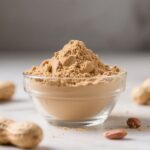
Dehydrated Peanut Butter Powder - Light, Versatile, and Packed With Flavor
Servings 16 servings
Ingredients
- 2 cups unsalted, roasted peanuts (skins removed if possible)
- 1/8–1/4 teaspoon fine salt (optional, to taste)
- 1–2 teaspoons coconut sugar, brown sugar, or maple sugar (optional)
- Pinch of ground cinnamon or vanilla powder (optional)
Instructions
- Start with roasted peanuts: If your peanuts are raw, spread them on a baking sheet and roast at 325°F (165°C) for 12–18 minutes, stirring once. They should be golden and fragrant, not dark. Let them cool completely.
- De-skin if needed: If your peanuts have skins, rub them in a clean kitchen towel to remove most of the skins. This helps the powder taste cleaner and look lighter.
- Grind to a paste: Add the cooled peanuts to a food processor. Pulse, then run continuously until the peanuts turn into a thick, glossy peanut butter. Scrape the sides as needed. This step helps break cell walls and releases oil for later removal.
- Extract the oil: Line a fine-mesh strainer with cheesecloth or a clean nut-milk bag. Spoon in the peanut paste. Fold the cloth over and press firmly with a spatula or the back of a spoon to squeeze out as much oil as possible. For extra extraction, place a plate and a heavy can on top and let it sit 30–60 minutes. The more oil you remove now, the lighter your final powder.
- Dry the defatted paste: Crumble the pressed peanut mass onto a parchment-lined baking sheet. Spread it thin and even. Dry in a low oven at 170–190°F (75–90°C) for 1–2 hours, stirring every 20 minutes, until completely dry and crisp. If using a dehydrator, set it to 135°F (57°C) for 2–4 hours, checking for dryness.
- Cool fully: Let the dried crumbles cool to room temperature. Coolness is crucial—warm bits will trap steam in your container and shorten shelf life.
- Grind into powder: Transfer the dry crumbles to a clean, dry blender, spice grinder, or food processor. Pulse until you get a fine, even powder. Avoid over-blending to the point of heat buildup, which can re-release oils.
- Season to taste: Stir in salt to brighten the flavor. Add a light touch of sugar or spices if you like. Keep it subtle so the powder stays versatile.
- Sift for smoothness: For the silkiest texture, pass the powder through a fine sieve. Re-grind any coarse bits.
- Store properly: Transfer to an airtight jar. Label with the date. See storage tips below.