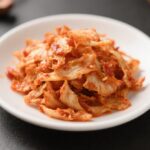
Dehydrated Kimchi Flakes - Spicy, Tangy, and Incredibly Versatile
Servings 8 servings
Ingredients
- 4 cups well-fermented kimchi (Napa cabbage kimchi works best; squeeze out extra liquid)
- 1–2 tablespoons kimchi brine (optional, for extra flavor or to dry separately into powder)
- 1 teaspoon sugar or honey (optional, balances sharpness)
- 1 teaspoon toasted sesame seeds (optional, for texture and aroma)
- Neutral oil spray (optional, only for oven lining; do not oil the kimchi)
Instructions
- Prep the kimchi: Drain the kimchi in a colander. Gently squeeze out excess liquid with clean hands or paper towels. Too much moisture will slow drying and dull the flavor.
- Chop finely: Cut the kimchi into small pieces—about pea-sized. Even pieces dry evenly and crush into uniform flakes later.
- Optional flavor boost: Toss the chopped kimchi with sugar or honey and sesame seeds. This adds a hint of caramelization and nuttiness during drying.
- Set up your dehydrator: Line trays with mesh screens or parchment. Spread the kimchi in a thin, even layer, without clumps. Set to 125–135°F (52–57°C).
- Or use an oven: Line baking sheets with parchment (lightly oil the parchment if sticking is a concern, but avoid oiling the kimchi). Spread evenly. Set the oven to its lowest temperature (170–200°F / 75–95°C). Prop the door slightly open with a wooden spoon to allow moisture to escape.
- Dry until crisp: Dehydrate for 6–10 hours in a dehydrator, or 3–6 hours in an oven, depending on temperature, humidity, and thickness. Stir or rotate trays every hour. The kimchi is ready when it’s dry, brittle, and snaps cleanly.
- Cool completely: Let the dried kimchi cool to room temperature on the trays. This prevents condensation in storage.
- Crush into flakes: Rub the dried pieces between your fingers, or pulse briefly in a food processor. Aim for small flakes, not powder. If you over-process, sift to remove fine dust.
- Optional brine powder: If you saved kimchi brine, spread it thinly on a lined tray and dry alongside until glassy and brittle. Blend into a fine powder for an umami-packed seasoning salt.
- Jar and label: Transfer flakes to clean, airtight jars. Label with the date and spice level (mild, medium, or hot) if you’re using different kimchi batches.