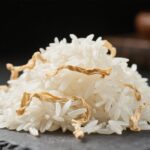
Dehydrated Cooked White Rice - A Handy Make-Ahead Staple
Servings 4 servings
Ingredients
- 3 cups cooked white rice (short, medium, or long grain)
- Water for cooking (follow your rice’s usual ratio)
- Optional: 1/2 teaspoon fine salt, to season before dehydrating
- Optional: A tiny splash of neutral oil for fluffier rice (use sparingly if storing long term)
Instructions
- Cook the rice. Use your standard method (stovetop, rice cooker, or Instant Pot). Aim for slightly firm, not mushy. For long-grain rice, a 1:1.75 or 1:2 rice-to-water ratio usually works well.
- Fluff and cool. When the rice is done, fluff it with a fork to release steam. Spread it on a large tray to cool until it’s just warm. This helps prevent clumping during drying.
- Light seasoning (optional). If you want, sprinkle a little salt and gently toss. Avoid heavy oils or butter—they slow drying and can reduce shelf life.
- Prepare dehydrator trays. Line trays with parchment or a mesh liner to prevent bits from falling through. Spread the rice in a thin, even layer, about one grain deep if you can.
- Dehydrate. Set your dehydrator to 135–145°F (57–63°C). Dry for 4–6 hours, stirring once or twice to break up clumps. The rice is done when the grains are hard, dry, and brittle.
- Oven option. If you don’t have a dehydrator, use your oven at its lowest setting (usually 170–200°F / 75–93°C). Prop the door slightly open to let moisture escape. Spread the rice thinly on lined baking sheets and dry for 2–4 hours, stirring every 30–45 minutes.
- Cool completely. Let the rice sit at room temperature until fully cool. This prevents condensation once you store it.
- Condition the batch. Place the dried rice in a large airtight container for 2–3 days, shaking it daily. If you see condensation or feel softness, return it to the dehydrator for another hour.
- Package for storage. Move the finished rice to airtight jars, vacuum-sealed bags, or mylar bags with oxygen absorbers for long storage. Label with the date.
- Rehydrate when needed. Combine 1 cup dried rice with 1 to 1 1/4 cups boiling water, cover, and rest 5–10 minutes. Fluff and season to taste. For stovetop, simmer gently until tender.