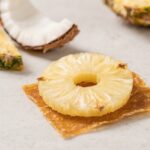
Pineapple Coconut Fruit Leather - Tropical, Chewy, and Naturally Sweet
Servings 8 servings
Ingredients
- 3 cups chopped ripe pineapple (fresh or thawed from frozen, drained)
- 1/2 cup canned coconut milk (full-fat for creamier texture)
- 2–3 tablespoons unsweetened shredded coconut (optional, for texture)
- 1–2 tablespoons lime juice (to brighten and help preserve color)
- 1–3 tablespoons honey or maple syrup, to taste (optional, based on sweetness of pineapple)
- Pinch of fine sea salt (about 1/8 teaspoon)
- Neutral oil or nonstick spray (for lining, if needed)
Instructions
- Prepare your pan. Line a rimmed baking sheet with a silicone baking mat or high-quality parchment paper. Lightly grease parchment with a thin film of oil to prevent sticking. If using a dehydrator, set up nonstick dehydrator sheets.
- Preheat. For oven: set to 170–200°F (75–95°C). If your oven doesn’t go that low, use the lowest setting and prop the door slightly open with a wooden spoon for airflow. For dehydrator: set to 135°F (57°C).
- Blend the base. In a blender, add pineapple, coconut milk, lime juice, sweetener if using, and salt. Blend until very smooth. You’re aiming for a thick smoothie consistency—pourable, but not watery.
- Adjust texture. If the puree seems thin, blend in 2 tablespoons shredded coconut or simmer the puree on the stove for 5–8 minutes to reduce slightly. This helps it dry evenly without cracking.
- Taste and tweak. This is your moment to balance flavors. Add a touch more lime for brightness or a bit more sweetener if your pineapple is tart. The flavor will concentrate as it dries, so keep it slightly less sweet than you want the final result.
- Spread the puree. Pour onto the lined sheet and spread with an offset spatula to about 1/8 inch (3 mm) thick. Keep the layer even, slightly thicker at the edges to prevent over-drying and cracking there.
- Dry it out. Oven: Bake 3–5 hours, rotating the pan halfway. Start checking at 3 hours. The surface should be tacky but not wet, and it should peel from the liner in one piece.
- Dehydrator: Dry 4–8 hours at 135°F. Time varies by humidity and thickness.
- Test for doneness. The fruit leather should be flexible and not sticky to the touch. If the center is still very soft or shiny-wet, keep drying. Do not rush this step—underdried leather spoils faster.
- Cool completely. Let it cool on the sheet for 20–30 minutes. This helps set the texture and makes peeling easier.
- Peel and cut. Carefully peel the leather from the liner. Place it on a sheet of parchment and cut into strips or rectangles. Roll with the parchment to keep pieces from sticking together.
- Optional finishing. Sprinkle a little toasted shredded coconut on top before rolling for extra texture. Press gently so it adheres.