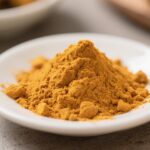
Dehydrated Turmeric Powder - Bright, Warm, and Easy Homemade Spice
Servings 16 servings
Ingredients
- 2 to 3 pounds fresh turmeric rhizomes (choose firm, smooth pieces)
- Water for rinsing
- Optional: 1 teaspoon black peppercorns (for blending later, to pair with turmeric in recipes)
- Optional: A small knob of fresh ginger (for a slightly different flavor profile if making a blend)
Instructions
- Prep the workspace: Turmeric stains. Line your cutting board with parchment, wear gloves, and use a knife you don’t mind getting yellow.
- Wash and trim: Rinse rhizomes under cool water. Scrub off dirt, then trim off any soft or bruised spots and cut away knobby ends.
- Peel or don’t peel: Peeling is optional. The skin is thin and edible. If you want the brightest color and smoothest powder, peel with a spoon. If not, just scrub well.
- Slice evenly: Cut into 1/8-inch (3 mm) slices. Thinner slices dry faster and more evenly. Aim for uniform thickness to prevent under- or over-drying.
- Choose your drying method: Dehydrator: Arrange slices in a single layer on trays. Dry at 105–115°F (40–46°C) for 6–10 hours, or until crisp and brittle.
- Oven: Line baking sheets and spread slices in a single layer. Set oven to the lowest temp (ideally 150–170°F / 65–75°C). Prop the door slightly open with a wooden spoon for airflow. Dry 3–5 hours, flipping halfway, until completely brittle.
- Check for doneness: A properly dried slice should snap cleanly. If it bends or feels leathery, keep drying.
- Cool completely: Let the slices sit at room temperature for 20–30 minutes. Trapped warmth can cause condensation in your grinder or jar.
- Grind: Use a spice grinder, high-speed blender, or clean coffee grinder. Work in small batches for a fine, even powder. Pulse until you reach your desired texture.
- Optional blend-ins: For a ready-to-use mix, grind 1 teaspoon black peppercorns per cup of turmeric powder and blend together. Pepper can enhance turmeric’s benefits in recipes that include fat.
- Sift and regrind: Pass the powder through a fine sieve. Return larger bits to the grinder until everything is uniform.
- Jar and label: Transfer to an airtight glass jar. Label with the date and note “homemade” so you remember it’s extra potent.