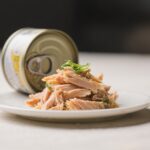
Dehydrated Canned Tuna - Lightweight, Shelf-Stable Protein for Meals Anywhere
Servings 8 servings
Ingredients
- Canned tuna (in water is ideal; solid or chunk light or albacore)
- Lemon juice (optional, for brightness)
- Seasonings (optional: garlic powder, onion powder, pepper, smoked paprika, dill, or chili flakes)
- Olive oil (optional—use sparingly; fat can reduce shelf life)
- Salt (to taste)
- Parchment paper or silicone dehydrator sheets
- Dehydrator (preferred) or oven that can maintain low temperatures
- Resealable bags or airtight containers
- Oxygen absorbers or vacuum sealer (optional, for long-term storage)
Instructions
- Drain the tuna well. Open the cans and press out as much liquid as possible. Use tuna packed in water for best results. Less moisture means faster, safer drying.
- Flake the tuna. Break it up in a bowl with a fork. Aim for small, even flakes. This helps it dry uniformly and rehydrate quickly.
- Season lightly. Add a squeeze of lemon juice and a pinch of salt, pepper, and your favorite spices if you like. Avoid heavy oil or mayo—fat slows drying and shortens storage life. If using oil, keep it to 1/2 teaspoon per can at most.
- Prepare your trays. Line dehydrator trays with parchment or silicone sheets to prevent small flakes from falling through. If using an oven, line baking sheets with parchment.
- Spread the tuna thin. Scatter tuna in a thin, even layer, no clumps. The thinner the layer, the more evenly it dries.
- Dehydrate at 145°F–155°F (63°C–68°C) for 4–6 hours. Rotate trays halfway through. Tuna is done when completely dry, hard, and brittle with no soft or cool spots.
- Oven method: Set the oven to its lowest temperature (ideally 170°F/75°C). Prop the door slightly open with a wooden spoon to release moisture. Dry for 4–6 hours or until brittle, checking often near the end.
- Cool and condition. Let tuna cool completely. Then “condition” by placing the dried tuna in a large jar for 3–5 days, shaking daily. If condensation appears, return it to the dehydrator to dry more.
- Package for storage. Transfer to airtight bags or jars. For longest life, vacuum seal with an oxygen absorber. Label with the date.
- Rehydrate when ready to use. Add hot water in a 1:1 ratio by volume, stir, and let sit 5–10 minutes. Drain any excess water and season to taste.