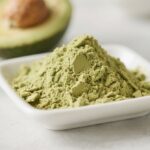
Dehydrated Avocado Powder - A Versatile, Shelf-Stable Avocado Boost
Servings 12 servings
Ingredients
- 3–4 ripe avocados (Hass or similar, with creamy flesh)
- 1–2 tablespoons lemon juice or lime juice (to slow browning)
- Optional: 1/4 teaspoon fine sea salt (per avocado), if you want a seasoned powder
Instructions
- Select ripe avocados. Choose avocados that yield gently to pressure and have no large soft spots or off smells. Slightly firm-but-ripe fruit dehydrates more evenly.
- Prep your workspace. Wash your hands and tools. Line dehydrator trays with nonstick sheets or use parchment on baking sheets if using an oven.
- Halve, pit, and peel. Scoop the flesh into a bowl and discard any bruised or stringy portions.
- Add acid. Stir in lemon or lime juice to coat thoroughly. This slows oxidation and helps the final powder stay greener.
- Optional seasoning. If you want a subtly savory powder, add a small amount of salt now. Keep it minimal so the powder stays versatile.
- Puree smooth. Use a blender or food processor until you get a thick, even puree with no chunks. A smooth puree dries faster and powders better.
- Spread thin. Pour the puree onto lined trays and spread to a uniform 1–2 mm thickness. Thin layers = faster, more even drying.
- Dehydrate low and slow. Dehydrator: 125–135°F (52–57°C) for 6–10 hours.
- Oven: Lowest setting (often 170–200°F / 75–93°C). Prop the door slightly ajar to improve airflow; expect 4–8 hours depending on thickness.
- Flip and finish. Peel off the liner and return the sheet to dry side-up if needed. Continue until fully dry and brittle. No flexibility = done.
- Cool completely. Let the dried sheet cool to room temperature before grinding. Warm pieces can trap condensation and cause clumping.
- Grind to powder. Break into chips and process in a spice grinder or high-speed blender. Pulse until fine. For ultra-smooth powder, sieve and regrind larger bits.
- Condition the powder. Place the powder loosely in a clean jar, fill no more than halfway, and shake once daily for 2–3 days. If clumps form, it wasn’t fully dry—return to the dehydrator briefly.
- Label and store. Note the date and whether it’s salted. Store airtight in a cool, dark spot.