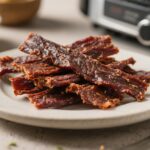
Air Fryer Venison Jerky - Lean, Flavorful, and Fast
Servings 6 servings
Ingredients
- 2 pounds venison (backstrap, hindquarter, or other lean cut), trimmed of all silver skin and fat
- 1/2 cup soy sauce (low-sodium preferred)
- 2 tablespoons Worcestershire sauce
- 2 tablespoons brown sugar
- 1 tablespoon apple cider vinegar
- 1 teaspoon garlic powder
- 1 teaspoon onion powder
- 1 teaspoon black pepper, freshly ground
- 1 teaspoon smoked paprika (or regular paprika plus a drop or two of liquid smoke)
- 1/2–1 teaspoon crushed red pepper flakes (adjust for heat)
- Optional: 1 teaspoon liquid smoke for a deeper smoky note
- Optional: 1 teaspoon kosher salt if using low-sodium soy and you prefer saltier jerky
- Nonstick spray or a light brush of neutral oil for the basket
- Zip-top bag or shallow dish for marinating
- Paper towels and a wire rack (helpful for pat-drying)
Instructions
- Partially freeze the venison. Place the trimmed venison in the freezer for 60–90 minutes. You want it firm, not rock-solid. This makes thin, even slicing much easier.
- Slice the meat. Cut the venison against the grain for a more tender chew or with the grain for a classic, slightly tougher jerky bite. Aim for slices about 1/8 to 1/4 inch thick and as uniform as possible.
- Mix the marinade. In a bowl, whisk soy sauce, Worcestershire, brown sugar, apple cider vinegar, garlic powder, onion powder, black pepper, smoked paprika, and red pepper flakes. Add liquid smoke if using.
- Marinate. Add the meat to a zip-top bag or dish, pour in the marinade, and toss to coat. Press out air, seal, and refrigerate for at least 6 hours, ideally 12–24 hours. Turn the bag once or twice for even coverage.
- Drain and dry. Remove slices from the marinade and lay them on paper towels or a wire rack. Pat dry thoroughly. Dry surfaces = better drying and less steaming in the air fryer.
- Preheat the air fryer. Set to 175–180°F (80–82°C) if your model allows, or the lowest temperature setting. Lightly oil or spray the basket or trays to prevent sticking.
- Arrange the slices. Lay the venison in a single layer with a little space between pieces. Don’t overlap. If you have trays, use them; if not, work in batches.
- Air fry low and slow. Cook for 2–4 hours, flipping every 30–45 minutes. Time varies by thickness and air fryer model. You’re drying, not frying.
- Check for doneness. Jerky should be dry to the touch, firm, and darkened but not brittle. Bend a piece: it should flex and crack slightly along the surface fibers without snapping.
- Cool completely. Place finished jerky on a clean wire rack to cool. This helps set the texture and avoids trapping steam in storage.
- Condition (optional but recommended). After cooling, place jerky loosely in a clean jar for 24 hours at room temperature, shaking once or twice. This equalizes moisture across pieces for longer storage.