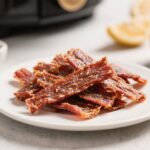
Air Fryer Turkey Jerky No Sugar - Simple, Clean, High-Protein Snack
Servings 8 servings
Ingredients
- 1.5 to 2 pounds turkey breast (boneless, skinless)
- 1 tablespoon apple cider vinegar
- 1 tablespoon Worcestershire sauce (optional; check label for no-sugar-added)
- 1 teaspoon smoked paprika
- 1 teaspoon onion powder
- 1 teaspoon garlic powder
- 1 teaspoon freshly ground black pepper
- 1/2 to 1 teaspoon red pepper flakes (optional, for heat)
- 1 teaspoon fine sea salt (adjust to taste)
- 1 tablespoon avocado oil (or olive oil)
- Nonstick spray (for air fryer basket or racks)
- Zip-top bag or shallow dish for marinating
- Paper towels for blotting
Instructions
- Partially freeze the turkey: Place the turkey breast in the freezer for 45–60 minutes. This firms it up and makes thin slicing easier.
- Prep the marinade: In a bowl, combine coconut aminos or soy, apple cider vinegar, Worcestershire (if using), smoked paprika, onion powder, garlic powder, black pepper, red pepper flakes, salt, and avocado oil. Stir well.
- Slice the turkey: Using a sharp knife, slice the turkey against the grain into thin strips, about 1/8 to 1/4 inch thick. Thinner slices dry faster and get chewier; thicker slices stay meatier.
- Marinate: Add turkey strips to the marinade. Toss to coat. Seal and refrigerate for at least 4 hours, preferably overnight for deeper flavor.
- Drain and blot: Remove turkey from the marinade and lay pieces on paper towels. Blot well to remove excess moisture. This helps even drying.
- Preheat the air fryer: Set to 180–200°F (80–95°C) if your model allows. If not, use the lowest setting available. Lightly grease the basket or racks with nonstick spray.
- Arrange the strips: Lay turkey in a single layer with slight spacing. Avoid overlap. If your air fryer has racks, use them for more capacity and airflow.
- Air fry and rotate: Dry at 180–200°F for 2 to 3.5 hours, flipping and rotating racks every 30–45 minutes. Time varies by thickness and air fryer model.
- Check for doneness: Jerky should be dry to the touch, deeper in color, and flexible, not brittle. Bend a piece; it should crack slightly but not snap. If the center looks raw or wet, keep going in 15–20 minute increments.
- Cool and condition: Let jerky cool on a rack. For best texture, place cooled pieces loosely in a paper bag or a loosely covered container for a few hours to “condition” and equalize moisture.