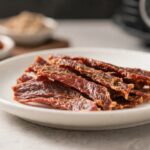
Air Fryer Ostrich Jerky - Lean, Flavorful, and Fast
Servings 6 servings
Ingredients
- 1.5 pounds ostrich steak or fillet, trimmed of visible fat
- 1/3 cup low-sodium soy sauce or coconut aminos
- 2 tablespoons Worcestershire sauce
- 1 tablespoon maple syrup or brown sugar (optional for balance)
- 1 tablespoon apple cider vinegar or rice vinegar
- 2 teaspoons smoked paprika
- 1.5 teaspoons freshly ground black pepper
- 1 teaspoon garlic powder
- 1 teaspoon onion powder
- 1/2 to 1 teaspoon red pepper flakes or cayenne (optional heat)
- 1/2 teaspoon ground coriander (optional, earthy citrus note)
- 1 teaspoon kosher salt (adjust to taste, especially if not using low-sodium soy)
- Nonstick spray or a little neutral oil for the basket/racks
Instructions
- Partially freeze the meat. Place the ostrich in the freezer for 45–60 minutes until firm but not solid. This makes it easier to slice thin and even.
- Slice into thin strips. Cut against the grain into 1/8–1/4-inch slices. Thinner slices dry faster and come out chewier; thicker slices stay meatier.
- Mix the marinade. In a bowl, whisk soy sauce, Worcestershire, maple syrup, vinegar, smoked paprika, pepper, garlic powder, onion powder, red pepper flakes, coriander, and salt.
- Marinate. Add the ostrich strips to a zip-top bag or shallow dish. Pour in the marinade and toss to coat. Press out air, seal, and chill for at least 4 hours, ideally 8–12. Turn once or twice to distribute flavor.
- Drain and pat dry. Remove strips from the marinade and lay on paper towels. Blot both sides. Excess moisture will steam instead of dry, so don’t skip this step.
- Prep the air fryer. Lightly oil the basket or racks to prevent sticking. Preheat to 180–200°F (82–93°C) if your model allows. If your air fryer’s lowest setting is higher, choose its lowest temperature and keep the door slightly ajar with a heat-safe utensil to encourage airflow and gentler drying.
- Arrange the strips. Lay pieces in a single layer with a little space between. Avoid overlap. If you have racks, use them to increase capacity.
- Dry in batches. Air-fry at 180–200°F for 2–4 hours, flipping every 30–45 minutes. Cook time varies by thickness, model, and humidity. Rotate racks if your fryer has multiple levels.
- Check for doneness. Jerky should be dry to the touch but still pliable. Bend a piece: it should crack and show white fibers inside but not snap completely. If it feels wet or spongy, continue drying in 15–20 minute intervals.
- Cool and condition. Let jerky cool completely on racks. Then place it loosely in a jar or bag for 24 hours at room temp, shaking once or twice. Conditioning equalizes moisture and helps prevent mold.
- Store. Move to airtight containers. Refrigerate for longest freshness, or freeze for extended storage.