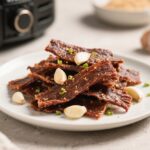
Air Fryer Garlic Beef Jerky - Savory, Tender, and Fast
Servings 6 servings
Ingredients
- Beef: 2 pounds lean beef (top round, eye of round, or sirloin tip), trimmed of visible fat
- Garlic: 6–8 cloves, finely grated or pressed
- Soy sauce: 1/2 cup (use tamari or coconut aminos for gluten-free)
- Worcestershire sauce: 2 tablespoons
- Brown sugar or maple syrup: 1–2 tablespoons (adjust to taste)
- Rice vinegar or apple cider vinegar: 1 tablespoon
- Black pepper: 1–2 teaspoons, freshly cracked
- Onion powder: 1 teaspoon
- Smoked paprika: 1 teaspoon (optional for a smoky note)
- Red pepper flakes: 1/2–1 teaspoon (optional for heat)
- Liquid smoke: 1/2 teaspoon (optional, adds depth)
- Oil: 1 teaspoon neutral oil (helps prevent sticking)
- Nonstick spray: for the air fryer basket
- Paper towels: for patting dry before cooking
Instructions
- Partially freeze the beef (30–60 minutes): This firms it up so you can slice clean, even strips. You’re aiming for a frosty exterior, not a rock-solid block.
- Slice the beef: Cut into 1/8- to 1/4-inch thick strips. Against the grain gives a more tender bite; with the grain gives a chewier, classic jerky texture. Keep thickness consistent for even drying.
- Mix the marinade: In a bowl, combine soy sauce, Worcestershire, garlic, brown sugar, vinegar, black pepper, onion powder, smoked paprika, red pepper flakes, liquid smoke (if using), and oil. Taste and adjust salt, sweetness, and heat.
- Marinate: Add beef to a zip-top bag or container. Pour in marinade and press out the air. Marinate at least 6 hours, ideally overnight (12–24 hours) for best flavor.
- Prep the air fryer: Lightly spray the basket or racks with nonstick spray. Preheat to 180–200°F (80–95°C) if your model allows low temps. If not, use the lowest setting available.
- Drain and pat dry: Remove beef from marinade and pat each strip dry with paper towels. This step helps the jerky dehydrate instead of steam.
- Arrange the strips: Lay beef in a single layer with no overlapping. Use racks if you have them. Space is key for airflow and even drying.
- Cook in batches: Air fry at 180–200°F for 2 to 3 hours, flipping every 30–45 minutes. If your air fryer runs hotter and only goes down to 200–210°F, check earlier and more often.
- Test for doneness: Jerky is done when it’s dry to the touch but still slightly flexible. Bend a piece: it should bend and start to crack but not snap cleanly. If it feels wet or spongy, keep going.
- Cool completely: Transfer to a rack or paper towels and let it cool fully. This finishes the drying process and prevents condensation in storage.